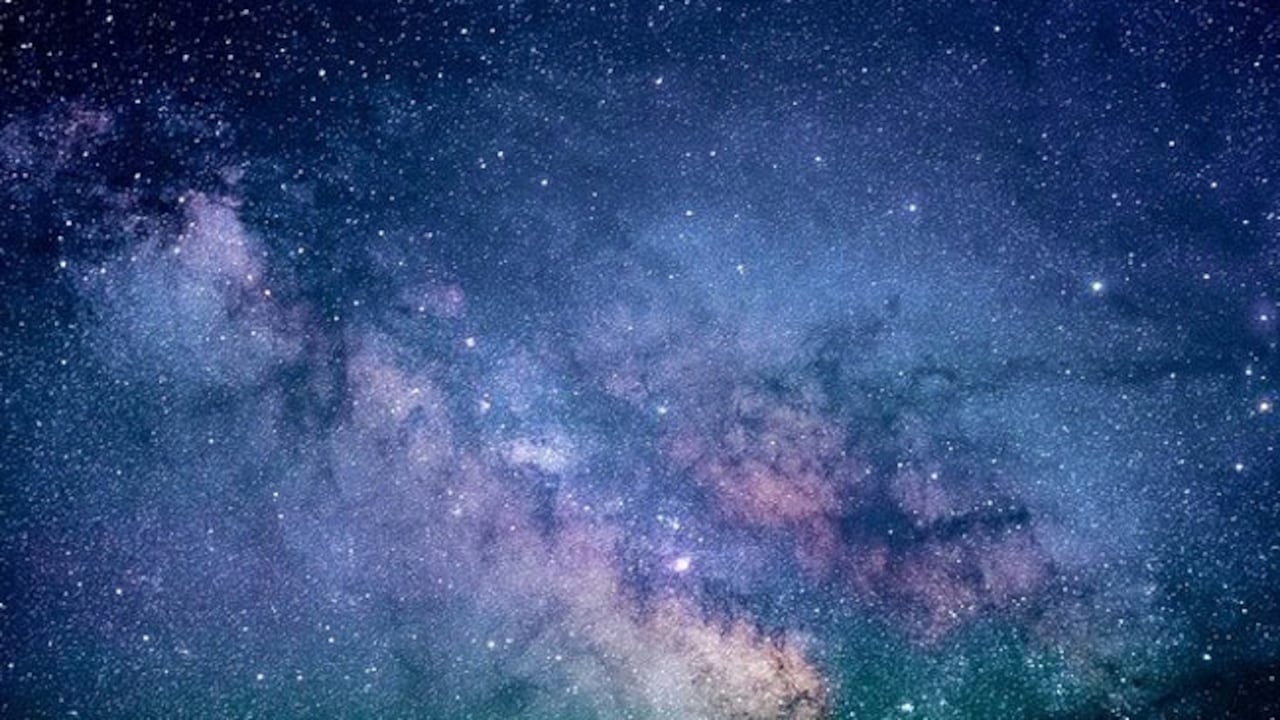
Look up at the night sky. You think you are looking at billions of stars. You are not.
A good chunk of those blinking lights are planets masquerading as suns. Others are dying embers, cosmic impostors, or entire galaxies blurred by trillions of miles of empty space. We throw the word star around too loosely. We use it for Hollywood actors, shiny stickers, and anything that glimmers in the dark.
But physics does not care about our casual vocabulary.
In the scientific world, a star is a very specific, incredibly violent machine. It is not just a hot ball of gas. Jupiter is a hot ball of gas, and nobody calls Jupiter a star. To earn that title, a celestial object has to pass a brutal thermodynamic test. It needs to fight a lifelong war against its own weight, and it has to win that war using nothing but the atoms in its core.
If you want to understand what makes a star a star, you have to look at the exact moment a planet-sized rock stops being an object and starts being an engine.
The Ignition Crux
Size matters. In astronomy, it matters more than anything else.
A star begins its life as a cold clump of molecular hydrogen and helium drifting through space. Gravity, acting as it always does, wants to pull every single particle closer together. As the cloud collapses, it gets crowded. Particles smash into each other. Heat rises.
For a long time, this proto-star is just riding the coattails of gravitational contraction. It glows, sure, but it glows because it is getting crushed, not because it is generating its own power. It is basically a giant cosmic space heater running on gravity.
To become a true star, the core must reach a ridiculous temperature. We are talking roughly 15 million Kelvin.
At that precise threshold, something magical and violent happens. Hydrogen atoms, which naturally repel each other because they have positive charges, get slammed together with so much force that they overcome their mutual hatred. They fuse.
This process, known as nuclear fusion, is the ultimate cosmic club entry fee.
When two hydrogen nuclei fuse into helium, a tiny fraction of their mass vanishes. It does not just disappear into nothingness; it transforms into pure energy. This is the practical application of Einstein’s famous equation, $E=mc^2$. Because the speed of light ($c$) is an enormous number, even a tiny speck of missing mass ($m$) yields a staggering amount of energy ($E$).
If an object cannot sustain this hydrogen-to-helium fusion in its core, it is not a star. Period.
The War That Never Ends
Once fusion turns on, the new star enters a state of permanent conflict.
Think of a star as a controlled hydrogen bomb that is constantly trying to blow itself apart, while a massive gravitational blanket is constantly trying to crush it into a point of infinite density. Astronomers call this delicate balance hydrostatic equilibrium.
[Inward Push: Gravity] ---> ( The Star's Core ) <--- [Outward Push: Thermal Pressure from Fusion]
It is a beautiful, terrifying tug-of-war.
If the core gets too hot, the fusion rate spikes, pushing the outer layers outward. The star expands. As it expands, the core cools down a bit, slowing the fusion down. If the core cools too much, gravity wins for a second, crushing the star inward, which heats the core back up and restarts the engine.
This self-regulating thermostat keeps a star stable for millions, billions, or even trillions of years.
When you look at our Sun, you are looking at a system in perfect equilibrium. It has been balancing on this tightrope for about 4.6 billion years. Every single second, the Sun converts about 600 million tons of hydrogen into helium. It is an unfathomable scale of energy production happening right over our heads.
The Tragic Tale of the Wannabes
Nature does not always give you a clean dividing line. Between massive gas giant planets like Jupiter and the smallest true stars, there is a weird, dark territory occupied by brown dwarfs.
I like to call them failed stars.
A brown dwarf is an object that gathered more mass than a planet, but not quite enough to kickstart proper hydrogen fusion. The cutoff point is roughly 75 to 80 times the mass of Jupiter. If a cosmic cloud gathers less than that, gravity cannot squeeze the core hard enough to reach that 15 million Kelvin sweet spot.
These objects are stuck in limbo.
They can fuse a heavy version of hydrogen called deuterium, but that fuel supply burns out quickly. Once the deuterium is gone, the brown dwarf spends the rest of eternity cooling down, fading into the dark. They do not have the internal pressure to fight off gravity forever, so they eventually settle into a weird state where electron degeneracy pressure—the sheer refusal of electrons to occupy the same space—stops them from collapsing further.
They are the ultimate proof that just being big and hot does not make you a star. You need the sustained engine.
Mass Dictates Everything
Once an object successfully ignites hydrogen fusion, its entire life path is set in stone. The amount of mass it starts with decides how long it lives, how bright it shines, and how spectacularly it dies.
Counterintuitively, the bigger a star is, the shorter its lifespan.
Consider red dwarfs. These are the lightweight champions of the universe. They have just enough mass to spark fusion, usually between 8% and 50% of our Sun’s mass. Because they are small, their internal gravity is relatively weak. They do not have to burn through their hydrogen fuel very fast to keep gravity at bay.
They sip their fuel like a hybrid car. A red dwarf can easily live for trillions of years. In fact, every single red dwarf born since the beginning of the universe is still alive today. Not a single one has died yet.
Then look at the blue giants.
These monsters can be dozens or hundreds of times more massive than the Sun. Their immense gravity tries to crush them instantly. To survive, their cores must run at scorching temperatures, burning through hydrogen at an insane, reckless pace. They guzzle fuel like a broken rocket ship.
A massive blue star might live for only a few million years before running out of gas. In cosmic terms, that is a blink of an eye. They live fast, burn bright, and blow up in violent supernova explosions that shake the fabric of their host galaxies.
The Misconception About Burning
We need to clear up a common piece of misinformation. Stars do not burn.
When you light a campfire, you are witnessing a chemical reaction. Wood combines with oxygen to create ash, carbon dioxide, and heat. That requires molecules to swap electrons.
Stars do not have fire. There is no oxygen up there to feed a flame anyway.
Fusion is a nuclear reaction. It alters the actual structure of the atoms themselves. It changes the identity of the elements. When hydrogen becomes helium, it is a fundamental shift in the building blocks of matter.
This distinction matters because chemical burning could never power something like the Sun for billions of years. If the Sun were made of high-grade anthracite coal and burned via regular fire, it would burn out completely in a few thousand years. Human history would have outlived the Sun.
Instead, nuclear fusion is so incredibly efficient that it keeps the solar system warm for eons.
Spotting the Real Deal in Your Sky
The next time you walk outside at night, you can use these principles to filter out the fakes.
If you see a bright light that shines steadily without flickering, you are probably looking at Mars, Venus, or Jupiter. Planets do not twinkle because they are close enough to appear as tiny disks through the atmosphere. The light beams from different sides of the disk average out, canceling the atmospheric distortion.
Real stars are so unbelievably far away that they are absolute mathematical points of light. As that tiny pinpoint of light passes through Earth’s turbulent, shifting atmosphere, it gets bounced around violently.
That twinkle you see is the visual proof of a star's staggering distance and intense, concentrated energy.
To really appreciate what you are looking at, grab a basic pair of binoculars and point them at the constellation Orion. Just below his belt lies the Orion Nebula. To the naked eye, it looks like a faint smudge. Through lenses, it reveals itself as a massive cloud of glowing gas.
You are looking directly at a star nursery. Inside that cloud, gravity is currently assembling the next generation of nuclear engines, crushing hydrogen down until the universe blinks open a few more brilliant eyes.