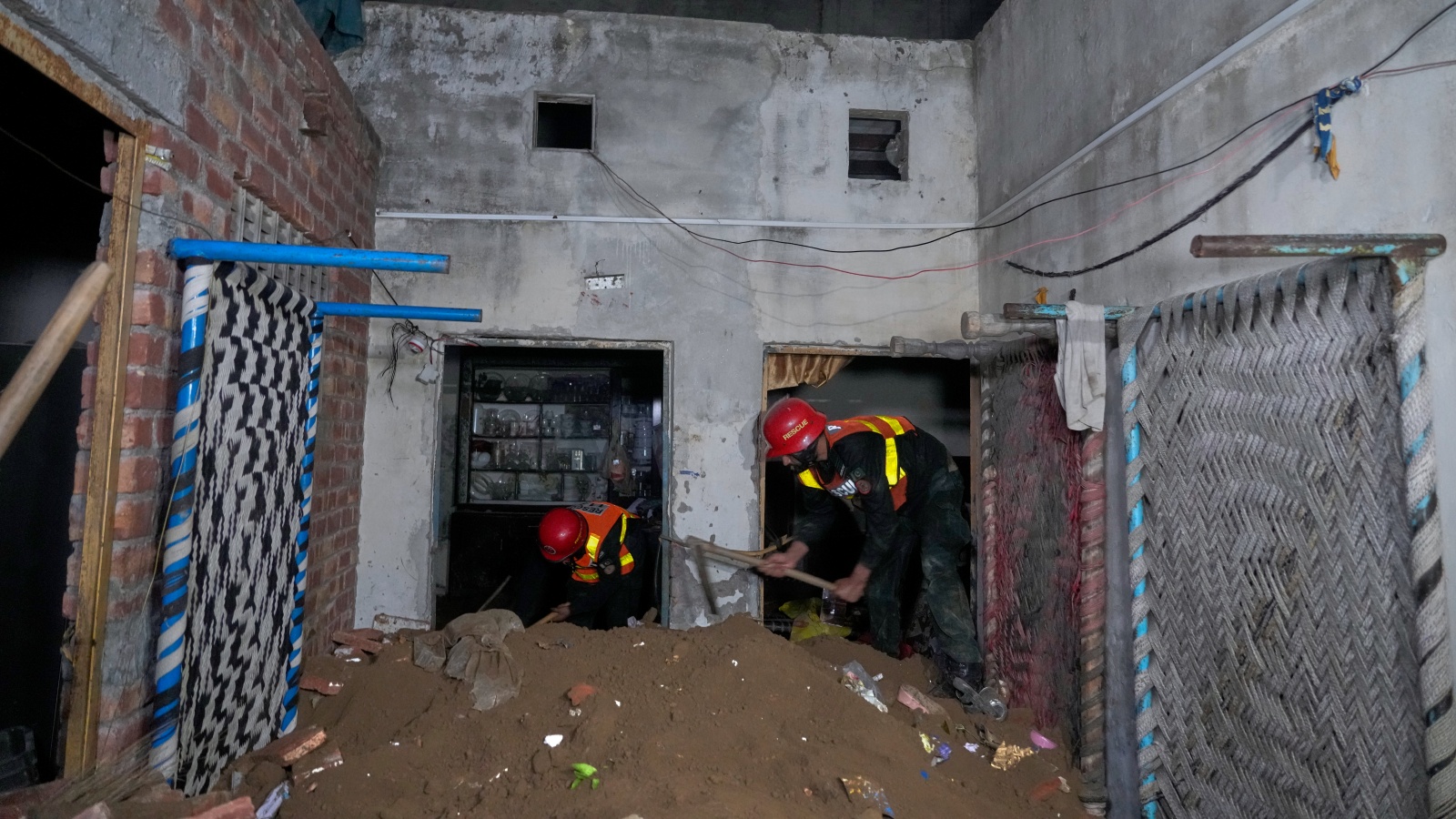
Urban structural collapses in rapidly expanding metropolitan areas are rarely isolated accidents. Instead, they represent the predictable culmination of regulatory evasion, sub-standard material composition, and economic pressures that force public services into unmapped, informal real estate. The recent structural failure of a tuition centre in Lahore, Pakistan, which resulted in the deaths of 14 children, highlights a systemic failure in municipal oversight and structural enforcement rather than a simple localized anomaly.
To evaluate how these structural vulnerabilities develop, we must examine the specific mechanisms of failure that govern informal commercial conversions in dense urban environments.
The Three Pillars of Informal Infrastructure Vulnerability
Unregulated educational facilities operating outside official zoning laws generally exhibit three distinct structural risk factors that compound over time.
Unauthorized Vertical Expansion
The primary driver of structural instability in dense urban centers is the unauthorized addition of floors to existing foundations. Residential buildings designed to support a specific dead load are frequently retrofitted with extra levels to maximize rental yields.
- Foundations designed for single or double-story residential loads are subjected to double or triple their intended weight.
- The soil mechanics beneath the foundation shift due to the increased bearing pressure, leading to differential settlement.
- Differential settlement introduces severe shear stresses into load-bearing walls that were never engineered to resist lateral or asymmetric forces.
Material Degradation and Sub-standard Composition
In informal construction, the quality of building materials is routinely compromised to reduce upfront capital expenditure. The structural integrity of concrete depends entirely on the water-to-cement ratio and the quality of the aggregate used.
- Low-Grade Cement Blends: Builders frequently use high sand-to-cement ratios, which drastically reduces the compressive strength of the concrete. Over time, moisture ingress causes this weak concrete to crumble under sustained loads.
- Corrupted Reinforcement Bars: The steel rebar used in informal builds often consists of re-rolled scrap metal rather than structural-grade deformed bars. These bars lack the necessary tensile strength and are highly susceptible to accelerated oxidation when exposed to environmental moisture.
- Porosity: Highly porous concrete allows carbon dioxide and moisture to penetrate deep into the structure, initiating reinforcement corrosion, which causes the steel to expand and spall the surrounding concrete.
Dynamic Load Imposition vs Static Design Limits
A critical distinction missed by standard reporting is the difference between static and dynamic loading. Residential spaces are mapped for low-density static loads—furniture, standard domestic occupancy, and minimal movement. Converting these spaces into tuition centers or schools introduces high-density dynamic loads.
The concentration of dozens of students moving simultaneously within a confined space creates rhythmic kinetic energy. When the frequency of this movement approaches the natural frequency of a weakened floor slab, resonance occurs. This amplification of stress can trigger an immediate, catastrophic failure of the slab, dropping the entire load onto the floor below and initiating a progressive collapse sequence.
The Mechanics of Progressive Collapse
The destruction of the Lahore tuition centre roof follows the classic engineering model of a progressive collapse, often referred to as a domino effect within a structure.
[Localized Shear Failure in Roof Slab]
               │
               ▼
[Impact Loading on Sub-adjacent Level]
               │
               ▼
[Overloading of Primary Structural Walls]
               │
               ▼
[Total Catastrophic Structural Collapse]
The failure sequence begins when a localized element—in this case, the roof or upper ceiling slab—reaches its ultimate limit state. Once the ultimate tensile or compressive strength of that specific component is exceeded, it detaches from its supports.
The gravity load of the falling roof converts instantly into kinetic energy, generating an impact load on the floor below that far exceeds the static capacity of the building's structural frame. Because informal structures lack structural redundancy—meaning there are no alternative load paths designed to redistribute weight if one component fails—the failure of a single element guarantees the immediate destruction of the entire assembly.
Municipal Oversight Gaps and Economic Drivers
Fixing blame solely on the property owner overlooks the economic ecosystem that permits these hazards to exist. The proliferation of informal tuition centers is driven by a supply-and-demand mismatch within both the educational sector and the real estate market.
The Subsistence Infrastructure Loop
Public educational infrastructure in developing urban centers often fails to keep pace with rapid population growth. Private actors fill this void by establishing low-cost alternatives. Because these operators run on razor-thin margins, renting properly zoned, commercially certified real estate is financially impossible.
Operators turn to the informal market, utilizing cheap residential conversions hidden within dense, narrow alleyways where municipal inspections are rare. The lack of visibility protects the operator from regulatory scrutiny while placing the student population in immediate physical danger.
The Enforcement Deficit
Municipal enforcement agencies in expanding cities are frequently understaffed, underfunded, and susceptible to localized corruption. The regulatory framework requires complex permitting processes for commercial spaces, yet lacks the active field personnel required to audit residential zones for illegal commercial conversions.
The second limitation is the absence of a proactive structural health monitoring framework. Buildings are generally inspected only during initial construction or following a visible, major incident. There is no systemic mechanism to detect micro-cracks, foundation shifting, or material fatigue in existing private properties.
Systemic Risk Mitigation Frameworks
Addressing the hazard of informal infrastructure failure requires a shift away from reactive post-disaster investigations toward predictive, structural risk management.
Implementation of a Multi-Tiered Audit Protocol
Municipalities must establish a binary classification system for all private buildings repurposed for public or high-density occupancy. This protocol should operate across three distinct operational phases:
- Non-Invasive Structural Audits: Utilizing rebound hammer testing and ultrasonic pulse velocity measurements to verify the compressive strength of concrete in suspected informal conversions without damaging the property.
- Mandatory Load Certification: Requiring any facility operating as a school, tuition centre, or commercial space to present engineering certification proving the structure can support a minimum live load of $4.0\text{ kN/m}^2$, compared to the standard residential requirement of $1.5\text{ kN/m}^2$.
- Zoning Integration: Creating an open-access digital register of approved educational spaces, allowing parents and regulators to verify the structural safety of a facility instantly before enrollment.
Structural Retrofitting Imperatives
For existing structures that fail to meet modern seismic or gravity load standards but cannot be demolished due to density constraints, specific engineering interventions must be mandated:
- Fiber-Reinforced Polymer (FRP) Jacketing: Wrapping compromised concrete columns and beams in carbon or glass FRP to drastically increase shear capacity and confinement pressure.
- External Steel Shoring: Installing external structural steel frames to transfer the load of upper floors directly to a new, dedicated foundation at ground level, bypassing the compromised original walls.
The reliance on reactive enforcement guarantees that future structural failures will occur. Until municipal authorities replace superficial administrative checks with rigorous, data-driven structural evaluations and enforce clear load capacity limits on commercialized residential real estate, the physical infrastructure of informal education will remain a critical point of systemic failure.