The draft declaration for the July 2026 NATO summit in Ankara reveals a structural reality that standard geopolitical analysis routinely misinterprets: political rhetoric is a lagging indicator of fiscal shifts. Mainstream coverage focuses heavily on the dramatic tension of Donald Trump affirming an "ironclad commitment" to Article 5 alongside European leaders. This view treats alliances as products of personal chemistry rather than systemic cost functions. The true blueprint of the Ankara summit lies not in the boilerplate language of mutual defense, but in the institutionalization of NATO 3.0—a hard-nosed rebalancing where European capital replaces American forward deployment.
To evaluate the survival probability of the alliance, analysts must look past diplomatic theater. The core mechanism driving the Ankara summit is a high-stakes transaction. Under pressure from a U.S. administration focused on domestic tariffs and Middle Eastern maritime conflicts, Europe and Canada are moving from a consumption model of security to a production model. This transition is governed by rigid defense spending baselines, multi-year funding mandates for Ukraine, and a structural pivot toward industrial co-production.
The Burden Sharing Equation: From The Hague to Ankara
The structural friction within NATO stems from a fundamental imbalance in the Alliance's defense cost function. For decades, the United States subsidized European security, creating a moral hazard where continental powers underfunded their own militaries. The blueprint to correct this was established at the 2025 summit in The Hague, where members agreed to aggressive targets: 3.5% of Gross Domestic Product (GDP) dedicated to hard defense expenditure, and an additional 1.5% allocated to security-related infrastructure by 2035.
The Ankara declaration marks the operationalization of these targets. The mechanism is straightforward: the United States is adjusting its force presence down to compel European allies to absorb frontline risk. The strategic logic relies on three core variables:
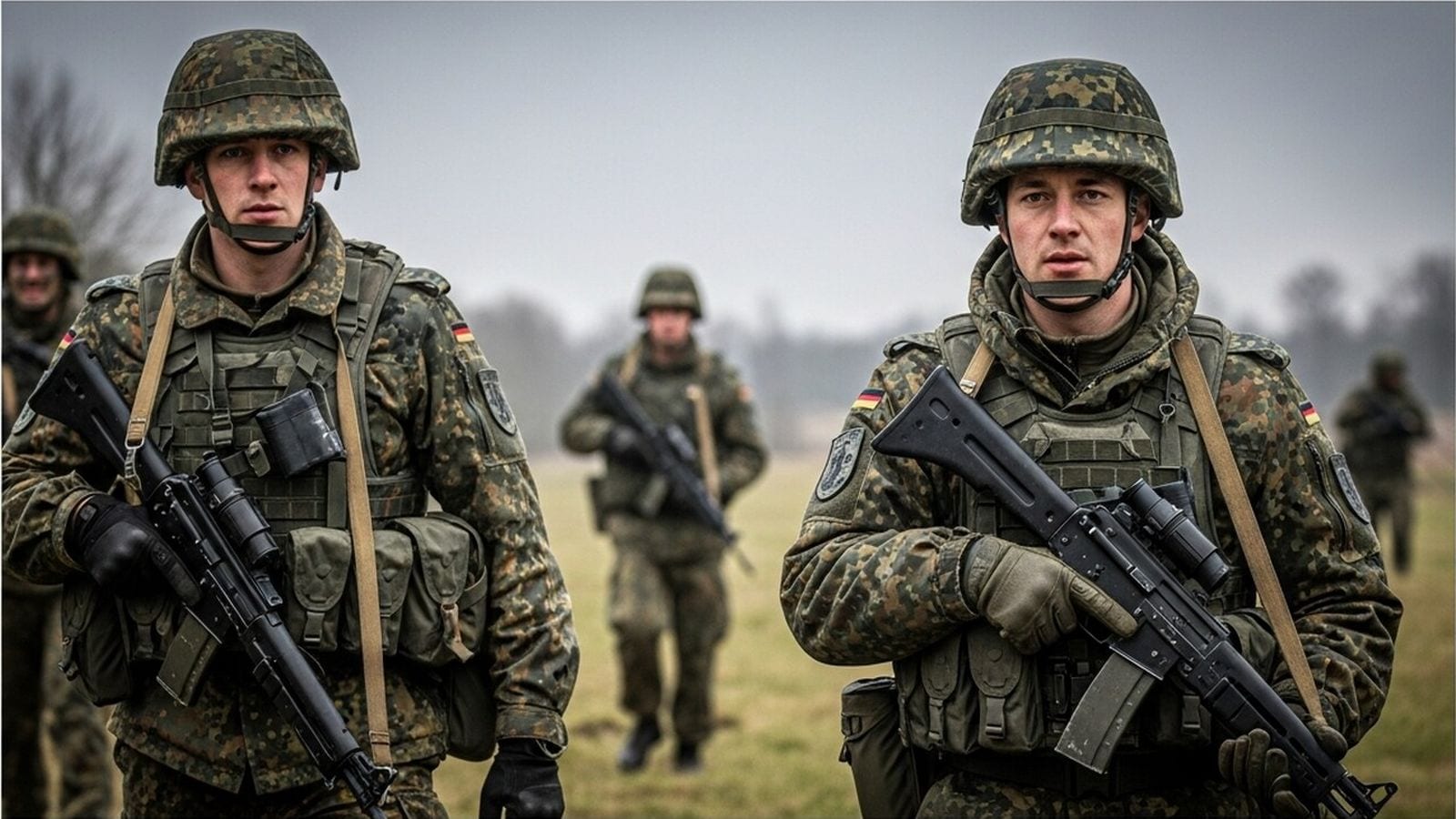
- The Principle of Zero Gaps: Planned reductions of U.S. forces in Europe—including the potential withdrawal of a brigade combat team and the cancellation of long-range fires battalions in Germany—must be synchronized with European deployment. If European forces fail to scale up at the exact rate of U.S. drawdown, security deficits emerge on the Eastern flank.
- Input vs. Output Metrics: Historically, NATO measured compliance through budgetary inputs (the 2% GDP benchmark). Ankara signals a shift toward industrial outputs: actual munitions production, integrated air defense readiness, and joint procurement velocity.
- The Industrial Premium: Under the "Prioritized Ukraine Requirements List," European nations are increasingly funding the acquisition of U.S.-manufactured defense articles. This turns European defense spending into a dual-purpose tool that satisfies domestic security needs while feeding the American defense industrial base, neutralizing isolationist political pressure in Washington.
The Ukraine Subsidy: Quantifying the Multi-Year Commitment
The secondary axis of the Ankara summit is the formalization of the Ukraine military assistance package. The text establishes a €70 billion ($80 billion) floor for 2026, with an explicit commitment to maintain "at least equivalent levels" in 2027.
By hard-coding these figures into a multi-year framework, NATO is attempting to eliminate the political volatility inherent in annual legislative appropriations. The financial architecture relies on structural mechanisms designed to bypass domestic gridlock:
[European Capital] ---> [Prioritized Ukraine Requirements List] ---> [U.S. Defense Production]
                                                                               |
                                                                               v
[Asymmetric Drone/Refinery Tech] <--- [Lend-Lease Framework] <--- [Frontline Ukrainian Forces]
This arrangement functions as an economic closed loop. Western capital buys American munitions, which are routed to Ukraine, while Ukraine provides real-time combat data and asymmetric tech integration back to Western defense firms.
The primary vulnerability in this model is inflation within the defense supply chain. A €70 billion commitment does not guarantee a fixed volume of artillery shells or air defense interceptors if nominal unit costs continue to escalate due to raw material shortages and restricted manufacturing capacity.
Structural Bottlenecks in the Transatlantic Defense Industry
The NATO Summit Defence Industry Forum in Ankara highlights the core reality that military deterrence is ultimately an industrial capacity problem. The alliance's updated strategy formally designates Russia as a "long-term threat," with intelligence assessments warning of potential territorial provocations within 12 to 60 months of the Ukraine war's conclusion. Despite this consensus, the transition to a high-volume war economy faces severe structural bottlenecks.
- Fragmentation of Procurement: European defense spending remains highly balkanized. Instead of purchasing standardized platforms at scale, individual nations protect domestic manufacturers, resulting in redundant supply chains and non-interoperable equipment.
- The Production Lead-Time Crisis: Scaling up production for complex systems like Integrated Air and Missile Defense (IAMD) requires multi-year lead times for microelectronics and solid-rocket motors. Capital injections cannot immediately override these physical manufacturing constraints.
- The Maritime Divergence: The United States is increasingly diverted by maritime security challenges, notably protecting freedom of navigation in the Strait of Hormuz amid conflicts involving Iran. This leaves fewer American naval and air assets available to secure the Euro-Atlantic theater, placing the burden of regional maritime deterrence squarely on European fleets.
The Definitive Strategic Play
The Ankara summit marks the end of the traditional transatlantic security architecture. The "ironclad commitment" to Article 5 is real, but it is no longer a free pass. It operates as a conditional contract: American nuclear and strategic coverage remains intact only because Europe is picking up the tab for conventional territorial defense.
The ultimate success of this pivot will not be determined by the communiqués signed at the Presidential Complex in Ankara. It will be decided by whether European capitals can rapidly convert their increased defense budgets into scalable, interoperable combat battalions before the U.S. executes its next planned troop drawdowns. Alliances are built on credibility, and in the current geopolitical environment, credibility is measured strictly in industrial output and munitions stockpiles.