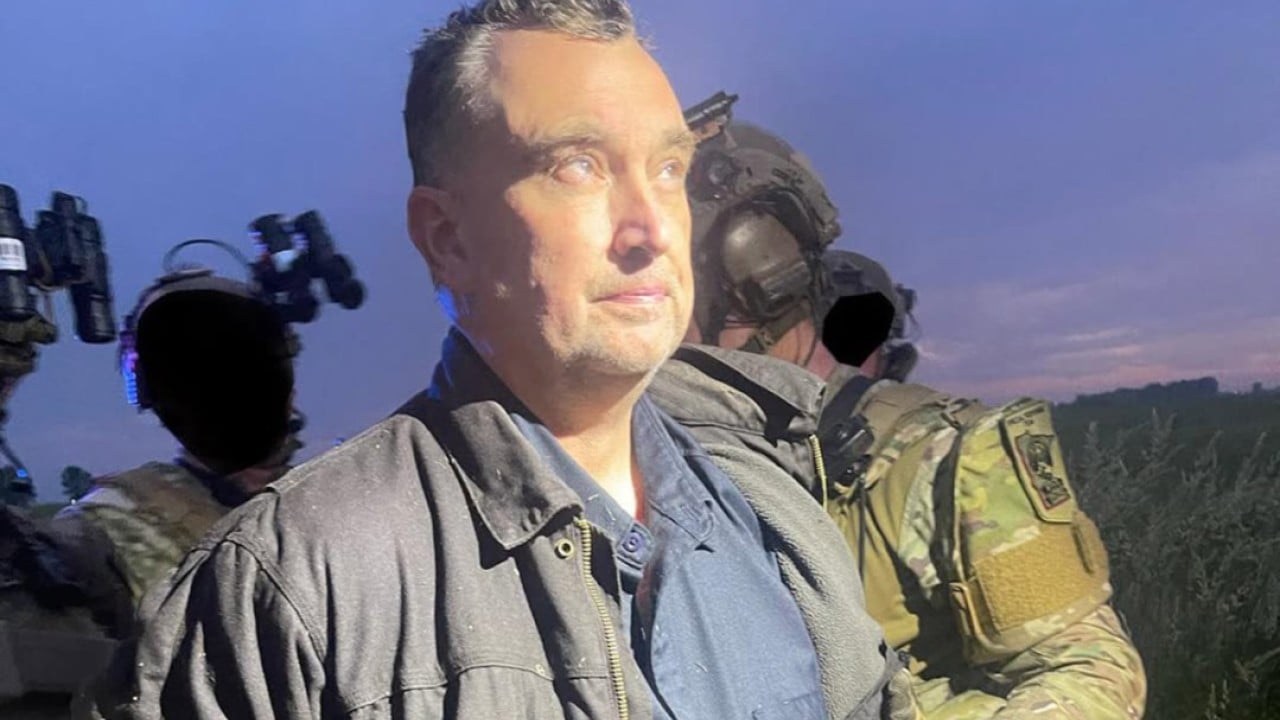
Vance Luther Boelter pleaded guilty in a Minneapolis federal courtroom to the June 2025 political assassination of former Minnesota House Speaker Melissa Hortman and her husband, Mark, as well as the near-fatal shootings of State Senator John Hoffman and his wife, Yvette. The plea deal, struck with federal prosecutors, explicitly takes the death penalty off the table in exchange for two consecutive life sentences plus 40 years. While the agreement ensures the 58-year-old extremist will never leave prison, it leaves behind a chilling blueprint of modern political violence and a complex legal reality that reveals why federal prosecutors compromised on capital punishment.
The admission of guilt marks the end of the federal trial phase, but the ripples of Boelter’s midnight rampage continue to expose deep vulnerabilities in public servant security. For 90 minutes on June 14, 2025, a lone actor successfully weaponized institutional trust to breach the private sanctuaries of state lawmakers.
The Terror of the Mock Officer
Boelter did not force his way into these suburban homes through brute strength alone. He used a meticulously constructed illusion. Driving a replica police SUV equipped with authentic flashing emergency lights and wearing a tactical uniform complete with a realistic, full-head mask, Boelter masqueraded as a law enforcement officer conducting a late-night check.
His first stop was the home of State Senator John Hoffman. When Hoffman opened his door to what appeared to be an officer of the law, Boelter opened fire. The senator was shot nine times, suffering permanent damage to his left arm, hand, digestive system, and urinary tract. His wife, Yvette, was shot eight times, leaving her with debilitating physical weakness. Their adult daughter hid inside, placing the frantic 911 call that began the largest manhunt in Minnesota history.
Boelter was not finished. He drove to the residences of two other state lawmakers, but found them empty. He then targeted the Brooklyn Park home of Melissa Hortman, the prominent Democratic House Speaker Emerita. Local police were already en route to check on Hortman following the Hoffman shooting when Boelter arrived. Before officers could intervene, Boelter confronted the couple. In court, Boelter answered with a flat, repeated "yes" when asked if he pressed a gun to Melissa Hortman’s head and fired. Both Melissa and Mark Hortman were killed. Their family dog was so badly mutilated by gunfire that veterinarians had to euthanize the animal.
The Decoupling of Local and Federal Justice
The Department of Justice’s decision to waive the death penalty surprised observers who noted the Trump administration's vocal support for expanding capital punishment. The reality of the case reveals a distinct legal calculation.
Minnesota abolished capital punishment in 1911. No federal death penalty case has ever successfully moved forward within its borders. To secure a capital sentence under federal law, prosecutors faced a steep structural hurdle. They had to prove that the murders occurred during the commission of another qualifying federal violent offense.
The federal indictment rested heavily on interstate stalking and firearms charges. A recent, highly publicized legal precedent in New York—where a federal judge dismissed the death penalty track against Luigi Mangione, the accused killer of UnitedHealthcare CEO Brian Thompson—ruled that stalking does not inherently qualify as a statutory crime of violence required for federal execution criteria. Fearing a lengthy appellate battle over jurisdiction and definition, federal prosecutors opted for guaranteed, permanent incapacitation.
"Political violence is a scourge in our nation," stated U.S. Attorney Daniel N. Rosen following the hearing. "To all of those who would commit political violence: this Justice Department will seek and obtain the longest prison terms for your offense."
🔗 Read more: Why the Trump Iran Ceasefire Just Collapsed
Crucially, this federal agreement does not bind state authorities. The Hennepin County Attorney’s Office confirmed that state charges—including two counts of first-degree premeditated murder and four counts of attempted murder—remain active and completely independent. Those charges were paused simply to allow the federal case to reach its conclusion.
Radicalization in the Shadows
Boelter’s background paints a complex picture of a quiet neighbor turned domestic terrorist. A resident of rural Green Isle, Minnesota, Boelter was known to friends as an evangelical Christian, occasional preacher, and missionary. He held deeply conservative political views and had spent months struggling with persistent unemployment.
Following his capture 48 hours after the murders, investigators recovered a rambling, delusion-filled confession letter addressed to FBI Director Kash Patel. The contents of the letter, along with various communications Boelter sent to local media outlets, illustrate a mind consumed by a chaotic mixture of partisan paranoia and conspiratorial medical grievances.
- Delusional Mandates: Boelter claimed he was operating under secret military orders issued by Minnesota Governor Tim Walz to eliminate the state’s federal senators, Amy Klobuchar and Tina Smith.
- The Vaccine Obsession: In notes sent to media outlets, Boelter referenced an amateur, rogue "investigation" he was conducting into the COVID-19 vaccine, framing the lawmakers as targets within a broader, imagined medical conspiracy.
- Coercion Narratives: He alleged that his actions were reluctant, claiming his own family had been threatened by unknown actors to force him into executing the plot.
The targeting of localized figures like state representatives highlights an alarming shift in domestic extremism. While federal officials travel with robust security details, state legislators live largely exposed, reliant on the standard domestic tranquility of the suburbs they represent.
The Permanent Scar on the Legislative Body
The survival of Senator Hoffman and his wife does not dilute the severe impact of the attack. Hoffman eventually returned to the state capitol, but the physical reality of his day-to-day life is permanently altered. A civil lawsuit filed by the Hoffman family details ongoing, severe medical expenses and irreversible nerve damage.
The psychological toll on the families and the broader community cannot be quantified by a plea arrangement. For a state that prides itself on accessible, community-level politics where citizens frequently run into their representatives at local grocery stores, the illusion of safety has shattered.
Security protocols around state capitols nationwide have quietly intensified over the past year. Lawmakers are increasingly advised to screen visitors, install advanced surveillance, and limit public availability regarding their residential addresses. The ease with which Boelter utilized a fake police vehicle to bypass natural defense mechanisms has forced emergency dispatchers and local police departments to rethink how welfare checks and late-night residential verifications are conducted.
Boelter remains in custody without bail. U.S. District Judge John Tunheim accepted the guilty pleas and ordered an expedited sentencing process, intending to finalize the two consecutive life sentences before the end of July. Boelter will step from the federal courtroom back into a maximum-security cell, leaving a state struggling to rebuild the broken trust between public service and personal survival.