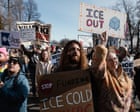
Defending democracy sounds like a job for lawyers or election officials until federal agents show up on your street. In Minnesota, that abstract concept became a brutal reality during Operation Metro Surge. The Trump administration’s heavy-handed federal deployment left two local residents dead—poet Renee Good and intensive care nurse Alex Pretti—and shattered any illusions of safety.
Now, the grassroots networks built to protect immigrants from federal overreach are pivoting toward a different battleground. They aren't just watching for Immigration and Customs Enforcement (ICE) vans anymore. They are training their neighborhoods to protect the upcoming 2026 midterm elections.
The strategy that once kept kids safe on their way to school is transforming into a block-by-block defense of the ballot box. This isn't about lofty political theory. It's a practical, gritty response to a weaponized Department of Justice and the very real threat of election interference.
The Evolution from ICE Watch to Election Guard
For years, groups like Unidos MN and its Monarca project trained everyday citizens to document federal immigration enforcement. Neighbors learned how to spot unmarked vehicles, record interactions safely, and run rapid-response phone trees. When thousands of federal agents flooded Minnesota earlier this year, these networks kept communities functioning.
But a network capable of tracking ICE is uniquely positioned to handle modern election threats. Organizers realized that the same tactics used to monitor immigration raids apply directly to voter intimidation and poll disruptions.
The transition is already underway in church basements and community centers across Minnesota. Organizers are running democracy defense trainings with a clear message: you can't rely solely on institutional guardrails anymore. The federal government is increasingly filled with loyalists, making grassroots oversight essential.
What Grassroots Democracy Defense Actually Looks Like
Forget abstract debates about constitutional law. On the ground, defending the vote involves direct, local action. Organizers are breaking down their strategy into actionable pieces that any regular person can handle.
- Van pools and transit networks: Ensuring elderly or vulnerable neighbors have guaranteed rides to and from polling stations.
- Poll monitoring for federal overreach: Stationing trained observers near voting sites to document any unauthorized presence of immigration or law enforcement agents aiming to intimidate newly naturalized citizens.
- Sign-ups for election judges: Filling local election worker slots with independent community members to guarantee accurate, untampered ballot counts.
- Door-to-door verification: Knocking on doors block by block to verify voter registration status and counteract state-level purging efforts.
A major driver for this pivot is the deep-seated fear felt by newly naturalized citizens. Many worry that casting a ballot could draw federal scrutiny to their undocumented family members. By placing trusted neighbors at local polling locations, organizers hope to build a human shield against fear.
The Criminalization of Everyday Organizing
This pivot isn't happening in a vacuum. The federal government has aggressively escalated its tactics against activists, attempting to reframe standard community organizing as criminal behavior.
In Minnesota, federal prosecutors recently leveled conspiracy charges against 15 anti-ICE activists. The indictments list routine operational security measures—like using the encrypted messaging app Signal, collecting phones before meetings, and documenting federal vehicles in public—as evidence of a criminal plot.
This pattern stretches far beyond Minnesota. Just days ago in Texas, eight anti-ICE protesters at the Prairieland detention facility received staggering sentences ranging from 50 to 100 years in prison. Prosecutors successfully applied a federal terrorism enhancement by tying the defendants to a vague, unorganized "antifa" label.
The Department of Justice is using these draconian sentences as messaging tools. The goal is to create a chilling effect, making ordinary citizens think twice before organizing.
"The Department of Justice is attempting to intimidate critics and punish those who organize to expose the administration's abuses," says Jess Marsden, counsel at Protect Democracy. "They know how much easier it is to tilt the electoral playing field if people stay home and stay quiet."
Taking Responsibility for Your Local Block
The scale of the threat to the 2026 midterms can feel paralyzing. Organizers stress that nobody needs to be a perfect political leader to make a difference. The focus is entirely on localized accountability.
If you want to protect the upcoming vote, the most effective step is to narrow your vision to your immediate surroundings. Take responsibility for a single floor in an apartment building, a suburban cul-de-sac, or a city block.
Start by talking to your immediate neighbors. Confirm who is registered to vote, identify who needs assistance getting to the polls, and establish a shared communication chain. When federal power is weaponized against dissent, an organized block of neighbors who actually know each other is the strongest defense available.