The ice in Greenland does not care about your lithium-ion battery. It does not care about the sleek, silent hum of an electric vehicle accelerating on a highway in California, nor does it care about the guidance systems of missiles locking onto targets halfway across the globe. The ice simply exists. It is heavy, indifferent, and ancient.
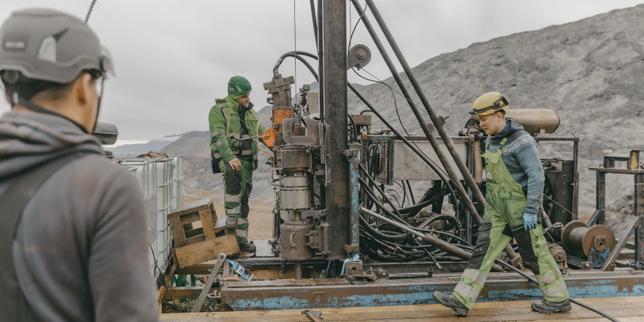
But up here, near the Kvanefjeld plateau, the silence is breaking.
For years, the talk of the Arctic was defined by the clatter of boots and the posturing of flags. The superpowers—the United States, China, Russia—eyed this frozen territory like a poker player staring at a hidden hand. They saw strategic value in the geographic position. They saw shipping lanes opening as the permafrost wept into the ocean. It was a narrative of military chess, of bases and runways, of sovereignty and territorial disputes.
That was the old story. It was loud, chaotic, and ultimately, a distraction.
Now, the real story is playing out in lower Manhattan, in the quiet, climate-controlled offices of investment firms and private equity boardrooms. The flags have been replaced by spreadsheets. The generals have been replaced by analysts. The military conquest we were told to fear has arrived, but it isn’t wearing a uniform. It is wearing a tailored suit.
Consider the reality of the rare earth elements—neodymium, praseodymium, dysprosium. These aren't just rocks. They are the vitamins of our digital existence. Without them, the motors in your car don’t spin. The wind turbines don't generate electricity efficiently. The speakers in your phone don't vibrate. We have collectively decided that to save the climate, we must burn through the finite resources of the earth at an unprecedented rate. And Greenland, holding some of the largest, most concentrated deposits of these elements in the world, has become the prize.
Malik, a local hunter who has spent his winters navigating the fjords near Narsaq, watches the change with a quiet, devastating clarity. He doesn't read the quarterly reports. He doesn't look at the projected valuations of mining concerns that promise to transform the town. He just knows that the water is changing. He knows that the dust from the exploratory drilling coats the snow in a way that feels wrong.
When he talks, it is not about "supply chains" or "critical mineral independence." It is about the seal meat, the taste of the sea, the generational rhythm of a life tied to the land. But he is a ghost in the machine. To the financiers thousands of miles away, Malik is a variable that has already been solved for.
The shift from military to corporate interest is a masterclass in obfuscation. If a foreign navy were to sail into the fjords and set up a base, the world would scream. There would be protests. There would be treaties. But when a publicly traded mining company—backed by global capital, sanctioned by local governance desperate for economic autonomy, and wrapped in the rhetoric of "green transition"—sends in the drills?
Nobody screams. They just buy stock.
This is the beauty of the new colonization. It is silent. It is framed as progress. When mining corporations explain the necessity of their operations, they use words like "sustainability" and "innovation." They promise jobs. They promise to move the world away from fossil fuels. It is a compelling argument. Who could argue against saving the planet?
But look closer at the math.
Extraction is a violent act, regardless of the cause. To pull these elements from the ground in Greenland requires tearing into a pristine ecosystem that has remained untouched for millennia. It involves radioactive tailings. It involves chemical leaching. The "green" technology we build with these materials will be clean, certainly. But the cost is paid in full upfront, in a currency of soil and water, in the quiet, isolated corners of the world that cannot fight back.
We have moved into an era where capital has more power than a standing army.
The military interests of the past failed because they were too rigid. They tried to impose order from the top down. Wall Street succeeds because it flows like water, seeping into the cracks of the local economy, finding the pressure points, and turning the desire for independence into a dependency on global markets. The Greenlandic people want prosperity. They want a future that doesn't rely solely on fishing. And so, the private equity firms offer them a bargain. It is a devil’s bargain, of course, but it is presented with the polished smile of a development partner.
The transition is nearly complete. The strategic importance of Greenland has been successfully commodified. We no longer need to worry about foreign military bases because the land is already being occupied by extraction leases and exploration permits. The ownership is shifting, incrementally, from the sovereignty of a nation to the portfolio of an investor.
This is the hidden cost of our convenience. Every time we click "buy" on a piece of technology, we are casting a vote for the industrialization of the Arctic. We are telling the market that the silence of the North is a resource waiting to be mined, crushed, and shipped. We are, in effect, the silent partners in this operation.
Standing on the edge of the plateau, looking out over the expanse of ice that stretches toward the horizon, the scale of the error becomes clear. We believe we are masters of our destiny because we have figured out how to extract the ingredients for our future. We think we are making the world better.
But out here, in the cold, clear air, the wind doesn't care about our green energy goals. The ice continues to melt, not because of the lack of rare earth magnets, but because of the fundamental, unyielding hunger that drives us to consume everything we touch.
The drills are starting to turn. The capital is flowing. And for the first time in history, the conquest of Greenland is not happening with an invasion force.
It is happening with a signature on a contract, executed in a glass tower, while the world looks away, waiting for the delivery of the next shiny object. The silence is not gone, but it is dying, replaced by the relentless, grinding hum of a future that is being manufactured from the ruins of the past.