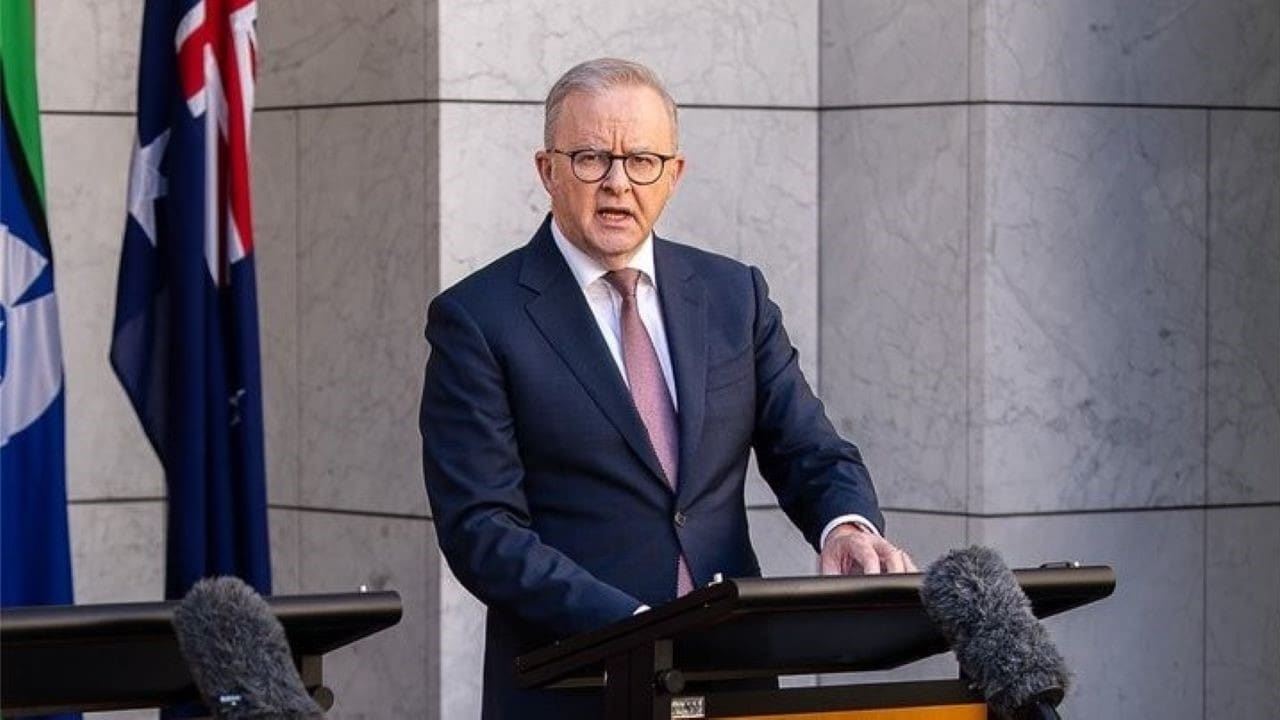
Australia isn't playing nice with Silicon Valley anymore. The days of polite requests and "voluntary" bargaining are officially dead. On Tuesday, the Albanese government dropped a bombshell that should make executives at Meta, Google, and TikTok very nervous. They’ve introduced draft legislation for a News Bargaining Incentive—a 2.25% revenue levy designed to squeeze cash out of tech giants if they don't play ball with local newsrooms.
It’s a blunt instrument. If you're a platform with a "significant" presence in Australia and your local revenue tops A$250 million, you have two choices. You either sign commercial deals to pay for the news content that populates your feeds, or you hand over a chunk of your gross revenue to the government. This isn't just about fairness; it’s a desperate, calculated move to keep Australian journalism from bleeding out. Meanwhile, you can read similar events here: The Ghost in the Targeting Reticle.
How the News Bargaining Incentive actually works
The logic is simple. Tech companies profit from the "hard work of journalism" that keeps users scrolling. Communication Minister Anika Wells didn't mince words, stating that if platforms decide not to do deals, they’ll simply end up paying more.
Here is the breakdown of how the levy operates: To explore the full picture, we recommend the excellent article by Wired.
- The Threshold: It targets platforms with local revenue exceeding A$250 million. This captures the usual suspects—Google and Meta—but notably pulls TikTok into the crosshairs for the first time.
- The Rate: A 2.25% tax on Australian revenue.
- The "Escape Valve": Platforms get offsets for every deal they strike with local news organizations. If they sign enough deals, the tax effectively disappears.
- The Beneficiaries: Money collected via the levy doesn't just sit in a government vault. It gets redistributed to news outlets based on the number of journalists they actually employ.
The government expects this to raise between A$200 million and A$250 million a year. That’s roughly the same amount the previous 2021 News Media Bargaining Code generated at its peak before Meta decided to start walking away from deals in 2024.
Why the old system broke
You might remember the 2021 drama. Australia passed the first version of this law, Meta freaked out and blocked all news in Australia for a week, and then everyone eventually settled. For a while, it worked. Roughly A$200 million flowed into newsrooms annually.
But then the tech giants got smart. They realized that "designation"—the process where the government forces a company into arbitration—was a slow, bureaucratic nightmare that the government was hesitant to trigger for fear of trade retaliation. Meta simply let its deals expire in 2024 and told the government it wasn't interested in news anymore.
This new 2.25% tax is the "v2.0" fix. It’s automatic. It doesn't require a long legal battle to "designate" a platform. It sets a default price for non-compliance. You're either in the tent making deals, or you're outside the tent paying the taxman.
The Big Tech backlash
Unsurprisingly, the response from Menlo Park and Mountain View has been ice-cold. Meta has already labeled the proposal a "digital services tax" in disguise. Their argument is that they don't "take" news; publishers post it voluntarily for the traffic. They claim this creates a "subsidy scheme" that makes the news industry dependent on government handouts.
Google isn't happy either. They’ve pointed out that they already have numerous commercial agreements in place and argue the tax is "arbitrary." They’re particularly annoyed that competitors like Microsoft (Bing), Snapchat, and OpenAI seem to have dodged the bullet for now.
There's also the "Trump Factor." With Donald Trump back in the White House, the U.S. has been vocal about "discriminatory" taxes on American firms. Prime Minister Anthony Albanese brushed this off on Tuesday, insisting Australia is a sovereign nation acting in its own national interest. Whether that holds up when hit with potential retaliatory tariffs is the multi-billion dollar question.
What this means for the future of your feed
If Meta and TikTok decide the 2.25% tax is too high to swallow, and they still refuse to pay for news, we might see "News Ban 2.0." Meta has already shown they’re willing to rip news out of Facebook and Instagram entirely to avoid paying. If they do that, your social feeds will become a vacuum of memes and influencer content, stripped of any verified local reporting.
But the government is betting that the tax is high enough to make deals look like the cheaper option. They’ve even added a "sweetener" for the platforms: they get bigger tax offsets for deals made with smaller, regional news outlets. It’s a clear attempt to save the local papers that are dying the fastest.
Next steps for the media landscape
This draft legislation is set to hit Parliament by July 2, 2026. If passed, the levy starts on July 1, 2026, for the 2025-26 financial year.
For news organizations, the message is clear: start counting your journalists. Your slice of the pie depends on your headcount. For Big Tech, the clock is ticking. They have a few months to decide if they want to negotiate or just add a new line item to their tax bill. Expect a massive lobbying blitz in Canberra over the next eight weeks as Meta and Google try to water down the definitions of "revenue" and "significant service."
Australia is once again the world's laboratory for digital regulation. If this works, don't be surprised if Canada, the UK, and Europe follow suit with their own revenue-based "incentives."