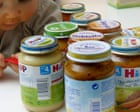
Parents expect the products on supermarket shelves to be safe. That's the baseline. When you buy a jar of baby food, you're buying trust. But the recent discovery of rat poison in baby food jars in Austria has shattered that trust for many families. This isn't just a minor manufacturing hiccup. It's a terrifying security breach in the food supply chain that happened right after a major product recall.
The situation centers on a specific recall involving baby food jars that were supposed to be removed from the market. Instead, authorities found that some of these jars—specifically those already identified as problematic—contained traces of brodifacoum. That’s a highly potent anticoagulant used in rodenticides. It doesn't belong anywhere near a kitchen, let alone a nursery.
If you're a parent, this is your worst nightmare. You do everything right. You check the labels. You follow the news. Yet, the system meant to protect your child failed. This incident reveals a massive gap between a company announcing a recall and the actual physical removal of dangerous goods from the shelf.
How Rat Poison Ended Up in a Baby Food Jar
We have to look at the mechanics of how this happened. In the Austrian case, the contamination wasn't an accidental spill at a factory. Evidence suggests intentional tampering. When a product is recalled, it’s usually because of a quality issue—maybe a piece of glass or a bacterial spike. But rat poison? That points to a different level of malice or gross negligence in the disposal process.
Local investigators in Upper Austria and the Federal Office for Food Safety (BAES) have been scrambling to trace the timeline. The contaminated jars were part of a batch that should have been long gone. Somehow, they stayed in the rotation or were reintroduced. This isn't just a "whoops" moment. It's a failure of the "last mile" of food safety. Retailers and distributors often lack the rigorous oversight needed to ensure 100% compliance with recall orders.
You’ve got to wonder how many hands touch these jars before they reach your cart. From the manufacturer to the warehouse, then the delivery truck, and finally the stock clerk. If the communication breaks down at any one of these points, a toxic product stays in reach of a toddler.
The Physical Danger of Brodifacoum Exposure
Don't let the technical names fool you. Brodifacoum is nasty stuff. It works by preventing blood from clotting. In rodents, it causes internal bleeding. In a human infant, the results can be catastrophic even in small doses.
Symptoms don't always show up immediately. It can take days for the effects on vitamin K levels to manifest. You might see:
- Unexplained bruising or small red spots on the skin
- Bleeding gums or nosebleeds
- Blood in the urine or stool
- Extreme lethargy or paleness
Medical experts in Austria have urged parents who suspect their children might have consumed the tainted food to seek immediate hospital care. Doctors can administer Vitamin K1 as an antidote, but timing is everything. The fact that we're even talking about antidotes for baby food is an indictment of the current regulatory environment.
Why Recalls Aren't Enough to Keep Kids Safe
The standard recall process is broken. Usually, a company issues a press release, the government posts a notice, and stores are told to pull the stock. But as we saw in this Austrian case, that’s a passive system. It relies on everyone doing their job perfectly.
I've seen this happen before in different industries. A "voluntary recall" sounds responsible, but it often lacks the teeth of a mandatory, government-enforced sweep. In Austria, the authorities are now looking at whether the tainted jars were placed back on shelves intentionally by someone with a grudge or a disturbed motive.
This brings up a huge vulnerability: retail security. Most grocery stores focus on preventing shoplifting, not preventing "shop-inserting." If someone can walk into a store and put a poisoned jar on a shelf, our entire concept of food safety is an illusion. We need better tamper-evident packaging. We need jars that don't just "click" when opened, but have physical barriers that are impossible to bypass without leaving obvious signs of damage.
Tracking the Specific Batch Numbers
If you're in Europe or have recently traveled there, you need the hard data. The Austrian authorities focused on specific brands and batches, primarily concentrated in the regions of Upper Austria and Salzburg.
While the name of the specific brand was initially withheld to prevent widespread panic, the recall notices eventually became specific. You should never rely on the "look" of a jar. Check the bottom. Look for the "Best Before" date and the batch code. In this instance, the contamination was linked to jars that had been flagged weeks prior for unrelated quality issues.
The lesson here? If a brand you use has any recall for any reason, stop using all products from that specific line until the investigation is totally closed. It’s better to waste five dollars on a jar of puree than to risk a trip to the emergency room.
Steps to Take if You Suspect Contamination
If you find something suspicious in a food product, don't just throw it away. You're holding evidence.
- Seal it up. Put the jar in a Ziploc bag and tape it shut.
- Document everything. Take photos of the jar, the contents, and the batch numbers.
- Contact the authorities. In the EU, you contact the national food safety agency. In the US, it’s the FDA or USDA.
- Notify the retailer. Tell the store exactly where and when you bought it. They need to check their remaining stock immediately.
Demanding Better From Food Corporations
We should be angry. The food industry generates billions in profit by marketing "pure" and "natural" products for our most vulnerable citizens. Yet, they often cheap out on the logistics of safety.
We need to push for digital tracking that automatically blocks a recalled barcode at the register. If a product is recalled, the scanner should literally refuse to process the sale. Some high-end retailers do this, but it needs to be a universal standard. We also need more transparency about how returned or recalled items are destroyed. If these jars were supposed to be destroyed but ended up back on a shelf, there was a hole in the chain of custody.
Stop buying from brands that have a history of slow responses to safety signals. Your dollar is the only thing these companies actually respect. When a company fails to secure its supply chain against rat poison, they don't deserve your business.
Check your pantry now. Don't wait for a news alert to pop up on your phone. Look at every jar of baby food you own. If the seal looks even slightly bubbled or the lid feels loose, get rid of it. Trust your gut. If something feels off about the packaging or the store where you bought it, listen to that instinct.
Food safety isn't a suggestion. It's a requirement. The situation in Austria is a wake-up call for every parent and every regulator across the globe. We have to do better than "recalling" poison after it’s already been sold.