Walk down any city street and you will see the same dance. A person stops dead in their tracks, squints at a glowing glass rectangle in their palm, bumps into a pedestrian, and mutters an apology without ever making eye contact. We are a species possessed by our screens. We have traded the physical world for a digital one, and the toll is paid in fractured attention and strained necks.
For years, Silicon Valley promised a cure. They called it augmented reality. They built bulky, terrifying goggles that made users look like deep-sea divers lost in a shopping mall. They built smart glasses that snapped photos of unsuspecting strangers, sparking immediate, justified paranoia.
They got it wrong because they focused on our eyes.
The real revolution isn't happening in front of our pupils. It is happening just above our cheekbones, whispered directly into our ear canals.
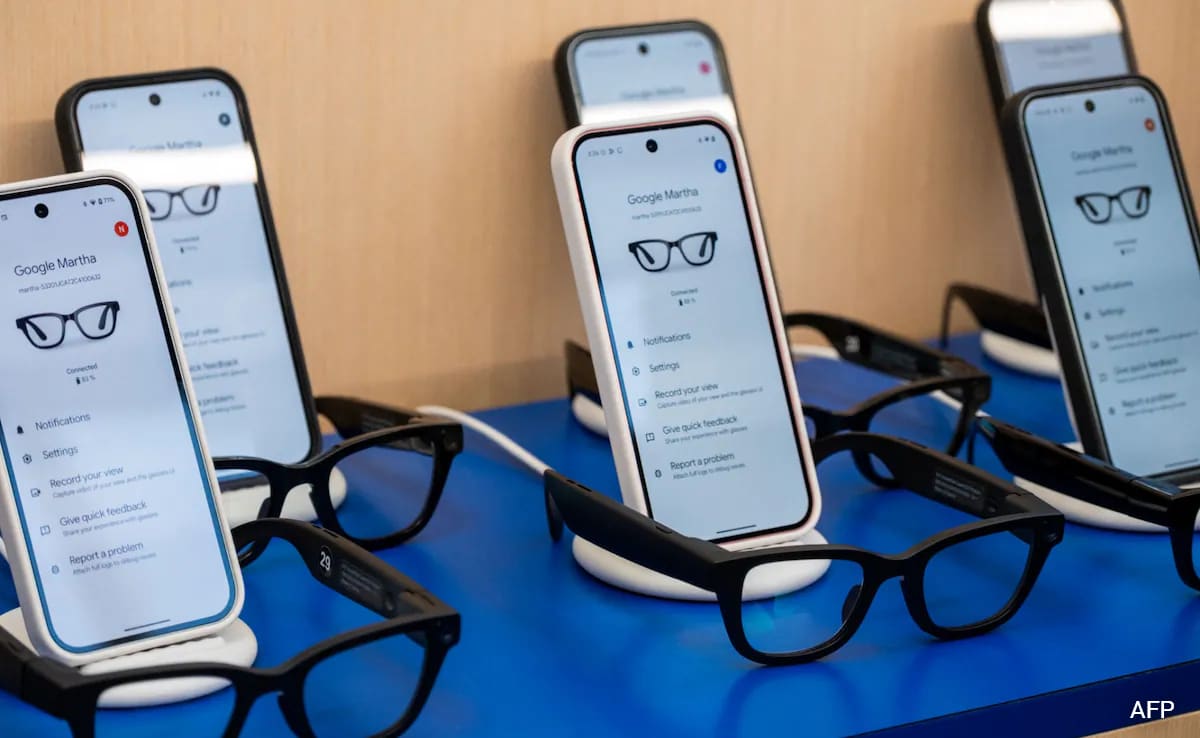
With the quiet unveiling of Google’s new audio-centric smart glasses, the tech giant hasn't just launched a product. It has fired a direct salvo at Meta’s dominant Ray-Ban smart spectacles, turning our faces into the ultimate corporate battleground. But this isn't a story about hardware specifications, battery life, or stock prices. It is a story about how we interact with reality itself, and who gets to whisper the script of our daily lives into our ears.
The Sound of Silence
Consider Sarah. She is a composite of every modern professional trying to survive the daily commute, but her experience is entirely real.
Sarah steps onto a crowded subway train. In the old days, she would pull out her phone, immediately signaling her emotional absence to the world. Now, she simply wears a pair of classic, black-rimmed spectacles. To the person standing next to her, she is just a woman looking out the window.
But Sarah is listening.
A tiny, directional speaker embedded in the stem of her glasses vibrates against her temporal bone. It tells her that her next train is delayed by seven minutes. It reads a text from her partner, asking if she can pick up milk. She taps the frame. "Tell him I'm on it," she whispers. The glasses translate her voice into data, send the text, and fall silent.
She never looked at a screen. She never broke her stride. She stayed entirely present in the physical world, even as she manipulated the digital one.
This is ambient computing. It is the concept of technology that dissolves into the background of our lives, acting as a supportive ghost rather than a demanding dictator. For the past year, Meta owned this space. Their collaboration with Ray-Ban proved that people will gladly wear technology on their faces, provided it doesn't make them look like a sci-fi extra. The Meta glasses let users take photos, stream video, and talk to an artificial intelligence assistant. They sold by the millions because they looked like normal, stylish sunglasses.
Google watched this success with a mixture of admiration and existential dread. They had been burned before. A decade ago, Google Glass became a cultural punching bag, spawning the derogatory term "Glasshole" and setting back facial technology by a generation. They learned their lesson. This time, they aren't trying to change how you see the world. They want to change how you hear it.
The Invisible Stakes
To understand why Google is risking another public failure in the eyewear market, we have to look at the underlying architecture of human attention.
When you look at a screen, your brain is forced to context-switch. You stop processing the room around you to process the pixels in front of you. This requires significant cognitive energy. Audio, however, operates on a completely different psychological wavelength. Human beings are hardwired to process ambient sound while simultaneously navigating physical space. Our ancestors tracked prey by listening to the rustle of leaves while scanning the horizon.
By stripping away the display entirely—eschewing the holographic lenses and tiny glowing projectors that make other smart glasses heavy and power-hungry—Google’s audio glasses achieve something remarkable. They weigh almost nothing. They look indistinguishable from standard eyewear.
But the simplicity is a Trojan horse.
The true battlefield between Google and Meta isn't the plastic and glass resting on your nose. It is the artificial intelligence engine running in the cloud. Meta’s glasses rely on their own AI model, which can look through the built-in camera and tell you what kind of bird is sitting on a fence post or translate a Spanish menu in real-time. Google, however, possesses something Meta can only dream of: twenty-five years of deep, institutional knowledge about human intent.
Google knows where you are going because you use their maps. They know what you want to buy because you use their search engine. They know your schedule because you use their calendar.
Imagine walking through a historic neighborhood. Meta’s glasses can tell you that the building in front of you is made of limestone. Google’s glasses, drawing from a vast ecosystem of personal data, can remind you that your grandfather used to work in that exact building in 1974, while simultaneously pointing out that a local bakery three doors down has the specific sourdough loaf you searched for last Tuesday.
That is not just assistance. That is a curated reality.
The Friction of Living in Public
Yet, this technological harmony comes with a deep, unsettling friction.
I remember the first time I tested a pair of modern smart spectacles in a crowded coffee shop. The sensation was intoxicating. I could check my email while ordering a macchiato, never breaking eye contact with the barista. I felt like a superhero.
Then, the battery died.
Suddenly, the silence was deafening. The glasses became heavy, dead plastic on my face. More importantly, I realized a cold truth: I had spent the entire morning letting an algorithm decide which parts of my environment deserved my attention. I hadn't noticed the song playing on the coffee shop radio. I hadn't noticed the rain starting to tap against the window. I had outsourced my situational awareness to a corporation in California.
There is a vulnerability in letting a device sit so close to our sensory organs. When a notification pops up on your phone, you can choose to look away. You can flip the phone face down. You can put it in another room. But when a notification is whispered directly into your ear, by a device attached to your face, the barrier between your internal thoughts and the external digital world begins to blur.
We must ask ourselves what happens when these audio streams are inevitably monetized.
Today, Google promises a pure, helpful assistant. But Google is, at its core, an advertising company. What happens when the ambient audio description of your walk through the park includes a subtle, AI-generated suggestion to stop at the corporate coffee chain on the corner? What happens when the voice in your ear isn't just helping you navigate your day, but gently nudging your behavior toward profitable outcomes?
Meta faces the exact same questions. They are a company built on social connection and data harvesting. If you wear Meta’s glasses, you are giving them access to your literal point of view. If you wear Google’s glasses, you are giving them access to your auditory environment. Choose your supervisor.
The Anatomy of the Device
Stripping away the marketing fluff reveals the engineering trade-offs that define this new era of competition. Google’s approach relies heavily on micro-acoustics.
Unlike traditional earbuds, which seal the ear canal and isolate the user from outside sounds, these audio glasses use open-ear directional speakers. The sound waves are tightly focused and aimed precisely at the eardrum. If you are standing twelve inches away from someone wearing them, you won't hear a thing. But the wearer experiences a rich, clear audio field that seems to originate from inside their own head.
This design solves a massive societal problem: the isolation of the headphone generation. Millions of people walk through the world with noise-canceling earbuds permanently wedged into their skulls. They are deaf to the honking horns, the shouts of warning, the casual greetings of neighbors. They have checked out of the civic space. Audio glasses leave the ear canal completely unobstructed. You can hear the digital assistant, but you can also hear the cyclist ringing their bell behind you.
The hardware itself is a marvel of miniaturization. The temples of the glasses house:
- Ultra-thin lithium-ion batteries that wrap around the ear
- Dual beam-forming microphones designed to isolate the wearer's voice from wind noise
- A low-power coprocessor that handles local voice recognition without needing a constant internet connection
- Capacitive touch sensors on the side of the frame for manual volume and playback control
But the most critical component is the lack of a camera. By omitting the camera on their base audio model, Google has made a deliberate strategic choice. They are betting that users are tired of the privacy anxieties that come with lenses pointed at the public. They want to make a device that can be worn in locker rooms, boardrooms, and bedrooms without anyone flinching. It is a play for universal social acceptance.
The Shifting Landscape
This corporate rivalry will not be settled by a single product launch. We are witnessing the opening moves of a decade-long transition away from the smartphone.
The phone is a bottleneck. It requires a hand, a pocket, and a dedicated gaze. Glass and audio require none of these things. As artificial intelligence models become faster, more intuitive, and deeply personalized, the demand for a frictionless interface will grow. The company that commands the face commands the gateway to that intelligence.
Meta has a head start. They have the brand recognition of Ray-Ban, and they have proven that their hardware is fashionable enough for everyday wear. Google has the data gravity. They possess the search index, the maps, the enterprise tools, and the operating system infrastructure that runs half the world's phones.
It is easy to get caught up in the corporate drama of it all—to root for one tech titan over another as if they were sports teams. But the real consequence of this battle will be felt in the quiet moments of our lives.
Imagine a father wearing these glasses at his daughter's birthday party. He isn't holding up a glowing rectangle, viewing his child's life through a six-inch screen. He is fully there, laughing, clanking glasses, hugging his family. But as his daughter blows out the candles, a voice in his ear whispers: "Recording audio memo. Stored to family archive."
Is that a beautiful preservation of a fleeting memory, or is it the final commodification of human experience? Is it a tool that frees us from our screens, or a leash that ensures we never truly escape the digital grid?
The technology is no longer coming; it is here. It is sitting on our noses, weighing less than two ounces, blending perfectly with our clothes. The screens are fading into the background, replaced by an invisible acoustic layer draped over the physical world. We wanted a way to look up from our phones, and the technology industry answered our prayer.
Now, we just have to live with the voices they put in our heads.


