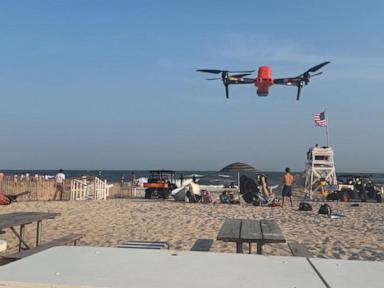
Local governments along the East Coast are pouring taxpayer dollars into the latest high-tech security blanket: shark-spotting drones. The narrative pitched to the public is seductive. A fleet of sleek quadcopters buzzes over the surf line, artificial intelligence scans the water, and lifeguards seamlessly pull swimmers from harm's way the moment a fin breaks the surface. It sounds like a perfect marriage of technology and public safety.
It is an expensive illusion.
Having analyzed coastal tech deployments for over a decade, I have watched municipalities routinely burn budgets on shiny hardware to solve PR problems rather than actual safety risks. Drone shark patrols are classic security theater. They offer the appearance of safety while introducing a cascade of technical limitations, false positives, and misallocated resources. We are spending millions to monitor a threat that barely exists, using tools that are fundamentally unsuited for the job.
The Physics of Water Defeats the Tech
The central premise of the drone patrol is that an aerial view provides total clarity. It does not.
A drone camera is bound by the laws of optical physics. Sunlight hitting the ocean surface creates intense glare. On anything but a perfectly flat, glass-like day, wind-chop distorts the view entirely. Furthermore, East Coast waters are notorious for high turbidity. Runoff, plankton blooms, and suspended sediment mean that visibility just past the breaking waves is often limited to a few feet, if not inches.
A drone flying at 100 feet cannot see a nine-foot sandbar shark cruising three feet below a turbid surface. It sees brown-green soup. To actually spot marine life consistently in anything less than pristine tropical water, drones must fly low, slow, and in tight grids.
This reality destroys the scale argument. A standard commercial drone battery lasts about 25 to 30 minutes. When you factor in the transit time from the launch pad to the search area and the mandatory safety buffer to return home, a pilot gets maybe 15 minutes of actual scanning time per flight. To monitor just a single mile of coastline continuously for an eight-hour beach shift requires an army of certified pilots, dozens of lithium-polymer batteries, and a massive logistical footprint.
The AI Misidentification Nightmare
To bypass the limitation of human fatigue, agencies are rushing to deploy automated object-recognition software. Computer vision algorithms are trained to spot the distinct silhouette of a shark and trigger an automated alert.
Here is what the sales pitches hide: the ocean is full of silhouettes.
In real-world deployments, these systems are plagued by false positives. A dark patch of seaweed, a grouping of baitfish, a harmless skate, a dolphin, or even a discarded floating tarp can trigger an anomaly alert. When an algorithm flags a potential shark near a crowded swimming zone, lifeguards have no choice but to act. They clear the beach.
[Drone Video Feed] ➔ [AI Object Detection] ➔ [Shadow/Seaweed Flagged] ➔ [False Alarm Triggered] ➔ [Beach Evacuation & Panic]
Consistently evacuating hundreds of swimmers because a computer mistook a bunch of kelp for a bull shark creates two distinct problems:
- The Boy Who Cried Wolf Effect: Guard forces and the public quickly develop alarm fatigue. When a real threat eventually materializes, the urgency to respond is gone.
- Economic Whiplash: Coastal economies rely heavily on beach tourism. Repeatedly shutting down premium beaches based on erratic drone data inflicts immediate financial pain on local businesses for zero measurable safety gain.
Dismantling the Risk Premise
We must address the absurdity of the underlying premise. The media treats shark encounters as an escalating crisis demanding a technological warfare response. The data from the International Shark Attack File (ISAF) maintained by the University of Florida consistently tells a different story.
The annual odds of being killed by a shark are roughly 1 in 4.3 million. You are statistically more likely to be struck by lightning, killed by a falling coconut, or fatally injured by a collapsing sand hole on the very beach you are visiting.
Investing six-figure sums into drone infrastructure to mitigate a microscopic risk is bad math. If a town has $150,000 to spend on beach safety, putting that money into drone hardware instead of hiring more human lifeguards, improving rip current education, or purchasing automated external defibrillators (AEDs) is a public policy failure. Rip currents kill dozens of swimmers on the East Coast every single year. Sharks rarely kill anyone. Yet, a drone program makes for a much better press conference than a new set of rip current warning flags.
The True Cost of Operation
Municipalities often buy into these programs based on the initial hardware invoice. A high-end enterprise drone outfitted with a thermal camera and a loudspeaker might cost $10,000 to $15,000. That is a fraction of the true operational cost.
| Expense Category | Hidden Requirements | Long-Term Cost Impact |
|---|---|---|
| Personnel | FAA Part 107 certified pilots required for legal commercial flight. | High hourly wages or dedicated full-time salaries. |
| Liability Insurance | Operating heavy multi-rotors over packed public beaches. | Massive premium hikes for municipal insurance policies. |
| Maintenance | Corrosive salt air destroys electronics, bearings, and optics. | Constant component replacement and hardware turnover. |
When a town realizes the sheer volume of bureaucratic red tape and maintenance required to keep these systems airborne, the drones end up sitting in a closet, gathering dust, while the local politicians move on to the next tech trend.
Redirecting the Strategy
If the goal is genuine ocean safety rather than positive press coverage, the focus needs to shift away from aerial surveillance entirely.
Stop trying to spot individual sharks from the sky. Instead, invest in real-time acoustic telemetry arrays. Organizations like the Atlantic White Shark Conservancy have shown that acoustic tagging provides actual, actionable data on apex predator movements. When a tagged shark passes a receiver buoy, the system logs it. This data tracks long-term patterns, allowing scientists to understand when and why large predators frequent specific coastal zones.
Combine this data with basic biological literacy. Teach the public that the ocean is a wild ecosystem, not a swimming pool. Do not swim at dawn or dusk. Do not swim near large schools of baitfish or where seals are congregating. Do not swim near river mouths or after heavy rains when water clarity drops.
These simple, zero-cost behavioral adjustments do infinitely more to prevent negative marine interactions than a buzzing plastic gadget flying overhead ever will. Ground the drones. Fire up the public education campaigns. Spend the remaining millions on the lifeguards sitting on the stands who actually save lives every day.