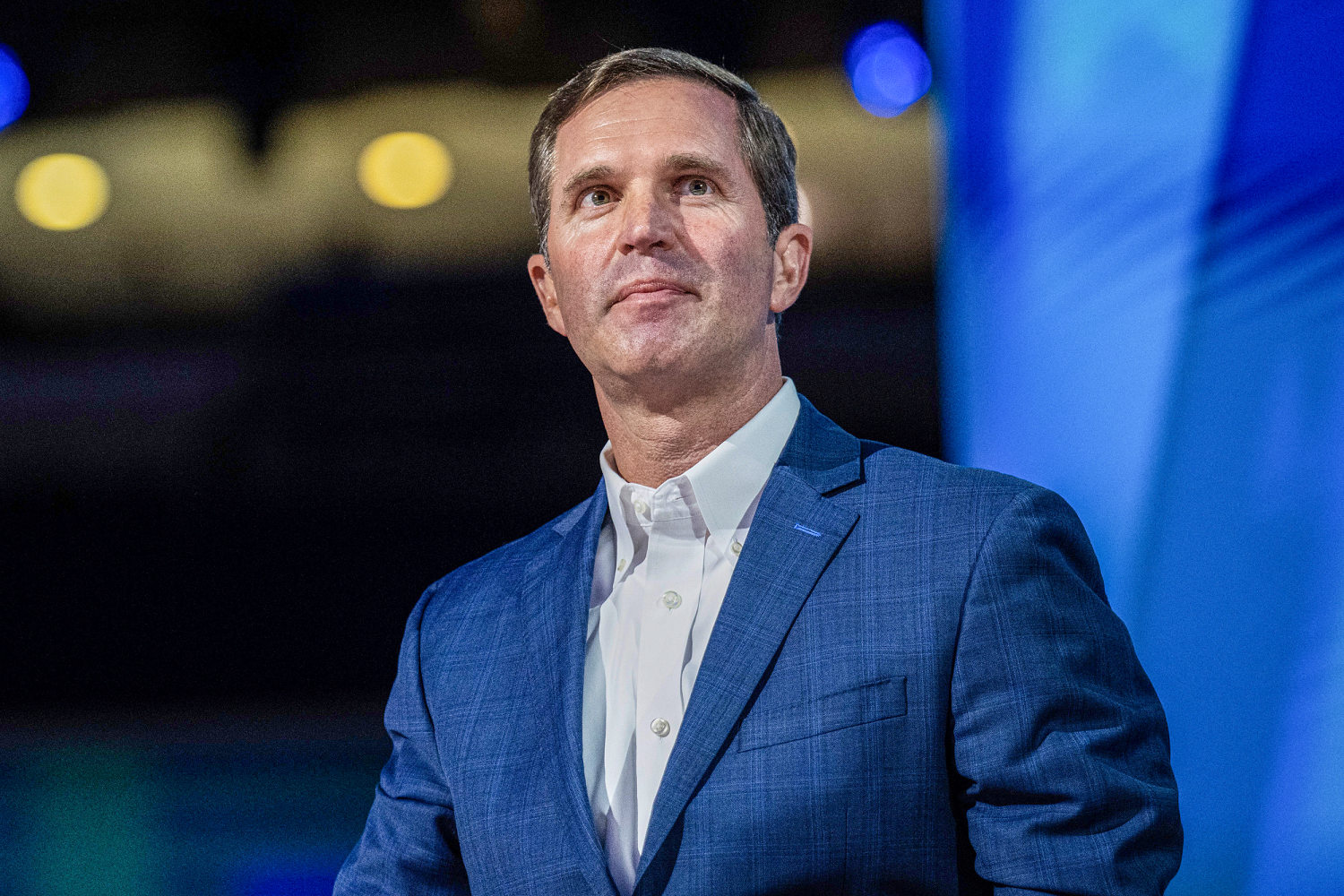
Kentucky Governor Andy Beshear recently declared that Texas is in play for Democrats following Attorney General Ken Paxton’s aggressive Republican primary victories. This claim relies on the theory that far-right victories alienate moderate suburbanites. However, a hard look at voting data, demographic trends, and campaign finance reveals that this political shift remains a distant prospect. The structural advantages built by the Texas GOP over three decades continue to outpace disorganized Democratic organizing efforts.
The political calculus behind the national optimism is easy to track. When Ken Paxton successfully weaponized his impeachment acquittal to systematically purge moderate House Republicans in the primaries, it exposed a deep rift within the state's dominant party. To outside observers, an increasingly ideological state party looks vulnerable. If the state Republican party pushes too far to the right on social issues and institutional governance, the theory goes, the rapidly growing suburbs of Dallas, Houston, and Austin will inevitably push back.
It is a comforting narrative for national strategists. It is also flawed.
The Mathematical Wall Facing the Democrats
To understand why the state remains out of reach, one must look at the sheer volume of votes required to flip statewide office. The gap is narrowing, but it is narrowing at a glacial pace.
In 2018, Beto O'Rourke ran a historically well-funded, high-energy campaign against Senator Ted Cruz. He lost by roughly 215,000 votes. Four years later, despite massive population growth and historic spending, the margin in the gubernatorial race expanded again, with Governor Greg Abbott defeating O'Rourke by nearly 900,000 votes.
Populations are growing, but registration patterns are not shifting in a uniform direction. The influx of new residents moving for corporate relocations is not a monolith of progressive voters. Many are conservative-leaning professionals fleeing high-tax states, attracted precisely by the regulatory environment that the Texas GOP has cultivated.
Furthermore, the state's geographic vastness acts as a natural firewall for the incumbent party. Texas contains 254 counties. Winning requires more than just running up the score in Harris or Dallas County. It requires mitigating losses in the vast rural stretches where Republicans routinely capture 70% to 80% of the vote. In these areas, Democratic infrastructure does not just lag; in many counties, it is completely nonexistent.
The Suburbs Are Not a Monolith
The core of the argument presented by national figures rests on the shifting allegiances of suburban voters in the "Texas Triangle" formed by Dallas-Fort Worth, Houston, and Austin. Places like Collin County and Denton County, long the bedrock of conservative majorities, have undeniably grown more competitive.
Yet, assuming these voters will defect en masse because of a primary purge misunderstands suburban conservatism.
Suburban voters in these high-growth zones prioritize local economic indicators over state-level judicial drama. They care about property tax relief, corporate job creation, and the funding of local school districts. While the ideological rhetoric coming from Austin may cause discomfort in corporate boardrooms, the tangible policy outcomes—namely, the lack of a state income tax and a highly favorable business climate—keep these voters anchored to the Republican column when general elections arrive.
Texas Gubernatorial Election Margins (Recent History)
2014: Abbott +20.4%
2018: Abbott +13.3%
2022: Abbott +11.0%
Even as the margins contract slightly, the absolute floor for statewide Republicans remains remarkably secure. A double-digit victory margin in a massive state during a challenging national cycle demonstrates a structural resilience that political rhetoric cannot easily erode.
The Hispanic Shift and the Rio Grande Valley
Perhaps the most significant counter-argument to the idea of an imminent political flip is the ongoing realignment in South Texas. For generations, the Rio Grande Valley was an untouchable stronghold for the Democratic party. That reality dissolved over the last three election cycles.
Counties like Zapata, Starr, and Cameron have seen historic swings toward the Republican party. The reasons are economic and cultural rather than purely ideological.
- Energy and Law Enforcement Economy: A vast percentage of families in South Texas rely directly on the oil and gas sector or employment with federal and state law enforcement agencies like Customs and Border Protection. Democratic policies targeting fossil fuels or advocating for sweeping border policy overhauls threaten the literal livelihood of these communities.
- Cultural Conservatism: The region is heavily Catholic, family-oriented, and socially conservative. The national party's focus on progressive cultural issues often alienates these voters, making the populist messaging of the modern GOP far more appealing than it was a decade ago.
- Active Recruitment: While state national organizations treated the border as a safe zone that required little investment, Republicans opened permanent community centers, ran localized advertising, and recruited local candidates who fit the demographics of the districts.
This shift in South Texas effectively offsets losses Republicans are experiencing in the inner-ring suburbs of major metro areas. If the border region continues to trend red or even remains highly competitive, the path to a statewide victory for any challenger becomes mathematically impossible.
The Illusion of the Primary Backlash
The idea that Ken Paxton's primary victories will trigger a moderate revolt assumes that voters view state legislative primaries through a national lens. In reality, primary voters represent a fraction of the general election electorate.
The unseating of moderate House members was driven by specific, localized issues, most notably the push for school vouchers and retaliation for the impeachment vote. When the general election arrives, the choice narrows to a binary partisan decision. History shows that moderate Republicans dissatisfied with the hard-right turn of their party are far more likely to stay home than to cross the aisle and vote for a challenger.
An abstention hurts an incumbent, but it does not provide the net-two-vote swing that a direct party defection offers. Without a massive, well-funded apparatus capable of identifying these disaffected voters and giving them a compelling, localized reason to vote for the alternative, the status quo remains entrenched.
Infrastructure Can Not Be Imported
National figures frequently comment on the state's political future without investing in the long-term infrastructure required to change it. Winning a statewide race requires a permanent, year-round operation that handles voter registration, tracking, and localized messaging.
The current strategy relies heavily on parachuting high-profile candidates into major media markets during election years, spending tens of millions of dollars on television advertising, and then packing up when the race concludes. This approach fails to build sustainable local parties.
Meanwhile, the Texas Republican apparatus operates continuously. It possesses a sophisticated data network, deep financial backing from state-based energy and tech billionaires, and a clear, unified message that connects local economic success with state-level governance. They do not need to introduce themselves to the voters every two years; they are already part of the community fabric.
Until a challenger builds a comparable, permanent ground operation that functions in the off-years and actively contests school boards, county commission seats, and rural legislative districts, declarations about the state being up for grabs will remain nothing more than fundraising rhetoric designed for an out-of-state audience. The reality on the ground is dictated by organization, cash, and structural design, all of which remain firmly controlled by the incumbents in Austin.