The ink smells of pine soot and old water. It is a sharp, medicinal scent that clings to the back of the throat long before the black liquid even touches the paper. On a wooden desk in a quiet office in Beijing, a man dips a wolf-hair brush into a stone inkstone. His wrist is perfectly level. His breathing slows.
To an outsider, this looks like an artist lost in a moment of solitary creation. It is not. This is a political act.
In China, the distance between an academic lecture hall and the highest seats of state power is measured not in miles, but in strokes of a brush. While Western political systems rely on the legalistic precision of drafted text and televised debates, the Chinese political structure communicates through an ancient, silent code: calligraphy. It is a visual language where the tilt of a radical or the pressure applied to a downstroke can signal a promotion, a shift in ideological doctrine, or the rise of a new faction within the state.
When we look at the history of modern China, we often focus on the economic numbers, the infrastructure projects, and the military parades. We miss the ink. By tracking the path of the brush from elite universities to the halls of government, we can decode a hidden system of authority that has survived emperors, revolutions, and the digital age.
The Weight of the Horizontal Stroke
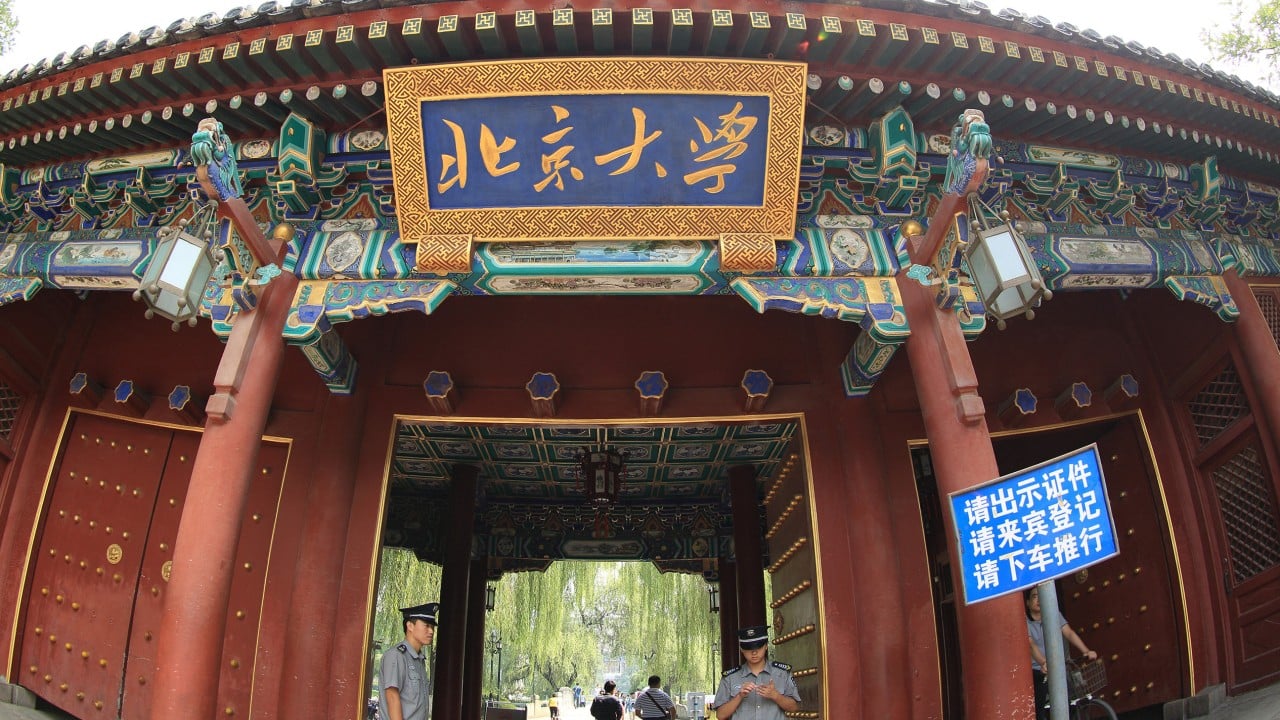
Consider a hypothetical student named Zhou. He is twenty-one, brilliant, and sitting in a lecture hall at Peking University. He is studying public administration, memorizing economic policies, and preparing for the grueling civil service examinations. But every Tuesday evening, Zhou sits in a small room with twenty other students, practicing the Heng—the basic horizontal stroke.
His instructor walks behind him, occasionally tapping Zhou’s elbow to correct his posture.
"The stroke must have a bone," the instructor mutters. "Without bone, it is just grease."
This is not a hobby. For Zhou, and for thousands of ambitious youth across China’s premier academic institutions, mastering this art is a pragmatic career move. They are engaging with a tradition that dates back to the Han Dynasty, where the imperial examinations evaluated a candidate’s moral character based entirely on their handwriting. The logic was simple: if your mind is chaotic, your brushwork will be chaotic. If you cannot control the ink, you cannot govern a province.
Though the imperial exams are gone, the underlying philosophy remains entirely intact. The modern Chinese Communist Party utilizes universities as the primary training grounds for its bureaucratic elite. Within these institutions, calligraphy clubs and academic departments are not merely preserving culture; they are teaching the physical discipline of obedience and alignment.
When a top-tier university invites a senior government official to pen an inscription for a new library or a research center, it is not a casual ribbon-cutting gesture. It is a mutual validation. The university gains political protection and prestige; the official demonstrates their cultural legitimacy and intellectual weight. The inscription, carved into granite or hung in a gilded frame, becomes a permanent monument to a specific political alliance.
Reading Between the Characters
The true power of this system lies in its ambiguity. In a political landscape where explicit dissent is impossible and explicit praise can feel hollow, calligraphy offers a nuanced vocabulary for the initiated.
Take, for instance, the stylistic choices of China's leaders.
Mao Zedong’s calligraphy was wild, untamed, and deeply personal. His characters broke out of traditional grids, running into each other with a fierce, cursive energy known as Caoshu, or grass script. It was the writing of a revolutionary who refused to be bound by existing rules. To emulate Mao’s style during his era was to signal revolutionary fervor and radical loyalty.
In sharp contrast, subsequent leaders moved toward more structured, standardized scripts. Their characters became square, balanced, and orderly—reflecting a political shift toward collective leadership, institutional stability, and bureaucratic predictability.
When a bureaucrat or a university president mimics the calligraphic style of the current leadership, they are performing a public act of loyalty. It is a visual shorthand that says: I see how the state is moving, and my hand moves in perfect harmony with it.
But what happens when the ink fades?
In 2015, a series of high-profile corruption investigations swept through the country. For onlookers trying to guess which officials were falling out of favor, the most reliable indicators were not found in official press releases. They were found on the walls of universities and public buildings.
Suddenly, overnight, stone tablets bearing the calligraphic inscriptions of certain former officials were chiseled away or covered with tarps. In the vocabulary of Chinese politics, the removal of a man’s handwriting from a public space is the equivalent of a civil execution. His name is erased from the physical environment before his sentence is even announced in the courts. The message to the faculty and students walking past those blank walls is unmistakable: the alliance has been severed.
The Digital Erasure and the Analog Survival
We live in an era of digital surveillance, algorithmic governance, and artificial intelligence. It seems contradictory that a modern superpower, leading the world in facial recognition and digital payments, remains so deeply tethered to a piece of bamboo and a clump of animal hair.
The reality is that technology has actually heightened the value of the handwritten word.
In a world where anyone can type a perfectly formatted document in a matter of seconds, a digital text carries no personal weight. It lacks a fingerprint. A calligraphic scroll, however, cannot be automated or faked. It requires time, physical presence, and a specific lifetime of training. It represents the one thing that algorithms cannot replicate: the direct expenditure of human life and discipline.
For the academic institutions tasked with producing the next generation of administrators, this analog skill serves as a vital filter. It separates the merely intelligent from the truly disciplined. Anyone can memorize a textbook, but not everyone can command the absolute stillness required to write a classical poem in perfect regular script under the watchful eyes of their peers.
This creates a self-reinforcing loop. The party selects for discipline; the universities train for discipline; the brush remains the ultimate test of that discipline.
The Unspoken Treaty
Back at his desk, Zhou finishes his stroke. The black ink pools slightly at the end of the line, catching the dim light of the afternoon sun. He lifts the brush, leaving a clean, sharp tip on the paper.
He knows that his performance in his upcoming exams matters. He knows that his connections with his professors matter. But he also knows that when he submits his final thesis, the cover page will be filled out by hand. The characters of his name, written in his own ink, will be the very first thing the reviewers see.
Before they read a single word of his economic analysis or his policy recommendations, they will judge the straightness of his lines. They will evaluate the confidence of his hooks. They will look for the "bone" in his characters.
This is the invisible treaty that underpins the entire structure of the state. It is an understanding that power is not merely a matter of laws, decrees, and economic leverage. Power is an aesthetic. It is a shared heritage that must be physically performed, day after day, generation after generation, passed from the scholar’s desk to the minister’s office.
The empires change, the technology evolves, and the names of the ministries are rewritten. But the hand that holds the brush remains exactly the same.


