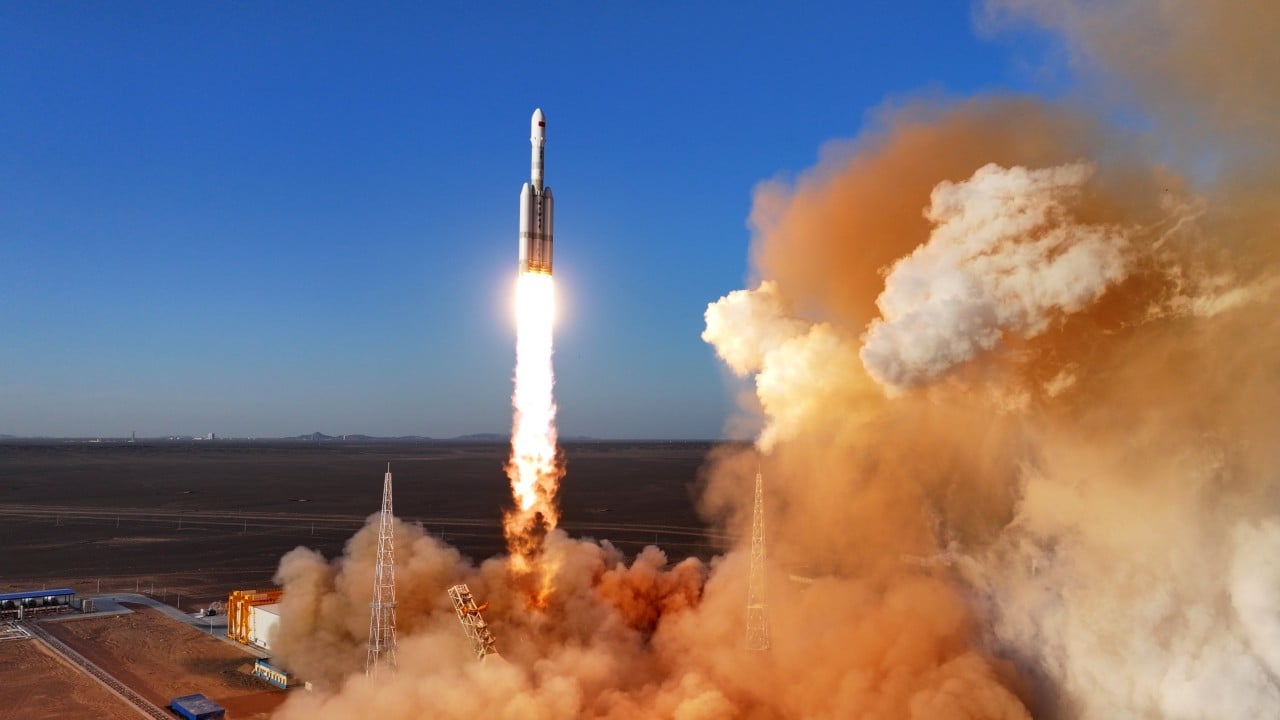
The United States has finally admitted that the moon is no longer a site for scientific curiosity but the frontline of a high-stakes territorial struggle. For decades, the lunar surface was treated as a dusty relic of the Cold War, a place where flags were planted and footprints left behind. That era is over. NASA’s Artemis program and China’s Lunar Exploration Program (CLEP) are currently locked in a sprint to secure the lunar south pole, a region containing water ice that serves as the literal fuel for future deep-space dominance. Capitol Hill is ringing alarm bells because the legal and physical infrastructure established in the next five years will likely dictate the next century of orbital commerce.
This is not a repeat of the 1960s. While the original space race was a battle of ideologies fought for television cameras, the current conflict is about resource acquisition and the establishment of "safety zones" that look remarkably like sovereign territory. If China establishes a permanent presence at the Shackleton Crater before the United States, they effectively control the high ground. Lawmakers in Washington are waking up to the fact that international space law is too vague to prevent a de facto occupation of the most valuable lunar real estate.
The Shackleton Trap and the Water Monopoly
The moon is a barren rock, but its south pole contains something more valuable than gold: hydrogen and oxygen. Frozen in permanently shadowed regions, this ice is the key to creating liquid rocket fuel. Shipping water from Earth costs thousands of dollars per kilogram. Harvesting it on the moon changes the math of the solar system. It turns the moon into a gas station for missions to Mars and beyond.
China plans to land its Chang’e-7 spacecraft at the south pole by 2026. This mission isn't just about taking pictures; it is a scouting operation for their International Lunar Research Station (ILRS). By partnering with Russia and several other nations, Beijing is building a coalition that operates outside the US-led Artemis Accords. This creates a bifurcated lunar economy. We are seeing the emergence of two distinct spheres of influence, where the rules of engagement are being written by whoever arrives first.
The technical hurdles are massive. Landing in the rugged, shadowed terrain of the south pole requires precision that neither nation has fully mastered at scale. However, the political will in Beijing appears more consistent than the shifting priorities of the US Congress. Every time a new administration takes office in Washington, NASA’s budget and timelines are scrutinized, debated, and often delayed. China does not have this problem. They operate on decades-long cycles with fixed milestones, a structural advantage that has many in the Pentagon sweating.
The Failure of the Outer Space Treaty
The 1967 Outer Space Treaty (OST) is the foundation of international space law, but it was written for a world that couldn't imagine private mining companies or permanent lunar bases. It explicitly forbids "national appropriation by claim of sovereignty," yet it allows for the "free use" of space. This creates a massive loophole. If a nation builds a base around a water ice deposit, they can claim a safety zone to prevent other missions from interfering with their operations.
Sovereignty by Another Name
When you place a multi-billion dollar habitat over a specific resource, you own that resource in every way that matters. The US-led Artemis Accords attempt to formalize these safety zones, but China and Russia view the Accords as an illegal power grab by Washington. They argue that the US is trying to create a "rules-based order" that favors American corporations like SpaceX and Blue Origin.
- The Artemis Accords: A set of bilateral agreements between the US and partner nations to govern lunar activity.
- The ILRS Alternative: China's competing framework, which focuses on state-to-state cooperation and ignores American-led standards.
- De Facto Control: The reality that physical presence on the moon trumps theoretical legal arguments back on Earth.
This legal friction is why US lawmakers are pushing for accelerated funding. They realize that being second to the south pole means asking for permission to access the very resources required to stay in the race. It is a strategic bottleneck. If one side controls the water, they control the traffic.
The Military Shadow Over Civilian Science
NASA and the China National Space Administration (CNSA) both claim their motives are purely scientific. History suggests otherwise. The technology required to land a rover on the moon is 90% identical to the technology required to intercept a satellite or guide a kinetic weapon. The dual-use nature of space hardware makes every civilian achievement a military signal.
The Pentagon is increasingly worried about "dual-purpose" lunar infrastructure. A communications relay intended for a lunar base can also be used to track US military assets in Earth’s orbit from a position that is difficult to monitor. The moon is the ultimate "high ground." From a lunar outpost, a nation can monitor everything happening in the gravity well between the Earth and its satellite. This region, known as cislunar space, is becoming a primary theater for the Space Force.
Budgetary data reflects this shift. While NASA's Artemis budget often faces cuts, funding for space-based defense and cislunar situational awareness is seeing a quiet surge. Lawmakers are no longer just asking about science; they are asking about "space domain awareness." They want to know exactly what China is doing on the far side of the moon, where direct communication with Earth is blocked and activities are hidden from ground-based telescopes.
Supply Chains and the Rare Earth Connection
The rivalry extends far beyond the launchpad. The hardware required to survive the two-week-long lunar nights depends on advanced battery technology and specialized materials. Currently, China controls the lion's share of the global supply chain for rare earth elements and the processing of minerals essential for space-grade electronics.
If the United States wants to win the moon, it has to rebuild its industrial base. It is a massive irony that the rockets intended to challenge Chinese dominance are often built using components or raw materials that pass through Chinese-controlled markets. This dependency is a vulnerability that lawmakers are only now starting to address through the CHIPS Act and other protectionist measures.
A lunar base requires massive amounts of power. Solar panels are the obvious choice, but they don't work during the long lunar night. This necessitates small modular nuclear reactors. The development of these reactors is another race within the race. Whoever perfects compact, space-hardened nuclear power first will have a permanent advantage. China is currently investing heavily in thorium-based and liquid-salt reactors, technologies that could easily be adapted for a lunar environment.
The Economic Impact of Second Place
Being second in the lunar race isn't like winning a silver medal in the Olympics. It is more like being the second person to build a railroad across a continent. The first mover sets the gauges, the signals, and the prices. If China’s standards become the global norm for lunar operations, every other nation will have to build their hardware to be compatible with Chinese ports, Chinese power grids, and Chinese communication protocols.
The private sector is the wild card here. Companies like SpaceX are moving faster than the government, but they are still tethered to federal contracts. The danger is that the US government will treat these companies as mere vendors rather than strategic assets. Meanwhile, China integrates its private "NewSpace" startups directly into its national military-civil fusion strategy. This ensures that every private breakthrough immediately benefits the state's strategic goals.
Consider the following statistics regarding the projected lunar economy by 2040:
| Sector | Estimated Value (USD) | Primary Driver |
|---|---|---|
| Lunar Mining | $170 Billion | Water ice and Helium-3 |
| Space Manufacturing | $250 Billion | Fiber optics and pharmaceuticals |
| Transportation | $100 Billion | Cislunar ferrying and orbital tugs |
| Defense/Surveillance | $150 Billion | Asset protection and monitoring |
These numbers aren't just guesses; they represent the internal projections of major aerospace firms. The stakes are trillions of dollars in future GDP. This is why the rhetoric in Washington has turned so sharp. It isn't about "the wonder of discovery." It is about who owns the next industrial revolution.
The Logistics of a Hostile Environment
Living on the moon is exponentially harder than living in the International Space Station (ISS). The ISS is protected by Earth’s magnetic field. The moon is not. Lunar inhabitants will be bombarded by solar radiation and cosmic rays. The dust, or regolith, is composed of tiny, glass-like shards that destroy seals and lungs alike.
To survive, any base must be buried under several meters of lunar soil or built inside lava tubes. This requires heavy machinery that can operate autonomously in extreme temperatures. China has already demonstrated significant prowess in autonomous robotics with its recent Mars and Moon landings. Their ability to operate without human intervention is a critical component of their plan to build a base using 3D-printing technology and local materials before humans even arrive.
The US approach relies heavily on the Gateway, a planned space station in lunar orbit. While the Gateway provides a flexible staging point, it is also a target. It is a fragile link in a very long chain. If the US focuses too much on the orbital station and not enough on the ground game, they risk being locked out of the most valuable craters.
Strategic Miscalculations and the Path Forward
The greatest risk to American interests is not Chinese capability, but American inconsistency. The "race" is often framed as a sprint to a single landing date, but the moon is a marathon. A single successful landing by 2026 or 2027 means nothing if it isn't followed by a sustainable presence. China's lunar program is built on a "crawl, walk, run" philosophy that has been remarkably resilient to external pressure.
Lawmakers are currently debating whether to increase NASA’s budget to match the urgency of the situation. Some argue that the private sector will fill the gap, but private companies require a stable legal environment to invest their own capital. Without a clear signal from the US government that it will defend its lunar interests and provide the necessary infrastructure, the private sector will remain cautious.
We are currently seeing the first move in a game that will take fifty years to play out. The rhetoric coming from the US House of Representatives is a rare moment of bipartisan clarity. They recognize that the moon is the "eighth continent," and like every continent before it, it will be settled by those who show up with the most gear and the strongest will to stay.
The time for philosophical debates about the "common heritage of mankind" is ending. In its place is a cold, hard reality where geography matters, resources are finite, and the laws of the moon will be written in the language of the first nation to control the ice.
Forget the grainy footage of the 1960s. The next time we see a human on the moon, they won't be there to take a "giant leap" for all of humanity. They will be there to secure a claim. And if they aren't wearing an American flag on their shoulder, the economic and strategic consequences will be felt for generations. You don't win a race by looking at the finish line; you win by controlling the track. America is finally realizing it doesn't even own the dirt.