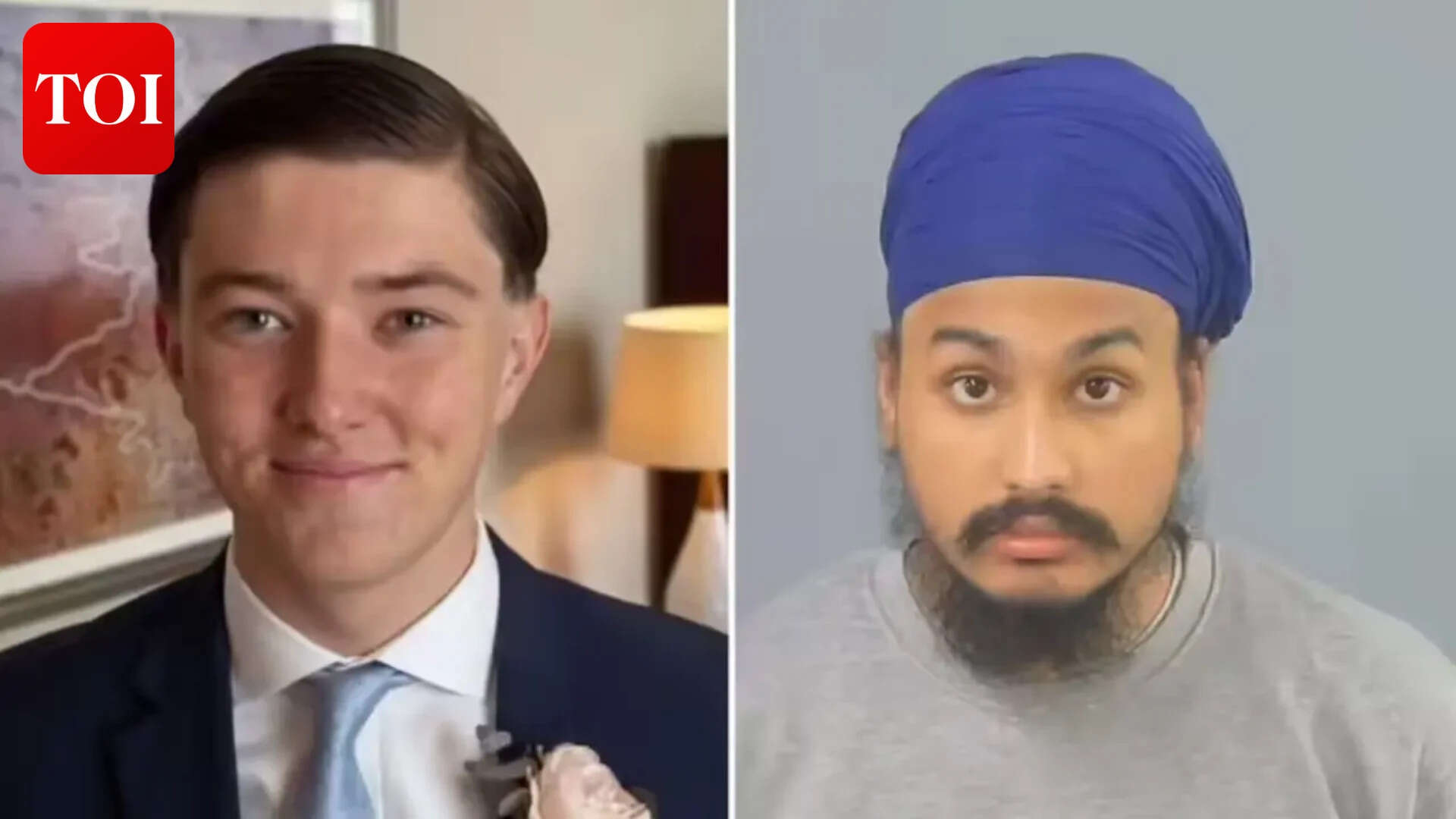
The modern British policing model broke entirely on a dark driveway in Southampton. When front-line officers from the Hampshire and Isle of Wight Constabulary stood over 18-year-old Henry Nowak as he lay bleeding to death, they did not see a victim of a catastrophic knife attack. They saw a suspect. Guided by a meticulously delivered falsehood from his killer, Vickrum Digwa, responding officers handcuffed the dying accounting student, dismissed his faded whimpers of "I've been stabbed," and countered his final gasps of "I can't breathe" with a casual, devastating retort: "Don't think you have, mate."
The superficial media narrative framing this catastrophe is simple. It treats the incident as a tragic operational failure where a devious perpetrator outsmarted naive first responders. Chief Constable Alexis Boon offered the standard institutional currency of regret, apologizing to the family for the arrest and handcuffing while the Independent Office for Police Conduct launched its inevitable review. But a deep dive into the institutional machinery behind this failure reveals something far more insidious than simple gullibility. This was a structural paralysis, a systemic vulnerability where the modern obsession with institutional optics overrode basic investigative curiosity and fundamental medical triage.
The Manipulation of Institutional Fear
To understand how four police officers could ignore a dying teenager saying he had been stabbed nine distinct times, one must examine the specific levers Vickrum Digwa pulled when the police arrived on Belmont Road.
Digwa, who was subsequently convicted of murder and sentenced to life with a minimum of 21 years, did not just lie. He weaponized the modern police force's deepest institutional anxiety: the terror of being perceived as insensitive to racially motivated crime. Standing near the driveway where Nowak lay with five stab wounds, including a fatal chest puncture, Digwa claimed he was the victim of a racially aggravated assault. He pointed to his eyelid, claimed his hair had been pulled, and asserted that Nowak had knocked off his turban.
For an institution conditioned by decades of post-Macpherson doctrine to accept allegations of hate crime immediately and uncritically at face value, Digwa’s performance was an algorithmic trigger. The response was immediate and binary. The white youth on the ground was categorized as the aggressor; the minority complainant standing nearby was verified as the victim.
This administrative sorting happened before a single officer conducted a physical assessment of the youth covered in blood. The body-worn camera footage captures a chilling compliance with protocol over reality. Officers did not look for a pulse or check for chest wounds. They looked for compliance. They reached for handcuffs.
The Failure of Forensic Instinct
The defense of the responding officers, often whispered by sympathetic colleagues within the ranks, rests on the chaotic nature of night-time policing. It was dark. The initial call-out was for an ongoing assault. The scene was dynamic.
Yet, this defense collapses under the weight of basic forensic observation. Experienced investigators know that crime scenes speak louder than the individuals standing inside them. Nowak was being held up by an eyewitness who explicitly stated the boy had a mouth full of blood. A mouth full of blood is a classic medical indicator of internal trauma, frequently caused by a punctured lung or severe upper airway hemorrhaging.
Instead of reading these physical signs, the officers relied entirely on verbal testimony from an interested party. They allowed a non-expert, self-serving statement to dictate their medical and tactical reality. Even when Nowak explicitly articulated his injuries, the officers suffered from confirmation bias so severe that it blinded them to the physical evidence directly in front of them. The system did not fail because the officers lacked training; it failed because the training they received taught them to prioritize bureaucratic box-checking over raw, analytical skepticism.
The Exploitation of Religious Exemptions
The weapon used to kill Henry Nowak was an eight-inch sheathed dagger, identified during the crown court trial as a pesh-kabz. While Digwa wore a small, compliant kirpan under his clothing to satisfy his orthodox Sikh faith, he deliberately carried the significantly larger, lethal dagger as an offensive weapon.
This distinction has forced an uncomfortable conversation regarding British knife legislation that politicians have spent years avoiding. Donna Jones, the Police and Crime Commissioner for Hampshire, has broken ranks to demand a national review of the laws concerning bladed articles carried under religious exemptions.
It is a policy area fraught with political risk. For decades, successive home secretaries have left the Criminal Justice Act 1988 untouched regarding religious exemptions, fearing the inevitable accusations of cultural insensitivity. This legislative hesitancy has created a grey area that violent actors can exploit. Digwa did not just use the knife to kill; he used the cultural status of the knife to cloak his intent, betting that authority figures would hesitate to question the presence of a blade within a religious context.
The judicial system recognized this calculation. Judge William Mousley pulled no punches during sentencing, telling Digwa that he had abused a specific legal privilege, dishonored his religion, and placed the broader, law-abiding Sikh community at risk of severe public backlash.
The Political Contagion
The fallout from Belmont Road has spilled out of the courts and into the streets, exposing the deep fractures in British social cohesion. The immediate public reaction was not just grief; it was a volatile mix of betrayal and fury.
Protests outside the Southampton police station quickly degenerated into running battles with riot police. Bricks, flares, and chairs were hurled at officers, leaving eleven personnel and a police dog injured. This civil unrest is the direct physical manifestation of a populace that no longer believes the law is applied with an even hand.
+-------------------------------------------------------------+
|               THE ANATOMY OF SYSTEMIC PARALYSIS            |
+-------------------------------------------------------------+
|                                                             |
|  [ Hate Crime Allegation ] ---> Triggers Institutional Fear |
|                                              |              |
|                                              v              |
|  [ Investigative Blindness ] -> Dismisses Physical Evidence |
|                                              |              |
|                                              v              |
|  [ Operational Failure ] ----> Handcuffs Applied to Victim  |
|                                                             |
+-------------------------------------------------------------+
Politicians have predictably weaponized the tragedy. Reform UK leader Nigel Farage immediately seized on the footage to validate his long-standing rhetoric regarding a "two-tier" justice system, explicitly drawing parallels between Nowak’s dying words and those of George Floyd to stoke working-class resentment. Prime Minister Keir Starmer countered by accusing political opponents of exploiting a national tragedy to foster division, while simultaneously admitting that the police face profound, systemic questions regarding how accusations of racism dictate operational decisions on the ground.
Amidst this noise, the most grounded perspective came from Mark Nowak, the victim's father. Speaking outside the court, he explicitly rejected the attempts by outside political groups to view his son's murder through the lens of identity politics. He did not blame a community or a religion. He placed 100 percent of the criminal culpability on Vickrum Digwa.
Yet, the elder Nowak’s indictment of the state apparatus was absolute. He observed that his son did not die with dignity, nor did he receive the basic care he deserved. He died in a state of artificial arrest, criminalized by the very people paid to protect him.
The Broken Blueprint
Apologies from chief constables are structurally empty. They function as a public relations buffer designed to absorb shockwaves until the news cycle moves on. The fundamental flaw exposed in Southampton cannot be fixed by an administrative apology or another internal diversity seminar.
The real breakdown occurred because frontline policing has abandoned the principle of primary physical verification. When an officer chooses to believe a verbal accusation over the physical reality of a teenager suffocating on his own blood, the institution has lost its foundational anchor. The Hampshire officers treated a crime scene like a corporate dispute where the person who files the first formal complaint wins temporary immunity.
British policing cannot survive many more videos like the one recorded on Belmont Road. Every time an officer dismisses the agony of a dying citizen to appease the immediate political demands of a scene, the unwritten contract between the public and the police dissolves further. The Independent Office for Police Conduct will eventually issue its report, likely recommending better medical training or clearer guidelines for handling multi-party disputes. But these cosmetic fixes miss the point entirely. Until front-line officers are insulated from the institutional fear of political fallout and retrained to trust empirical, forensic reality over narrative manipulation, the streets they patrol will remain fundamentally unsafe for the people they are sworn to serve.