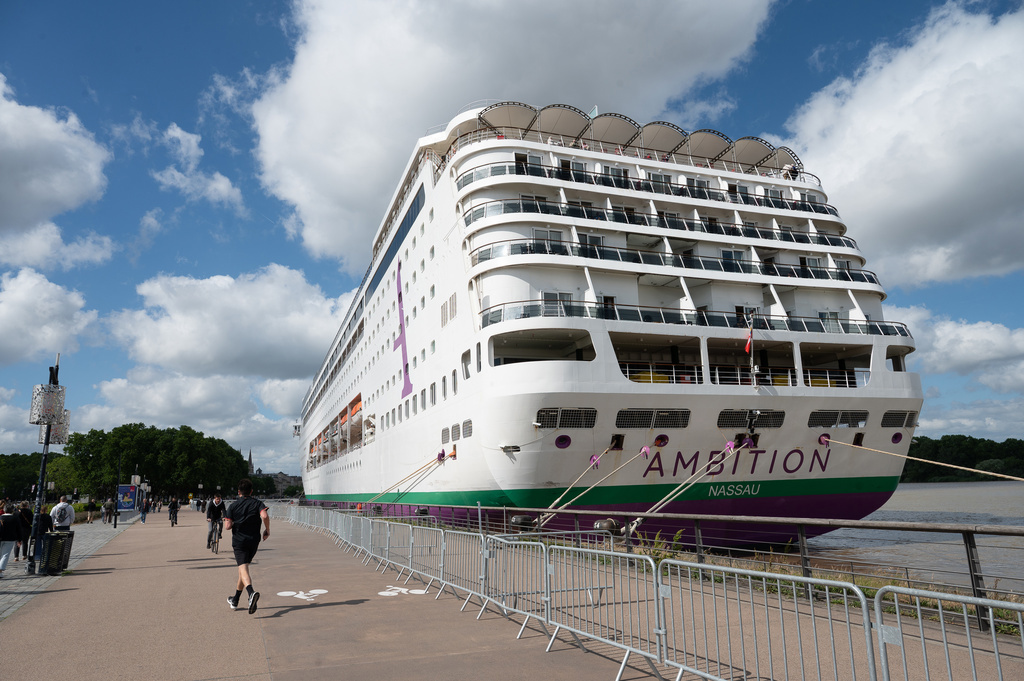
The modern cruise ship is a marvel of engineering and a nightmare of epidemiology. When news broke that 1,700 passengers and crew were barred from disembarking due to a viral outbreak, the industry followed a predictable script. There were PR statements about "abundance of caution" and "rigorous protocols." But the reality of being stuck onboard while a pathogen weaves through the ventilation and common areas is far from the sanitized version sold to shareholders.
The immediate crisis involves nearly two thousand souls confined to a steel hull, but the broader issue is the systemic vulnerability of the global cruise fleet. These vessels are high-density urban environments that move across borders, often operating under flags of convenience that allow them to sidestep the stringent health regulations of the nations they visit. When a virus hits, the ship becomes a closed-loop laboratory. The failure isn't just the outbreak itself; it is the industry-wide reliance on a business model that prioritizes maximum occupancy over biological safety.
The Physics of a Shipboard Outbreak
To understand why 1,700 people are currently idling in a state of medical limbo, you have to look at the math of the "floating city." On a standard mid-sized vessel, thousands of people share the same air, the same buffet tongs, and the same elevator buttons.
Pathogens like norovirus or respiratory variants thrive in these conditions. Despite the ubiquitous hand sanitizer stations, the sheer volume of high-touch surfaces makes containment nearly impossible once a virus reaches a certain threshold. Most people assume the air filtration systems are the primary culprit. While modern HEPA filters do a decent job, the real danger lies in the social architecture of the ship.
Dining rooms are designed to funnel people into communal spaces. The profit margins of these cruises depend on getting passengers out of their cabins and into bars, casinos, and shops. This economic necessity creates the perfect environment for a "super-spreader" event. Once the infection rate climbs past a few percentage points, the onboard medical center—usually equipped for minor injuries and basic stabilization—gets overwhelmed. At that point, the ship ceases to be a vacation destination and becomes a liability that no port wants to touch.
The Sovereignty Shakedown
The most harrowing part of these outbreaks is the legal vacuum that opens up the moment a ship is denied entry. International maritime law is a complex web of treaties, but when a local health authority sees a ship full of sick passengers, "sovereignty" beats "maritime right of entry" every single time.
The Port vs. The Ship
Ports are under no obligation to welcome a biohazard. This leaves the captain and the parent company in a desperate negotiation with local governments. While the 1,700 people onboard wait for news, lawyers and lobbyists are working the phones behind the scenes. They are arguing about who will pay for the hospitalizations if the passengers are let off, and who bears the cost of the mandatory quarantine.
Flags of Convenience
Most major cruise lines register their ships in countries like the Bahamas, Panama, or Bermuda. This saves them millions in taxes and allows them to bypass strict labor laws. However, when a crisis occurs, these tiny island nations lack the infrastructure or the diplomatic muscle to help a ship stranded halfway across the world. The passengers, often citizens of the US, UK, or EU, find themselves caught between a company that doesn't want the bad press and a host nation that doesn't want the virus.
The Failure of "Sanitized" Marketing
The cruise industry spent billions after the 2020 global lockdowns to convince the public that cruising was safe again. They installed ultraviolet light systems, upgraded air handling units, and implemented "contactless" check-ins. These are visible changes meant to provide psychological comfort, but they don't address the fundamental issue of density.
The "bubble" concept is a myth.
Crew members move between the guest areas and the cramped crew quarters below deck. They are the invisible engine of the ship, and they are often the most vulnerable. If a crew member gets sick, the service chain breaks. If the kitchen staff is quarantined, the ship cannot feed 1,700 people safely. We are seeing this play out in real-time. The "virus outbreak" isn't just a medical event; it’s a logistics collapse.
The Economic Pressure to Sail
Why do ships keep sailing even when an outbreak is suspected? The answer is the "turnaround."
A cruise ship only makes money when it is moving. The schedule is tight, often with only a few hours between one group of 2,000 passengers leaving and the next group arriving. This leaves almost no time for the kind of deep, surgical cleaning required to truly eradicate a persistent virus. If a ship cancels a voyage, the losses run into the tens of millions. This creates an unspoken pressure to "monitor" a situation rather than stop it.
By the time the numbers are high enough to trigger a port's refusal, the situation is usually well out of control. The 1,700 people currently stuck are the victims of a "wait and see" approach that prioritized the next week's revenue over the current week's safety.
The Hidden Costs of the Cruise Experience
When you buy a ticket, the fine print on the cruise contract essentially waives your right to a timely return. These contracts are masterpieces of legal defense. They state that the itinerary can change at any time for any reason, and that the carrier is not liable for emotional distress or even medical complications resulting from a quarantine.
The Financial Burden on Passengers
- Missed Flights: Most travel insurance policies have specific clauses regarding "acts of government" or "quarantine" that can make claims difficult to process.
- Medical Bills: Being treated in a ship’s infirmary is notoriously expensive, and not all land-based insurance covers maritime medical care.
- Lost Wages: For the 1,700 people onboard, a seven-day vacation has the potential to turn into a three-week ordeal.
The industry likes to frame these events as "unforeseen," but they are entirely predictable. As long as we build massive ships designed to pack more people into smaller spaces, we are building better incubators.
Infrastructure and the Lack of a Plan B
There is a shocking lack of a global "Plan B" for shipboard outbreaks. Currently, the strategy is simply to wait until the virus burns through the population or until a port finally relents under diplomatic pressure.
We need a standardized international protocol that designates specific "quarantine ports" equipped to handle large-scale disembarkations without endangering the local population. Without this, we will continue to see ships wandering the seas, rejected by every harbor, while the people inside grow increasingly desperate.
The current situation with 1,700 people trapped is a warning. It is a sign that the "new normal" in cruising is just the old normal with a fresh coat of paint and more hand sanitizer. The industry hasn't changed its DNA. It has only changed its PR strategy.
What Needs to Change Immediately
If the cruise industry wants to survive the next decade without becoming a permanent punchline for "floating petri dish," it must move beyond cosmetic fixes.
- Reduced Occupancy Mandates: Ships should be required to operate at 80% capacity during peak viral seasons to allow for isolation cabins that aren't just converted broom closets.
- Independent Medical Oversight: Onboard doctors should report to international health bodies, not to the ship's captain or the corporate office. This would remove the conflict of interest when deciding whether to report an outbreak.
- Mandated Repatriation Insurance: Cruise lines should be forced to pay into a global fund that guarantees the immediate chartering of planes to get passengers home the moment a ship is quarantined.
The current 1,700-person stalemate will eventually end. The ship will eventually dock, the passengers will go home, and the vessel will be scrubbed down for the next batch of vacationers. But the trauma of being a prisoner on a "luxury" vessel lingers. It changes how people view the ocean and the industry that claims to master it.
If you are planning to book a cruise, look past the glossy brochures of pristine pools and midnight buffets. Look at the air vents. Look at the crowded elevators. Recognize that when you step onto that gangway, you are entering a jurisdiction where the company’s bottom line often dictates your biological destiny. The only real way to protect yourself is to demand transparency from an industry that has spent decades hiding behind the horizon.
Stop looking at these outbreaks as "accidents." They are a feature of the system, not a bug.