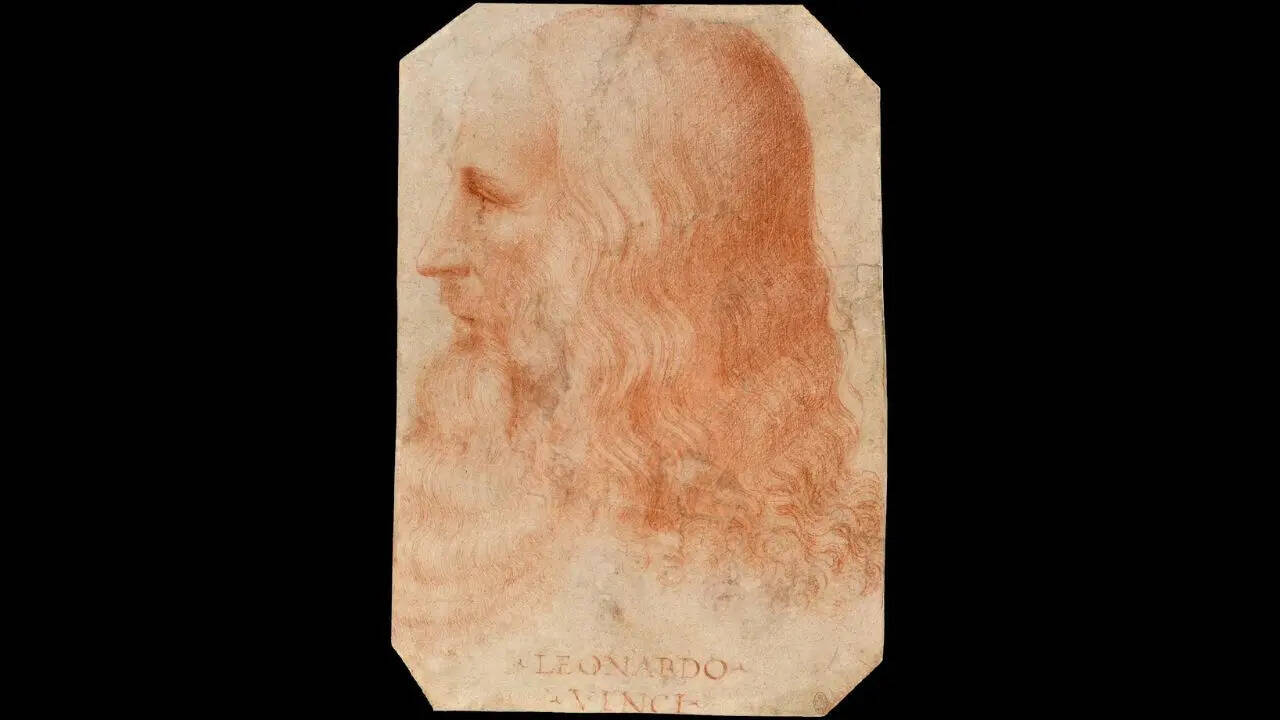
Clickbait culture has officially cannibalized the Italian Renaissance. If you have spent any time browsing art history forums, inspirational social media feeds, or lazy interior design blogs, you have likely run into a specific, hauntingly poetic quote attributed to Leonardo da Vinci.
The quote usually reads: "A painter should begin every canvas with a wash of black, because all things in nature are dark except where exposed by the light."
It sounds profound. It evokes the image of a brooding genius staring into a dark void, coaxing light out of absolute nothingness. There is just one glaring problem with this viral piece of art historical wisdom. Leonardo da Vinci never said it, he never wrote it, and the technical advice it offers completely contradicts the actual painting methods he spent his entire life perfecting.
The internet is flooded with manufactured historical quotes, but this specific myth does real damage. It distorts our understanding of Renaissance technology and misrepresents one of history’s greatest scientific minds. By deconstructing where this myth came from and examining how Leonardo actually worked, we uncover a far more interesting reality about light, shadow, and the mechanics of human vision.
The Anatomy of a Historical Hoax
The internet thrives on unsourced platitudes. A quote gets slapped onto an image of the Mona Lisa, shared a few thousand times, and suddenly it becomes an undeniable fact.
When you trace the "wash of black" quote through digital archives, you quickly realize it has no footprint in academic literature prior to the internet age. It does not appear in the Codex Atlanticus. It is entirely absent from the Treatise on Painting, the collection of Leonardo's notes compiled after his death by his pupil Francesco Melzi.
The quote is a modern fabrication. It likely evolved from a fundamental misunderstanding of chiaroscuro, the artistic technique using strong contrasts between light and dark, and sfumato, Leonardo's trademark method of blurring edges to create a smoky, lifelike transition between tones.
Someone looking to summarize these complex visual concepts compressed them into a punchy, easily digestible soundbite. They chose black because it feels dramatic. But to a master of the High Renaissance, treating a canvas with a pure black underpainting would have been an amateur mistake that ruined the luminosity of the final piece.
Why a Black Base Layer Fails the Physics of Painting
To understand why Leonardo would reject a black wash, you have to look at the physical behavior of oil paint. Oil paint is not a solid opaque wall. It is a translucent glaze. Light passes through the upper layers of pigment, hits the underpainting beneath, and bounces back to the viewer's eye.
Imagine a hypothetical scenario where an artist paints a brilliant red apple. If they place that red pigment over a bright, white ground, the light travels through the red glaze, reflects off the white base, and illuminates the apple from within. The color glows.
Now, change the variables. If that same artist paints the red apple over a solid black wash, the black base absorbs the light. The light never bounces back. Over time, as oil paint becomes even more transparent with age, the black underpainting eats the top layers from below. The entire image turns into a muddy, dead mess.
Leonardo was obsessed with light transmission. His notebooks are filled with diagrammed optical experiments analyzing how light reflects off curved surfaces. He knew that absolute darkness offers no bounce. Starting with a black canvas would be fighting against the very physics of illumination he sought to master.
How Leonardo Actually Built His Masterpieces
The real technique Leonardo utilized was far more tedious than splashing a quick wash of dark paint over a wooden panel. He began with a meticulously prepared white ground, usually gesso made of animal glue and chalk, applied to a poplar wood board. This white surface acted as a natural mirror.
On top of this blindingly white base, he did not slap down a layer of black. Instead, he built his images through a painstaking, multi-staged process.
- The Imprimatura: A very faint, translucent tint, often an earthy tone like raw umber or a warm gray, was applied to kill the stark brightness of the white gesso without destroying its reflective power.
- The Underdrawing: He mapped out the composition using fine, delicate line work, often in a brown ink or dilute pigment.
- The Monochromatic Underpainting: Here is where the confusion about "black" likely originates. Leonardo used values of brown and gray, known as a verdaccio or a dead-coloring layer, to establish where the shadows would fall. He left the areas of maximum light completely untouched, letting the white gesso do the heavy lifting.
- The Glazing: He applied dozens of incredibly thin, transparent layers of colored oil glazes. Some layers were so thin they were mere microns thick, requiring weeks to dry between applications.
This elaborate layering is why the skin of the Mona Lisa or the drapery in The Virgin of the Rocks seems to shift when you look at them from different angles. It is not the result of a dark void beneath, but rather the consequence of light navigating a complex labyrinth of translucent colored films.
The Evolution of the Dark Canvas Myth
If Leonardo didn't paint on black, did anyone? Yes, but they arrived much later on the historical timeline.
The transition to deeply dark, moody underpaintings gained traction during the Baroque period, long after Leonardo’s death in 1519. Artists like Caravaggio and Rembrandt championed tenebrism, a style where subjects emerge out of dominant, pitch-black backgrounds.
Caravaggio frequently worked on dark reddish-brown backgrounds, which allowed him to paint at a furious pace. By using a dark ground, he didn't have to spend time painting in the shadows; the shadows were already there. He only had to paint the highlights.
This dark-ground method offered speed and theatrical drama, but it came at a steep cost. Many Baroque paintings have darkened significantly over the centuries because the deep underpaintings have slowly swallowed the mid-tones. Leonardo anticipated this danger. He valued archival longevity and precise optical accuracy over quick dramatic tricks.
The Danger of Rebranding Science as Mysticism
The persistence of the fake Leonardo quote points to a broader, more frustrating trend in how we consume history. We prefer the myth of the romantic, brooding artist over the reality of the disciplined, methodical scientist.
Leonardo was not an abstract philosopher guessing at the nature of darkness. He was an empirical researcher. He dissected human eyes to understand how the optic nerve processes shape. He studied the atmosphere to figure out why distant mountains appear blue.
[White Gesso Base] -> Reflects maximum light from beneath.
   [Imprimatura]   -> Warms the light, cutting harsh glare.
     [Glaze 1]     -> Translucent layer allows light passage.
       [Glaze 2]   -> Adds depth and subtle color shift.
When you reduce his complex, scientifically grounded optical system to a lazy phrase about washing a canvas in black, you erase his actual brilliance. You substitute genuine genius for cheap poetic sentimentality.
The next time an inspirational quote account tells you that Leonardo da Vinci started his paintings in total darkness, remember the white gesso. Remember the physics of reflection. The real Renaissance was built on a foundation of brilliant, calculated light, not an easy wash of black paint.