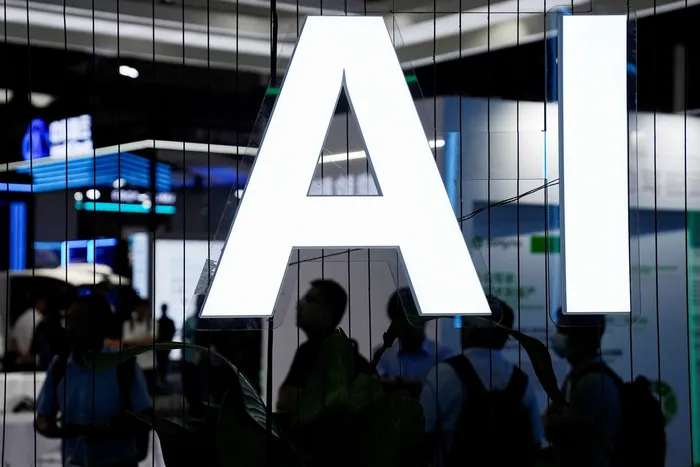
China just slammed the door on Meta. Mark Zuckerberg wanted Manus, the high-flying AI agent developed by a Chinese startup, but Beijing said no. This isn’t just a failed business deal. It’s a loud, clear signal that the era of open borders for artificial intelligence is officially dead. If you think the tech rivalry between the US and China was intense before, you haven't seen anything yet.
The move blocks Meta from getting its hands on one of the most promising "autonomous agents" in the world. While everyone else is busy chatting with bots, Manus was designed to actually do things. It browses, it plans, and it executes tasks across the web without a human holding its hand. Losing this acquisition is a massive blow to Meta’s dreams of dominating the next phase of the internet. It also proves that China views its AI talent as a national security asset, not a commodity for sale to Silicon Valley.
Why Manus was the prize Meta couldn't have
The hype around Manus didn't come from nowhere. Most AI models are passive. You ask a question, they give an answer. Agents are different. They represent the shift from "tell me" to "do it for me." Manus gained traction because of its ability to handle complex, multi-step workflows with startling autonomy.
Think about the friction in your daily digital life. Booking a flight involves checking five tabs, comparing prices, and filling out forms. Manus does that in one go. For Meta, integrating this tech into WhatsApp or Instagram would've been a massive win. It would've turned their social apps into a universal remote for the digital world.
Beijing saw that potential and decided it wasn't for export. The Chinese government is tightening its grip on "dual-use" technologies. In their eyes, an AI that can navigate the web and solve problems autonomously is too powerful to let go to a direct geopolitical rival. They're treating code like enriched uranium.
The silicon curtain is falling fast
This isn't an isolated incident. It's part of a broader pattern where the world is splitting into two distinct tech ecosystems. We’re seeing a "silicon curtain" descend. On one side, you have the US trying to starve China of high-end Nvidia chips. On the other, China is blocking its best software from leaving.
Meta is caught in the crossfire. Zuckerberg has been trying to play both sides for years. He’s been vocal about the need for American AI to win, yet he’s always looking for talent and tech wherever it lives. This rejection shows that being a global giant doesn't mean you're above the fray. You're a pawn in a much bigger game.
China’s logic is simple. If they have a lead in agentic AI, they want to keep it. They want their own domestic giants—Tencent, Alibaba, Baidu—to be the ones deploying this tech. Letting Meta buy Manus would be like giving away the blueprints for a new class of engine right as the race starts.
What this means for the future of AI agents
The failure of this deal will ripple through the startup world. If you're a Chinese AI founder, your exit strategy just got a lot more complicated. You can't just wait for a big American check anymore. You’re essentially locked into the domestic market or neutral territories.
This creates a weird incentive structure. We might see more "shadow" startups where the IP is developed in one place but the company is legally parked in Singapore or Dubai to avoid these blocks. But even then, regulators are getting smarter. They look at where the engineers are sitting, not just where the tax papers are filed.
For users, this means fragmented experiences. The AI agent you use in the West will likely be fundamentally different from the one used in Asia. They’ll have different biases, different capabilities, and different restrictions. The dream of a single, global AI assistant is fading.
The technical gap is narrowing
Despite US export controls on hardware, Chinese software engineers are doing incredible things with less. They're optimizing models to run on older chips. They’re finding clever ways to achieve high performance with smaller datasets. Manus was proof that you don't need a hundred thousand H100s to build something world-class.
That’s exactly what scares Washington. If China can build superior agents while being "handicapped" by chip bans, the bans aren't working. By blocking Meta, China is essentially saying they don't need American capital as much as the Americans need their innovation.
Zuckerberg's next move without Manus
So where does Meta go from here? They'll double down on Llama. Meta’s open-source strategy is their best defense. Since they can't always buy the best startups, they’re trying to build a platform that everyone else uses.
But agents are harder to open-source effectively than simple LLMs. They require deep integration with live web data and personal accounts. Meta will have to build their own version of the Manus engine from scratch or find a Western startup that isn't yet on the radar of regulators.
The problem is that the talent pool for this specific kind of AI is small. Most of the people who know how to build "action-oriented" models are either at OpenAI, Google, or in these specialized startups in Beijing and Shanghai.
The cost of tech nationalism
We're entering a period of massive inefficiency. In a rational world, the best tech wins and spreads. In our world, the best tech gets trapped behind a border. This slows down progress for everyone.
Imagine if the early internet had been blocked this way. We’d have three different versions of TCP/IP that didn't talk to each other. That’s where we’re headed with AI. We are prioritizing national pride and security over actual utility.
It’s easy to blame one side or the other. The US started with the chip bans. China responded with the export blocks. It’s a classic escalatory cycle. Neither side can afford to blink because AI is seen as the ultimate "force multiplier" for both the economy and the military.
Practical steps for tech observers
Don't expect this to be the last blocked deal. If you're invested in the tech space or working in it, you need to change your perspective.
First, stop assuming a "global" tech market exists. It doesn't. You need to evaluate companies based on which "bloc" they belong to. A startup's value is now tied to its regulatory environment as much as its code.
Second, watch the talent migration. Engineers are the new gold. If they can't move their companies, they’ll move themselves. Look for where the top researchers from these blocked startups end up. That’s where the next breakthrough will happen.
Finally, pay attention to the "neutral" hubs. Places like the UAE and Singapore are becoming the intermediaries. They are the only spots where East and West still meet to trade ideas, even if the governments are trying to prevent it.
The Meta-Manus collapse isn't a footnote. It’s the first chapter of a much darker book on how the internet gets torn apart. Keep your eyes on the next big Chinese AI lab that hits the headlines. If they're good, they'll stay home—whether they want to or not. Start looking for Western alternatives now, because the bridge to the East is officially closed.