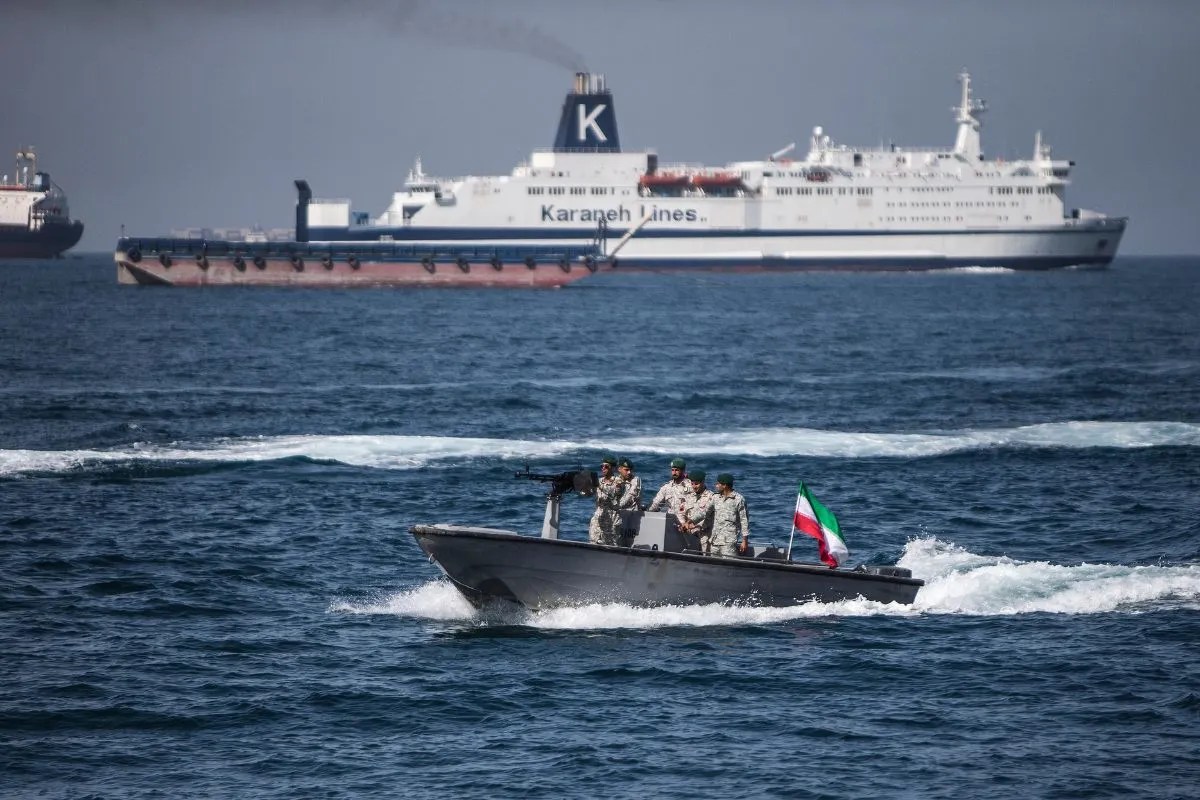
The steel hull of a massive oil tanker vibrates with a low, rhythmic hum that you don't just hear; you feel it in your teeth. For the twenty-man crew aboard a vessel carrying two million barrels of crude oil, that vibration is the sound of safety. It means the engines are running. It means they are moving. But as the ship approaches the Strait of Hormuz, that hum is drowned out by a heavy, suffocating silence.
Men on these ships don’t look at the water anymore. They look at the sky. They watch for the sudden, erratic trajectory of a drone, or the fast-approaching wake of an unmarked speedboat. They know that this narrow strip of water, just twenty-one miles wide at its tightest point, is the closest thing the modern world has to a single point of failure.
When the Strait of Hormuz constricts, the world gasps for air.
We tend to view geopolitical crises through the cold lens of tickers, stock charts, and diplomatic jargon. We read about the United Nations Security Council calling an emergency meeting, or nations pledging "international solidarity," and our eyes glaze over. The language of diplomacy is intentionally designed to cool the room, to make terrifying realities feel bureaucratic and manageable. But behind the closed doors of New York briefing rooms, the panic is raw. The world’s economic circulatory system is experiencing a sudden, violent blockage.
The Twenty-One Mile Tightrope
To understand why the globe is currently on a knife-edge, look at a map, but stop thinking like a tourist. Think like a plumber.
The Persian Gulf is a massive reservoir of energy, but it has only one drainpipe. Every single day, roughly one-fifth of the world’s petroleum passes through the Strait of Hormuz. It is not an open ocean; it is a highly congested, tightly regulated marine highway. Because of the shallow depths and treacherous islands, the actual shipping lanes available to these gargantuan tankers are only two miles wide in either direction, separated by a two-mile buffer zone.
Imagine driving a vehicle the size of a skyscraper through a two-mile lane, knowing that a single well-placed sea mine or a rogue missile could turn your cargo into an apocalyptic inferno.
This isn't an abstract exercise in risk management. When a crisis flares up here, the mathematical certainty of supply and demand takes over. If the strait closes, or even if the risk of passage becomes too high, the oil stops flowing. When the oil stops flowing, the price of a barrel spikes instantly.
But the true cost isn't measured in the oil markets of London or New York. It is measured in the quiet desperation of a commuter in Tokyo who suddenly realizes their monthly fuel bill has doubled. It is measured in the panic of a logistics manager in Chicago trying to explain why shipping containers are stranded halfway across the globe because bunker fuel prices have gone through the roof.
The Gathering in the Dark
The sudden escalation in international movement—the flurry of late-night phone calls between Washington, Beijing, Paris, and New Delhi—is driven by a shared, terrifying realization. For decades, the global economy has operated on the assumption of friction-free trade. We built a world where components are manufactured in three different countries, assembled in a fourth, and consumed in a fifth, all relying on the absolute guarantee that the oceans remain open, cheap, and safe.
The current friction in Hormuz shatters that illusion.
As the UN Security Council prepares for an emergency session, the posturing will be immense. Speeches will be delivered. Resolutions will be drafted. But the real tension lies in the shifting alliances behind the scenes. Historically, the burden of policing these waters fell largely on Western navies. Today, the calculus has changed.
Consider the vulnerability of Asian economies. China, India, Japan, and South Korea rely on the Persian Gulf for the vast majority of their energy imports. For them, Hormuz is not a distant foreign policy issue; it is a matter of immediate national survival. This reality explains why the push for a global solution has suddenly gained such ferocious momentum. Nations that agree on absolutely nothing else are suddenly finding themselves forced into the same room, looking at the same map, facing the same existential threat.
They know that an unmonitored choke point is a playground for chaos.
The Invisible Toll on the Human Frontline
Let us step away from the macroeconomic data and stand on the deck of a commercial freighter. Consider a captain—let’s call him Marcus, a veteran of twenty-five years at sea. Marcus didn’t sign up to be a soldier. He signed up to move cargo. Yet, under the current threat level, his job description has fundamentally transformed.
Marcus now spends his nights reviewing piracy protocols, checking the operation of water cannons, and reassuring a young crew that is visibly terrified. Marine insurance brokers have already begun reclassifying the region, sending premiums skyrocketing to levels that make shipping practically prohibitive. For the crew, however, the premium is measured in adrenaline and lost sleep.
The psychological toll on these mariners is immense. They are acutely aware that they are floating targets in a game played by regional powers who view them merely as leverage. If a drone strikes their vessel, they are not just statistics in a news report; they are human beings burning alive on a sea of oil.
When we talk about the "global response" and the "mobilization of international support," this is what is actually at stake. It is the restoration of basic predictability to human labor. It is the enforcement of a rule of law that prevents the global commons from turning into a shooting gallery.
The Illusion of Independence
There is a dangerous myth that circulates every time the Middle East erupts: the myth of energy independence. You hear it shouted in political speeches across the West. The argument goes that because a nation produces enough of its own oil and gas domestically, it is insulated from the madness of the Persian Gulf.
It is a comforting lie.
Oil is a fungible global commodity. The price of oil in Texas is inextricably linked to the price of oil in Saudi Arabia. If twenty million barrels a day are suddenly removed from the global market due to a blockade or a hot war in Hormuz, a massive, insatiable vacuum is created. Buyers who previously bought from the Gulf will immediately begin outbidding everyone else for oil from Canada, the North Sea, or West Africa.
The price skyrockets everywhere. Instantly.
Your local gas station doesn't care where the oil was pumped out of the ground; it cares about the global spot price. A prolonged closure of the Strait of Hormuz would trigger a global inflationary spike that would make the post-pandemic supply chain issues look like a minor inconvenience. Factories would idle. Food production costs would surge, as fertilizers and agricultural transport are heavily dependent on petrochemicals. The economic shockwave would ripple through every household on earth within weeks.
The Breakdown of the Commons
This brings us to the core of the panic driving the current diplomatic frenzy. The international order is built on the concept of the global commons—spaces that belong to no one, yet are vital to everyone. The oceans are the ultimate commons.
For centuries, the implicit agreement was that regardless of ideological differences, the freedom of navigation must be preserved. Even during the height of the Cold War, Soviet and American merchant ships passed each other without incident in these vital waterways.
What we are witnessing right now is the fraying of that foundational agreement. The weaponization of choke points like Hormuz represents a regression to a more primitive, dangerous era of global affairs, where might makes right, and geographic proximity equals total control.
The emergency meeting of the Security Council is not just about resolving a localized dispute or protecting a few dozen shipping companies. It is a desperate attempt to shore up a crumbling wall. It is an effort to re-establish the collective understanding that some areas must remain off-limits to geopolitical warfare, simply because the cost of their destruction is too high for humanity to bear.
The diplomats will sit under the massive murals of the UN chambers, adjusting their earpieces, listening to simultaneous translations of legalistic arguments. They will debate the precise wording of statements, arguing over commas and modifiers.
But out in the blue-grey waters of the Gulf, the crew of a lone tanker will watch the horizon change as the sun dips below the coastline of the Musandam Peninsula. They will turn off their automatic identification transponders, slipping into the shadows of the world's most dangerous highway, hoping against hope that the fragile machinery of global diplomacy holds together for just one more night.

