We are drowning in words, yet saying less than ever. The modern corporate ecosystem, political stage, and media environment suffer from a severe inflation of language. Everyone talks; nobody communicates.
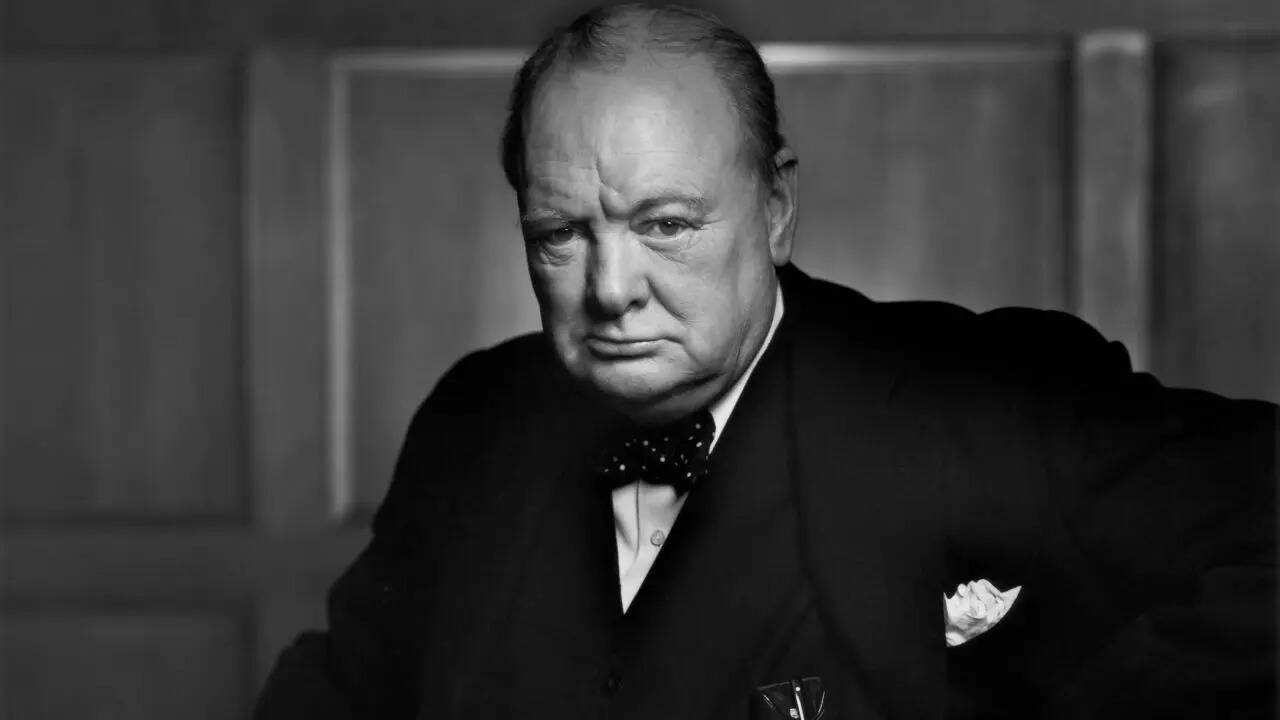
To fix this, people often point to a famous piece of advice attributed to Winston Churchill: "A good speech should be like a woman's skirt; long enough to cover the subject and short enough to create interest." It is a catchy analogy. It gets a polite laugh at toastmaster clubs and corporate retreats. But as a guide for modern communication, the advice is failing. Relying on an outdated, casual quote ignores the structural reality of why our communication is actually broken.
True brevity is not about satisfying an arbitrary aesthetic standard. It requires an aggressive, tactical reduction of fluff to expose the core truth.
The Misattributed Mastery of Public Speaking
We love to credit Winston Churchill with every witty remark about brevity, leadership, and alcohol. This specific skirt analogy, however, has a murky lineage. It has been attributed to everyone from casual post-war comedians to various mid-century politicians.
The origin does not matter. The psychological reliance on the quote does.
We grasp at these historical nuggets because we feel the weight of modern bloat. The average corporate presentation has ballooned. White papers are written to justify budgets rather than transfer knowledge. Politicians speak for hours without taking a definitive stance.
When Churchill actually spoke during crises, he did not just aim for "short enough to create interest." He aimed for precision. His wartime memos were notoriously brief, often demanding single-page summaries for massive military operations. He understood that complexity is the hiding place of incompetence.
When you look closely at modern communication failure, the problem is rarely that the speech is simply too long. The problem is that the speaker does not know what they want to say. Length is a symptom of confusion.
Why Modern Communication Strategy is Broken
Look at any major corporate presentation or political address. You will see a structural flaw that no analogy about a skirt can fix.
The systemic issue is the fear of being clear.
[The Fear of Clarity] ──> [Over-complication] ──> [Audience Detachment]
When a CEO delivers a two-hour address filled with corporate jargon, they are not trying to cover the subject thoroughly. They are insulating themselves against accountability. If you say everything, you have technically said nothing, which means you cannot be proven wrong.
The Hidden Cost of the Long Fill
Every extra sentence adds a layer of risk. In public relations, this is known as the exposure trap.
Consider a hypothetical company addressing a product recall. A precise statement acknowledges the flaw, outlines the fix, and states the timeline. It takes forty seconds.
Instead, legal and public relations teams usually draft a multi-page document. They add paragraphs about their historical commitment to quality. They insert statements about their corporate values. They layer in compliments to their staff.
By expanding the text to "cover the subject" safely, they create dozens of new angles for critical scrutiny. The media does not focus on the solution. They focus on the defensive tone of the excess words.
The Short Speech That Says Nothing
The opposite failure is just as common. In the rush to be brief, speakers often strip out the substance entirely. This is the danger of taking the skirt analogy too literally.
A presentation that is short enough to create interest but lacks structural data is just a teaser trailer. It leaves the audience energized but entirely uninformed. You see this in tech pitches where a founder spends ten minutes shouting about changing the world without explaining what the software actually does.
Brevity without substance is manipulation. Substance without brevity is a chore.
The Mechanics of Structural Compression
Fixing our broken communication requires looking at editing as an engineering problem rather than an art form. You do not make a piece of writing better by simply chopping it in half. You make it better by increasing its density.
High-density communication delivers maximum information per syllable.
To achieve this, a speaker or writer must abandon the traditional three-part structure of introduction, body, and conclusion. That format belongs to an era when information moved at the speed of a steam train.
Step One: Kill the Preamble
Most speeches do not truly start until the third minute. The first 180 seconds are wasted on pleasantries, thank-yous, and throat-clearing.
- Traditional opening: "Thank you for having me today. It is an honor to speak to the regional board, and I want to thank John for that kind introduction. Today, I want to talk to you about our Q3 performance and why we need to adjust our trajectory..."
- Compressed opening: "We lost twelve percent of our regional market share last quarter, and today we are changing the three operational habits that caused it."
The second option is brutal. It is uncomfortable. It also guarantees that every eye in the room remains fixed on the front of the room.
Step Two: The Single Variable Test
Every paragraph, slide, or sentence must serve one specific purpose. If an idea does not directly advance the primary objective of the communication, it must be removed.
This is where the skirt analogy falls short. It implies a passive aesthetic balance.
Real editing is aggressive. It requires looking at your own work and admitting that a paragraph you spent two hours writing does not actually matter to the audience.
The Illusion of Audience Attention spans
We hear constantly that human attention spans are shrinking. Commentators blame smartphones, short-form video apps, and the rapid pace of digital media. This is a comforting lie for bad speakers.
People still spend eight hours straight watching complex television dramas. They still read massive non-fiction books when the subject affects their lives.
The attention span is not shrinking; the filter is sharpening.
Because people are bombarded with information, their brains have adapted to detect fluff within seconds. If a listener senses that a speech is padded with corporate buzzwords or empty political rhetoric, they will disengage immediately. They are not distracted; they have made a conscious decision that your words are a poor investment of their time.
The goal is not to make your message short enough to accommodate a distracted mind. The goal is to make your message so potent that distraction becomes impossible.
The Architecture of a Hard-Hitting Message
To build a message that cuts through the noise, you must understand the difference between decoration and foundation.
Most communication is ninety percent decoration.
| Element | Purpose | Modern Abuse |
|---|---|---|
| The Core Fact | To establish reality | Hidden under layers of nuance |
| The Consequence | To show why it matters | Replaced by vague optimistic projections |
| The Action Step | To direct the audience | Omitted entirely to avoid commitment |
When you strip away the decoration, you are left with a lean, undeniable narrative. This approach does not require a specific word count. A five-minute speech can feel agonizingly long if it is empty. A two-hour lecture can pass in an instant if every sentence delivers a new, critical realization.
Stop measuring your words by length. Measure them by weight. The next time you prepare to speak or write, ignore the old analogies about what a speech should resemble. Find the point. State it directly. Sit down.