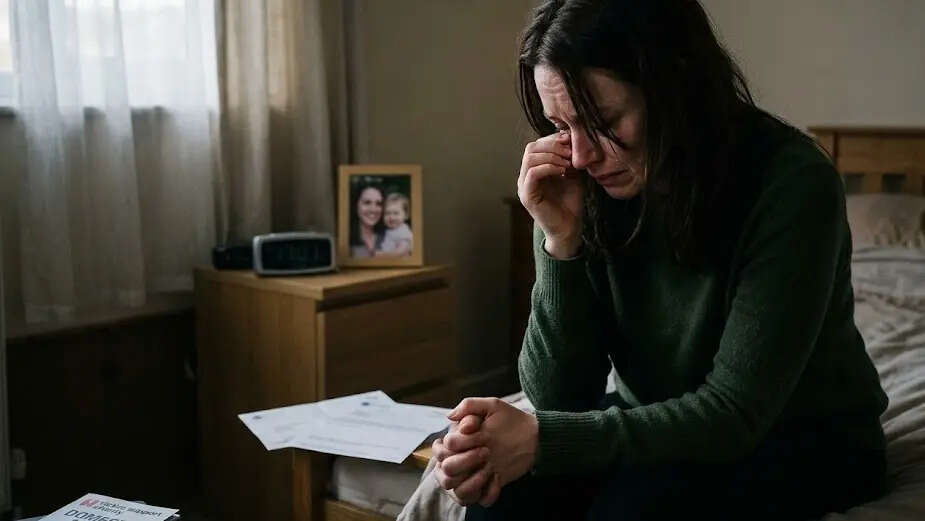
The numbers don't lie, but they certainly sting. For the second year running, more people in England and Wales have died by suicide following domestic abuse than have been killed by a partner. We aren't just talking about a minor statistical shift here. We're looking at a fundamental change in how we understand the "lethality" of an abusive relationship.
If you thought domestic violence only meant physical bruises, the latest National Police Chiefs’ Council (NPCC) report is a wake-up call. It reveals that between April 2023 and March 2024, there were 98 suspected victim suicides linked to domestic abuse. Compare that to 80 intimate partner homicides in the same period. The math is simple: the "invisible" killer—coercive control and psychological torture—is now deadlier than the physical one.
The silent epidemic of coercive control
We've spent decades looking for the "smoking gun" in domestic abuse cases. We look for broken bones or police call-outs. But the Domestic Homicide Project data shows that 58% of these suicides involved a clear history of coercive and controlling behaviour.
This isn't just "arguing." It's the systematic stripping away of a person’s autonomy. Imagine someone monitoring your every text, deciding what you wear, and slowly cutting you off from your family until you're convinced you're worthless and alone. When you're trapped in that headspace, suicide doesn't always feel like a choice; it feels like the only exit from a prison with no walls.
The report also found that in 27% of these cases, there was a history of non-fatal strangulation. This is a massive red flag. Research from the Institute for Addressing Strangulation (IFAS) suggests that if a partner puts their hands around your neck once, the risk of you being killed—or driven to take your own life—skyrockets. It’s a high-level marker of ultimate control.
Why the police are finally seeing the patterns
Honestly, the rise in these figures isn't necessarily because more people are ending their lives than five years ago. It’s because the police are finally getting better at "professional curiosity."
In the past, if someone took their own life, the police would often close the file as a tragic, personal choice. Now, officers are being trained to look backward. They’re checking police systems for a history of domestic calls. They’re talking to friends and family to see if there was a "silent" abuser in the background.
- 98 suspected suicides following domestic abuse (SVSDA)
- 80 intimate partner homicides (IPH)
- 39 adult family homicides
- 11 child deaths
When you see that 80% of perpetrators were already known to the police, it’s clear that the system is missing opportunities to step in. A third of these suspects were also known to other agencies, like mental health services or social services. The data shows we’re still working in silos while people are literally dying for a joined-up conversation.
The demographic reality no one wants to admit
The report isn't just about total numbers; it’s about who is being hit the hardest. Most victims are women aged 25 to 54. But there's a disturbing trend in "adult family homicides" too, where older victims (65+) are disproportionately represented, often killed by their own children or relatives.
We also have to talk about the "falls from height." The report flagged 22 cases of deaths following a fall. Out of those, 36% were recorded as suspected suicides following abuse. Most shockingly, three of those victims were pregnant. It’s a level of desperation that is hard to wrap your head around, yet it’s happening in our neighborhoods every single week.
The problem with "unavoidable tragedies"
For too long, the justice system treated suicide as a mental health issue and homicide as a criminal one. This report proves that's a false distinction. If an abuser's behavior drives a victim to suicide, that is a direct consequence of their crimes.
We're starting to see "posthumous charges" where abusers are prosecuted for their actions even after the victim is gone. It's a start, but it’s not enough. Assistant Commissioner Louisa Rolfe has been blunt: we need a "multi-agency" approach. That means your GP, your housing officer, and the police need to be reading from the same script.
What needs to happen right now
If you're reading this and you recognize these patterns in your own life or someone else's, don't wait for a "physical" escalation. The psychological weight is enough to be fatal.
- Trust your gut on coercive control. If you feel like you're "walking on eggshells" or have lost your sense of self, that is a high-risk situation.
- Use Clare's Law. You have the "Right to Ask" the police about a partner’s violent past. Use it.
- Pressure for policy change. We need to demand that "Domestic Homicide Reviews" are mandatory for every suspected suicide where domestic abuse is a factor.
- Support specialist services. Groups like Refuge and Women’s Aid aren't just "charities"; they’re frontline lifesavers that understand the link between control and suicide better than anyone.
The shift in these statistics is grim, but it's also a chance to change how we save lives. We have to stop waiting for the physical blow and start intervening when the psychological cage is being built.
If you are in the UK and need help, call the National Domestic Abuse Helpline at 0808 2000 247 or contact Samaritans at 116 123. Don't let the silence be the last word.