The maritime dispute between Sri Lanka and India over bottom trawling is not a mere diplomatic friction; it is a calculated failure of resource management that threatens the biological baseline of the Palk Strait. While official requests from the Sri Lankan Fisheries Ministry to the Tamil Nadu state government often focus on the immediate arrest of fishermen, the structural issue lies in the collision between industrial efficiency and artisanal sustainability. The Palk Strait operates as a shared, shallow-basin ecosystem where the application of bottom trawling—a method involving heavy weighted nets dragged across the seabed—functions as a form of clear-cutting that destroys the very habitats required for species recruitment.
The Mechanics of Benthic Destruction
To understand why Sri Lanka maintains a hardline stance against bottom trawling, one must define the mechanical impact on the benthic zone. Bottom trawls utilize "otter boards" and heavy ground gear to keep the net open and in contact with the seafloor. In the shallow waters of the Palk Strait, where the depth often stays under 15 meters, this equipment does not just harvest fish; it reconfigures the physical environment. You might also find this connected coverage interesting: The Desert and the Monsoon Meet in a Shared Lab.
- Habitat Leveling: The Palk Strait is characterized by seagrass beds and coral patches that serve as nurseries for shrimp, blue swimmer crabs, and various finfish. Trawling shears these structures, removing the protection necessary for juvenile stages of high-value exports.
- Sediment Resuspension: The physical dragging of nets kicks up plumes of silt. This increases turbidity, which blocks sunlight from reaching photosynthetic organisms on the seabed. The resulting hypoxic conditions can lead to localized "dead zones" where mobile species flee and sedentary species perish.
- Non-Selective Biomass Extraction: Trawling is inherently inefficient in its selectivity. For every kilogram of target shrimp, several kilograms of bycatch—often juvenile fish or non-commercial species—are destroyed and discarded. This creates a "recruitment overfishing" scenario where the population cannot replenish itself because the breeding stock is removed before reaching maturity.
The Economic Asymmetry of the Conflict
The conflict is driven by a stark divergence in the economic models of the two fishing fleets. The northern Sri Lankan fishing community, largely recovering from decades of civil war, relies on small-scale, passive gear such as gillnets and traps. These methods are labor-intensive but low-impact. Conversely, the Indian fleet from Tamil Nadu, specifically from districts like Rameswaram and Nagapattinam, transitioned to mechanized trawling during the 1960s and 70s as part of the "Blue Revolution" intended to maximize export revenue.
This creates a predatory economic relationship. A single mechanized trawler can destroy dozens of artisanal gillnets in one night. For a Sri Lankan fisherman, the loss of a net represents a capital wipeout that can take months or years to recover. This is not just a competition for fish; it is a direct encroachment on the means of production for the northern Sri Lankan economy. As discussed in detailed reports by USA Today, the effects are significant.
The Failure of the International Maritime Boundary Line (IMBL)
The 1974 and 1976 agreements between India and Sri Lanka established the IMBL, placing the rich fishing grounds of the Palk Bay under Sri Lankan sovereignty. However, the IMBL exists as a legal abstraction rather than a physical or economic barrier. Several factors contribute to the constant breach of this boundary:
- Resource Depletion in Indian Waters: The intense fishing pressure on the Indian side of the IMBL has led to a collapse in catch-per-unit-effort (CPUE). Indian trawlers cross into Sri Lankan waters because the biomass density there is significantly higher due to more stringent (though often forced) conservation periods during the civil war.
- Subsidization of Inefficiency: The Indian trawling fleet is supported by fuel subsidies. These subsidies artificially lower the operational cost of trawling, allowing vessels to travel further and stay out longer than would be economically viable in a free-market scenario. By decoupling the cost of fuel from the value of the catch, the government inadvertently incentivizes the crossing of international borders.
- Political Gridlock: The Tamil Nadu state government faces immense pressure from the fishing vote bank. Any move to strictly enforce the IMBL or ban trawling is met with protests that can destabilize local political coalitions. This creates a disconnect between the Union Government in New Delhi, which seeks stable bilateral ties with Colombo, and the State Government in Chennai, which prioritizes the immediate livelihoods of the trawler owners.
Legal and Policy Frameworks for Resolution
Sri Lanka’s 2017 amendment to the Fisheries and Aquatic Resources Act effectively banned bottom trawling within its waters, providing a clear domestic legal mandate for the arrest and seizure of foreign vessels. However, legal mandates without viable alternatives for the offending fleet rarely yield long-term results.
The transition requires a tiered strategy that moves beyond the "arrest and release" cycle:
Deep-Sea Fishing Diversification
The most logical escape from the Palk Strait bottleneck is moving the Indian mechanized fleet into the deep sea (Exclusive Economic Zone). This involves retrofitting trawlers for long-lining or gillnetting in deeper waters to target tuna and other pelagic species. The capital requirement for this transition is high, and the skill set required for deep-sea navigation is fundamentally different from shallow-water trawling.
Aquaculture as a Buffer
Expanding seaweed farming and sea cucumber ranching in the Palk Bay offers an alternative income stream for coastal communities. These are low-entry-cost ventures that can be managed by the same demographic currently engaged in trawling. If the economic density of aquaculture exceeds that of poaching, the incentive to cross the IMBL diminishes.
Joint Resource Management
The establishment of a Palk Bay Authority, a bilateral body with the power to issue joint licenses and enforce seasonal bans across the entire strait, is the only way to treat the ecosystem as a single unit. This would require harmonizing the fishing calendars of both nations to ensure that species have a unified "safe window" for spawning and growth.
The Strategic Imperative for Tamil Nadu
The persistence of bottom trawling is a terminal strategy. Even if Sri Lanka were to stop all enforcement today, the Indian trawling fleet would eventually collapse under the weight of its own ecological impact. As the seabed is sterilized, the yields will continue to drop until the fuel costs, even with subsidies, exceed the value of the catch.
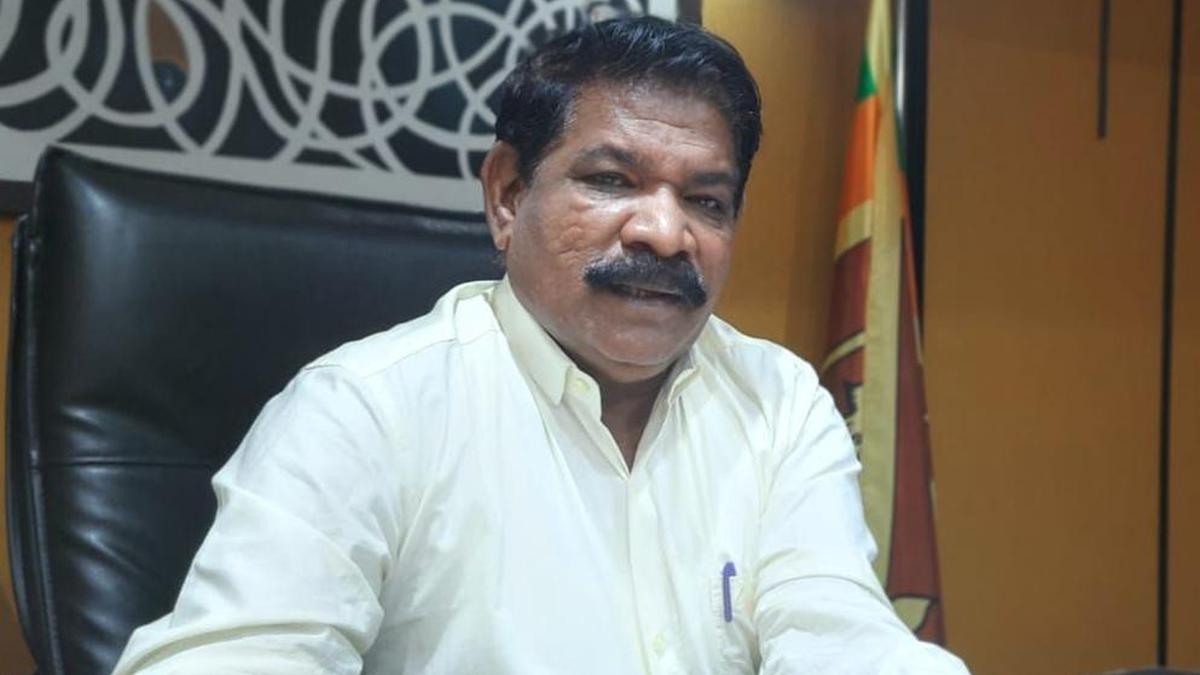
The request from the Sri Lankan Fisheries Minister to Chief Minister Vijay is not a request for a favor; it is a warning about the impending total collapse of a shared regional resource. The strategy for the Tamil Nadu administration must shift from defending the "right to fish" to ensuring the "existence of fish." This requires an immediate moratorium on the construction of new trawlers and a phased buy-back program for existing ones.
The transition must be framed not as a concession to a neighboring nation, but as a mandatory restructuring of an industry that has reached its ecological and economic limit. Failure to act results in a permanent loss of the Palk Strait's regenerative capacity, turning a vibrant maritime corridor into a biological desert.