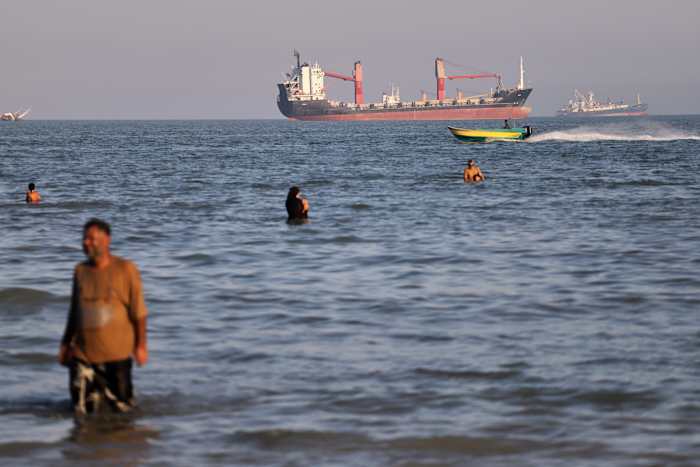
The continued transit of crude oil supertankers through the Strait of Hormuz under active threat conditions is not an act of geopolitical bravado; it is a calculated equilibrium maintained by maritime insurance mechanics, state-backed security protocols, and inelastic global energy demand. Approximately one-fifth of the world's liquid petroleum consumption passes through this 21-mile-wide choke point daily. The decision by commercial fleet operators to navigate these waters during periods of heightened friction with Iran’s Islamic Revolutionary Guard Corps Navy (IRGCN) depends on a precise cost-benefit calculation where the risk of vessel seizure or kinetic damage is weighed against the structural penalties of supply chain rerouting.
To understand how global trade absorbs this friction, the problem must be deconstructed into its operational, financial, and strategic components. The persistence of shipping volumes through a contested corridor reveals the structural vulnerabilities—and the hidden stabilization mechanisms—of global energy distribution.
The Physical and Operational Constraints of the Chokepoint
The Strait of Hormuz is a geographic bottleneck that compresses global shipping into narrow, predictable channels. The actual maritime traffic separation scheme consists of two two-mile-wide lanes—one inbound, one outbound—separated by a two-mile buffer zone. This configuration restricts tactical maneuvering for Very Large Crude Carriers (VLCCs), which can exceed 300 meters in length and require up to 3 kilometers to come to a complete stop when fully laden.
The physical constraints dictate the tactical environment. Because these traffic lanes fall within the territorial waters of Oman and Iran under the United Nations Convention on the Law of the Sea (UNCLOS), transit is legally governed by the regime of transit passage. This regime allows continuous and expeditious navigation solely for the purpose of transit. However, the physical proximity to Iranian coastal infrastructure gives asymmetric actors a permanent geographic advantage.
The IRGCN utilizes a maritime strategy optimized for this specific terrain. Rather than deploying large surface combatants that are vulnerable to conventional naval strikes, the doctrine relies on swarm tactics involving fast attack craft (FAC) armed with anti-ship missiles, marine commandos trained for helicopter-borne boarding operations, and naval mines. The narrowness of the shipping lanes ensures that commercial vessels remain permanently within the operational envelope of shore-based anti-ship cruise missile batteries stationed on Qeshm and Abu Musa islands.
This operational reality creates an immediate asymmetric vulnerability. A commercial tanker tracking at 13 knots cannot outmaneuver a fleet of fast attack craft capable of speeds exceeding 40 knots. The vulnerability is entirely structural, meaning that safety cannot be achieved through evasion, but must instead be managed through financial hedging and international military escort frameworks.
The Cost Function of Geopolitical Risk
The decision to send a vessel through a high-threat zone is governed by a complex cost function. Commercial shipping operators evaluate profitability by balancing freight rates against the escalating expenses of transit under threat. The financial model for a single VLCC voyage through the Strait of Hormuz incorporates three primary variables: freight premiums, war risk insurance surcharges, and crew hazard pay.
The War Risk Insurance Mechanism
The primary economic indicator of tension in the Strait of Hormuz is the War Risk Additional Premium (WRAP). Standard hull and machinery insurance policies typically exclude designated areas of high risk, which are determined by the Joint War Committee (JWC) of the Lloyd's Market Association. When the JWC designates the Persian Gulf and the Gulf of Oman as listed areas, shipowners must pay an additional premium for every transit.
This premium is calculated as a percentage of the vessel's total value. In baseline periods, the WRAP is negligible. During periods of active ship seizures or limpet mine attacks, this rate can escalate from 0.025% to over 0.5% of the hull value for a single seven-day transit. For a modern VLCC valued at $100 million, a 0.5% premium translates to an immediate $500,000 increase in operational expenditure per voyage.
Total Voyage Cost = Baseline Operating Expense + (Hull Value * WRAP) + Crew Hazard Premium + Freight Opportunity Cost
The market absorbs these costs through the Worldscale rating system, which adjusts freight rates to compensate for increased operational expenses. If the spot freight market rises sufficiently to cover the WRAP and yield a profit margin, tank owners will continue to book charters despite the physical risks. The threshold for halting traffic is not the existence of danger, but the point at which insurance premiums exceed the marginal revenue of the voyage.
The Supply-Side Inelasticity
The reason buyers are willing to absorb these elevated freight costs lies in the structural rigidity of global refinery configurations. Refineries in the Asia-Pacific region, particularly in China, India, Japan, and South Korea, are specifically calibrated to process the sour crude grades characteristic of Middle Eastern production (such as Saudi Arab Light or Iraqi Basrah Heavy).
Substituting these grades with sweet crudes from the United States or West Africa requires complex adjustments to refinery configurations, which reduces yield efficiency and increases processing costs. The physical reliance on specific chemical profiles ensures that Asian buyers will continue to bid up freight prices to guarantee a continuous flow of raw material through the Strait, effectively subsidizing the risk premiums demanded by shipowners.
Escalation Dynamics and Asymmetric Maritime Warfare
The interactions between commercial shipping, international naval forces, and the IRGCN follow a predictable escalation matrix. The IRGCN does not execute random acts of aggression; its maritime interdictions are calibrated instruments of statecraft designed to achieve specific diplomatic or economic leverage without triggering a full-scale conventional military response.
The operational methodology typically involves targeted interdictions based on specific pretexts, such as alleged maritime violations, judicial disputes, or sanctions enforcement retaliation. The following matrix outlines the stages of escalation and the corresponding commercial impacts.
| Escalation Phase | IRGCN Operational Manifestation | Commercial Operational Response | Impact on Maritime Insurance |
|---|---|---|---|
| Phase 1: Low-Level Harassment | Electronic jamming of GPS signals, aggressive maneuvering by fast craft. | Increased bridge lookouts, implementation of Best Management Practices (BMP5). | Baseline premiums; minor adjustments to risk assessments. |
| Phase 2: Targeted Interdiction | Seizure of specific flag-state vessels using heliborne commandos or judicial pretexts. | Alteration of transit schedules; avoidance of specific flag states (e.g., UK, US registration). | WRAP increases sharply (e.g., 0.1% to 0.25% of hull value). |
| Phase 3: Kinetic Disruption | Deployment of limpet mines, unmanned aerial vehicles (UAVs), or anti-ship missiles against commercial hulls. | Mandatory convoy participation; rerouting of non-essential tonnage; deployment of private armed security teams. | Extreme premium spikes; potential withdrawal of coverage by certain underwriters. |
| Phase 4: Total Denial (Theoretical) | Comprehensive mining of the shipping lanes; sustained missile barrages against all commercial traffic. | Complete suspension of commercial traffic through the chokepoint. | Complete closure of insurance market for the region; declaration of Force Majeure. |
The strategic stability of the strait depends on the transition between Phase 2 and Phase 3. When state actors respond to Phase 2 actions with military protection mechanisms, such as Operation Sentinel or the European Maritime Awareness in the Strait of Hormuz (EMASoH), the risk is effectively socialized. Naval escorts reduce the probability of successful interdiction, which stabilizes insurance markets and allows commercial flows to continue.
The Operational Limits of Alternative Routes
A common misconception is that global energy security can be decoupled from the Strait of Hormuz through the utilization of cross-border pipelines. An examination of the alternative transport infrastructure reveals that the total redundant capacity is entirely insufficient to offset a prolonged closure of the waterway.
The two primary land-based alternatives are:
- The Petroline (East-West Crude Oil Pipeline): Spanning Saudi Arabia from Abqaiq to the Red Sea port of Yanbu. It has a nominal capacity of approximately 5 million barrels per day (mb/d), but its effective unutilized capacity rarely exceeds 2 mb/d due to ongoing domestic allocations and existing supply contracts.
- The Abu Dhabi Crude Oil Pipeline (ADCOP): Traversing the United Arab Emirates to the port of Fujairah outside the Persian Gulf. This line has a maximum operational capacity of 1.5 mb/d.
Combining all operational bypass pipelines yields a maximum diversion capability of roughly 3.5 to 4 mb/d. Given that daily flows through the Strait of Hormuz regularly exceed 20 mb/d, more than 75% of the region’s oil exports have no alternative physical path to market. Rerouting via these pipelines also introduces secondary bottlenecks, particularly at the Bab el-Mandeb strait, which presents its own set of acute geopolitical and maritime security risks.
The lack of scalable alternatives ensures that the Strait of Hormuz remains an irreplaceable corridor. The global energy market cannot bypass the bottleneck; it must manage the friction inherent within it.
Strategic Allocation of Maritime Risk
The persistence of tanker traffic through the Strait of Hormuz demonstrates that maritime trade is highly resilient when backed by sophisticated financial underwriting and state-level security architecture. The system operates via a continuous redistribution of risk: the physical danger is borne by the crew and the hull, the financial volatility is absorbed by global oil consumers through the risk premium built into energy prices, and the security umbrella is financed by international naval coalitions.
This equilibrium will hold as long as two conditions are met. First, the actions of the IRGCN must remain beneath the threshold of sustained kinetic destruction that would render hull insurance completely unobtainable. Second, the spot price of crude oil must maintain a premium sufficient to offset the rising cost of war-risk insurance and hazard compensation. If either side of this economic equation fails—either through an uninsurable escalation of kinetic violence or a collapse in global oil demand—the traffic through the strait will halt. Until that threshold is crossed, the tankers will continue to move, driven by the rigid arithmetic of global supply and demand.