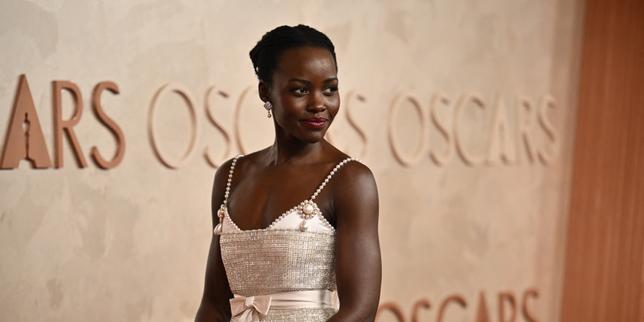
Elon Musk is angry online again. This time, his target is Christopher Nolan, who reportedly cast Lupita Nyong’o as Helen of Troy in a hypothetical or upcoming cinematic take on Homer’s "The Odyssey." Musk took to social media to bash the casting, echoing a predictable online chorus screaming about historical accuracy and intellectual property fidelity.
The internet quickly divided into its usual, exhausted camps. On one side, the cultural purists crying foul over historical revisionism. On the other, the defensive corporate loyalists championing diversity wins.
Both sides are entirely missing the point.
The outrage machine wants you to believe this is a battle over the soul of Western literature. It isn't. It’s a masterclass in how modern media manipulates cultural friction to guarantee box office returns. Elon Musk isn’t defending Homer; he’s playing the role of the useful idiot in a highly sophisticated marketing machine. Christopher Nolan isn’t breaking new ground; he’s utilizing a centuries-old theatrical tradition.
Let's dismantle the noise and look at the cold mechanics of how culture, casting, and capital actually intersect.
The Flawed Premise of Historical Accuracy in Mythology
The loudest argument against casting an actress of color as Helen of Troy is that it violates "historical accuracy." This argument collapses under the slightest intellectual scrutiny.
Helen of Troy is a mythological figure. She is the daughter of Zeus, who took the form of a swan to impregnate her mother, Leda. She hatched from an egg. To demand rigid genetic accuracy for a character born from a divine waterfowl is inherently absurd.
Even if we treat the Trojan War cycle as a reflection of Late Bronze Age Mycenaean reality, the concept of race as we understand it today did not exist in ancient Greece. The Greeks divided the world into those who spoke Greek and those who did not (barbarians). They did not view the world through the lens of modern transatlantic racial classifications.
Hollywood has spent a century casting Anglo-Saxon actors to play Middle Eastern, North African, and Mediterranean figures. Nobody weaponized "historical accuracy" when white actors with British accents played Egyptian pharaohs or Roman emperors. The selective outrage exposes itself not as a defense of history, but as an discomfort with change.
Why Christopher Nolan Does Not Care About Your Tradition
Christopher Nolan is a filmmaker obsessed with structure, time, and subversion. He does not make textbook historical reenactments. He made a movie about Dunkirk that functioned as a triptych of compressing timelines. He made a movie about Oppenheimer that played out like a psychological horror film and a courtroom drama wrapped into one.
If Nolan is adapting Homer, he isn't trying to give you a BBC documentary. He is looking for actors who can convey the gravity of mythic proportions.
Lupita Nyong’o is an Academy Award-winning actress with immense screen presence. In the ancient texts, Helen is not just pretty; she is terrifyingly beautiful. Her beauty is a destructive force of nature that destabilizes empires. It requires an actress who can command a room by simply walking into it. Nyong’o has that specific, regal gravitas.
When an auteur like Nolan casts against type or tradition, it’s rarely a mandate handed down from a corporate diversity committee. It’s an artistic choice designed to strip away the calcified layers of audience expectation. If you see a standard, blonde Helen, your brain goes on autopilot. You think of every classical painting you saw in a textbook. If you see Nyong'o, you are forced to re-evaluate the character's status as an outsider, a captive, and a catalyst for global war.
The Cultural Outrage Machine is Free Marketing
We need to talk about the economic reality of these controversies. Studios no longer view online backlash as a crisis. They view it as a KPI.
The math behind modern film marketing is brutal. Reaching a global audience through traditional advertising costs hundreds of millions of dollars. But if you can spark an ideological proxy war on social media? The audience does the marketing for you.
Imagine a scenario where a studio releases a standard trailer for a mythological epic. It gets a few million views, some mild interest, and a lot of shrugs. Now, imagine a billionaire with over a hundred million followers tweets his disgust at a casting choice. Instantly, thousands of media outlets write articles dissecting the tweet. Millions of users argue in the comment sections. The movie trends for three days straight.
That is free publicity worth tens of millions of dollars. By engaging in this public spat, Musk is driving awareness straight to Nolan's project. The contrarians think they are fighting a culture war, but they are actually just working as unpaid interns for a studio's PR department.
The Double Standard of Creative Liberty
We accept massive historical liberties in cinema every single day without a peep.
- We watch gladiators speak with classical British accents.
- We watch historical dramas where the costumes are centuries out of date to look more fashionable.
- We watch William Wallace fight for Scottish independence without wearing a kilt, because kilts weren't invented yet.
We grant filmmakers the license to lie to us constantly in service of a better story. The only time the collective internet throws a tantrum is when that license involves the skin color of a performer.
This double standard damages art. If we lock casting into a rigid, literalist box, we destroy the universality of classical theater. For centuries, Shakespeare has been performed by actors of every imaginable background, setting Macbeth in feudal Japan or Julius Caesar in modern Washington D.C. The text survives because the themes are universal. Homer’s themes of pride, grief, and the devastating cost of war belong to humanity, not to a single demographic pool.
Stop Asking the Wrong Questions About Cinema
The question people keep asking is: "Is this casting choice accurate to the source material?"
That is the wrong question. The right question is: "Does this casting choice make the story more compelling?"
If you want a literal translation of the text, read the Robert Fagles translation of the Iliad. Cinema is an act of translation across mediums. It requires reinvention. If a director isn't going to bring a fresh, jarring perspective to a 3,000-year-old story, they shouldn't bother making the film at all.
The real risk in Hollywood right now isn't "woke casting." The real risk is cowardice. The risk is studios making safe, sanitized, algorithmically approved content that offends no one and inspires no one. A polarizing casting choice that provokes a visceral reaction from the world's richest man proves that cinema still has the power to disrupt.
Stop letting tech billionaires dictate your cultural media literacy. Stop treating ancient myths like fragile museum pieces that will shatter if exposed to a new perspective. Judge the film when the lights go down in the theater, based on the power of the performances and the vision of the director. Everything else is just noise designed to make you click.