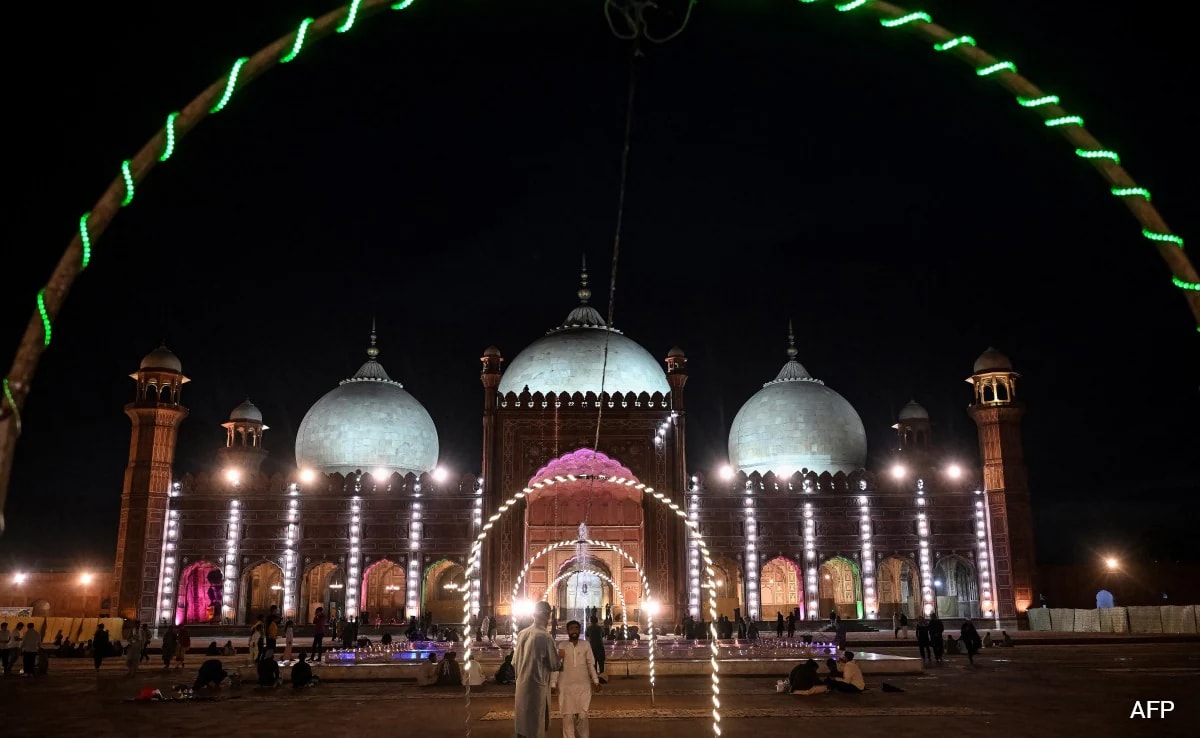
An old man stands at the intersection of memory and asphalt in old Lahore. If you asked him for directions to Ram Gali, he might pause, his eyes tracking the chaotic dance of rickshaws and motorbikes, before pointing you down a narrow, sun-drenched alleyway. But if you had asked him for directions just a few decades ago, the name on his lips would have been different. He would have sent you down Rehman Gali.
Names are the anchors we drop into history to keep ourselves from drifting away. In Lahore, a city that has swallowed empires and birthed poets, those anchors are being quietly, systematically hauled up. Street by street, the map of Pakistan’s cultural capital is being redrawn. It is not an expansion of territory, but a contraction of memory.
To understand why a street name changes is to understand who holds the eraser of history.
The Weight of a Zinc Sign
Consider a hypothetical resident named Tariq. He has lived in the same brick house for seventy years. His grandfather bought it before the partition of 1947, back when the neighborhood was a tapestry of shared festivals and intertwined lives. Tariq grows up on a street named after a Hindu philanthropist or a Sikh merchant. The name on the blue zinc sign at the corner is as familiar to him as the shape of his own front door.
Then, one morning, the sign changes.
The old name, rooted in centuries of coexistence, is replaced by an Islamic or nationalistic alternative. Ram Gali becomes Rehman Gali. Or, in a more recent wave of bureaucratic revisionism, the process reverses, turning Rehman Gali back into Ram Gali as the state attempts to reckon with tourism, heritage preservation, or shifting political winds.
For Tariq, the change is a quiet earthquake. The physical bricks of his home remain unmoved. The open sewers still run the same way. The tea stall on the corner still burns the same milk. Yet, the emotional landscape has shifted. The geography of his childhood has been declared incorrect.
This is the reality across Lahore. The City District Government and various development authorities have spent decades renaming thoroughfares, intersections, and neighborhoods. Krishan Nagar became Islampura. Sant Nagar became Devpura, then something else entirely. Every renaming is a bureaucratic stroke that attempts to solve a crisis of identity by pretending the past was simpler than it actually was.
The Bureaucracy of Belonging
Why does a state dedicate administrative energy to changing the name of an alleyway where only two mule carts can pass at a time?
The answer lies in the architecture of national identity. When Pakistan was carved out of the subcontinent in 1947, it faced the monumental task of defining what it meant to be a Pakistani. Lahore, with its deeply pluralistic past—home to magnificent gurdwaras, sprawling Hindu temples, and Islamic monuments—posed a challenge to a singular narrative. The easiest way to build a specific future was to rename the past.
Official records suggest that the renaming committees operate on guidelines meant to honor national heroes, Islamic martyrs, and prominent philanthropists. But the ground reality is a tug-of-war between historical accuracy and ideological convenience.
When a street undergoes this transformation, the process is deceptively mundane. A petition is moved. A committee meets in a drab government office cooled by a groaning ceiling fan. Files are stamped. Then, a painter with a ladder and a bucket of white paint arrives at the corner. Within an hour, a century of local reference points is wiped clean.
But identity is stubborn. It does not wash away with water-based enamel.
Walk through these neighborhoods today and ask a resident where they live. The youth might give you the official post-office-approved name, a title that sounds clinical and clean. The elders will use the old name, their voices softening as they speak it. They are practicing a form of quiet resistance, keeping a ghost city alive through speech.
The Cost of the Erasure
There is a practical chaos to this historical revisionism. Imagine the mail carrier navigating a city where one street has three identities depending on the age of the person you ask.
But the real problem lies elsewhere, far deeper than misdelivered letters or confused delivery drivers.
When you remove the names of the minority communities who built the hospitals, funded the colleges, and laid the literal foundations of the city, you create a sterile environment. You teach the next generation that their city was always homogenous, that it never knew the richness of difference. You erase the generosity of Ganga Ram, the legendary engineer who built Lahore’s modern infrastructure, or the legacy of countless local figures whose only crime was practicing a different faith.
In recent years, a counter-movement has gained a fragile foothold. Historians, activists, and cultural preservationists have begun to argue that Lahore is losing its soul to this nomenclature sanitization. There have been sporadic efforts to restore original names, to acknowledge that Ram Gali belongs to the history of Lahore just as much as any modern avenue.
This creates a dizzying whiplash for the inhabitants. A street changes from its pre-partition name to an Islamic name in the 1970s during a wave of nationalization, only to be targeted for restoration decades later under the banner of heritage tourism. The people living there become spectators to their own addresses, watching their identity flip back and forth like a coin tossed by politicians.
The Ghost Map of Lahore
If you were to overlay a map of Lahore from 1930 with a map from today, the discrepancies would look like scars. The old city was a living organism where names grew organically from the people who inhabited the spaces. A lane was named after a blacksmith, a courtyard after a specific banyan tree, a neighborhood after the community that kept its lamps burning at night.
Modern renaming replaces this organic growth with top-down edicts. It assumes that citizens are empty vessels to be filled with state-sanctioned patriotism.
But a city is not a textbook. It cannot be edited without consequences.
When we look closely at the streets of Lahore, we see that the names are never just names. They are arguments. They are assertions of power. The changing of Rehman Gali to Ram Gali, or vice versa, is a testament to an ongoing struggle for the narrative of a nation that still hasn't decided how much of its own history it can afford to remember.
The sun sets over the old walled city, casting long shadows across the narrow lanes. The paint on the street signs cracks under the intense Punjabi heat. Beneath the new letters, if the light hits the metal just right, you can still see the faint, raised outlines of the characters that came before. They refuse to disappear entirely, waiting in the dust for someone to read them again.