Europe is at a crossroads where idealism meets a cold, hard radiator. For decades, the continent treated atomic energy like a family secret it wanted to forget. Germany shut down its last three plants in 2023. Italy walked away years ago. Spain has a phase-out plan in motion. But the math isn't adding up anymore. Wind and solar are great, but they don't blow or shine on command. Now, with energy security becoming a matter of national survival rather than a policy debate, the nuclear conversation is getting loud again.
It's about time.
If you look at the power grids of the most successful low-carbon economies in Europe, one thing stands out. They didn't get there with just turbines and panels. France and Sweden used nuclear to anchor their grids. Today, the rest of the continent is realizing that hitting net-zero without a baseline of carbon-free "always-on" power is basically impossible. We aren't just talking about keeping the lights on in homes. We're talking about saving the heavy industry that keeps the European economy from sliding into irrelevance.
The high price of being wrong about energy
Energy prices in Europe have been a disaster for manufacturers. When you look at the cost of electricity for a steel mill or a chemical plant in Germany compared to one in the US or China, the gap is terrifying. High costs drive companies away. They take the jobs and the tax revenue with them.
The pro-nuclear shift isn't coming from a place of sudden love for uranium. It's coming from fear. Governments are scared of deindustrialization. They're scared of being dependent on volatile gas markets. You can see this fear turning into policy in places like Poland, which is planning its first nuclear power station with American help. Even the Czech Republic and Romania are doubling down.
Critics will tell you it's too expensive. They'll say it takes too long. They have a point, but they're missing the bigger picture. The cost of not having reliable power is far higher than the cost of building a reactor. We've seen what happens when the wind stops blowing during a cold snap. Prices spike, factories pause, and people suffer. Nuclear provides a floor. It’s the steady heartbeat of a modern economy.
Breaking the myth of the renewables only grid
There's a common belief that we can just build enough batteries to bridge the gaps in wind and solar. Honestly, that’s a fantasy right now. The scale of battery storage needed to back up an entire continent for a week of calm, cloudy weather is staggering. It doesn't exist.
Nuclear energy fills that gap perfectly. It runs 90% of the time. Solar? In Northern Europe, you're lucky to get 15% efficiency over the course of a year. If you want to decarbonize heating and transport, you're going to need a massive increase in total electricity production. Paving the entire countryside with panels isn't just politically difficult—it's physically insufficient.
France is the clear leader here, and they've proven it works. They have some of the lowest carbon emissions per capita in the G7. They’re now planning a massive "renaissance" of their nuclear fleet, with six new large reactors on the way. They understand that you can't run a 21st-century civilization on intermittent sources alone.
The Small Modular Reactor revolution
The biggest complaint about nuclear is the construction time. Hinkley Point C in the UK is a prime example of how not to do it. It’s years behind schedule and billions over budget. Big, bespoke projects are a nightmare for investors.
That’s why everyone is talking about Small Modular Reactors or SMRs.
Think of them like airplanes. Instead of building a unique, massive structure on-site every time, you build the components in a factory and ship them to the location. It's meant to be faster, cheaper, and safer. Rolls-Royce in the UK and various startups in the US are racing to get these licensed.
If SMRs work, the game changes. You could put a small reactor next to a data center or a large factory. You could replace old coal plants and use the existing grid connections. It makes the whole process more manageable for smaller countries that can't afford a $30 billion mega-project.
Dealing with the radioactive elephant in the room
Waste is the argument that never goes away. People act like we have no idea what to do with spent fuel. That’s just not true.
Most nuclear waste is low-level stuff—tools and clothing. The high-level waste, the actual fuel rods, is a tiny volume. In fact, all the high-level waste ever produced in the US could fit on a single football field stacked about 50 feet high. We know how to store it. Finland is currently finishing Onkalo, a deep geological repository that will keep waste safe for 100,000 years.
Compare that to the waste from other industries. Coal plants pump toxins directly into the air we breathe. Solar panels and wind turbine blades create massive amounts of physical waste that is often hard to recycle. We hold nuclear to a standard of perfection that we don't apply to anything else. It's a double standard that’s actually hurting the planet.
Why the finance world is changing its mind
For a long time, green finance rules in Europe—the "Taxonomy"—excluded nuclear. This made it harder and more expensive to get loans for new projects. It was a political move, driven by anti-nuclear sentiment in a few key countries.
That changed. After a lot of infighting, the EU finally included nuclear as a "green" investment. This was a massive win for the industry. It signals to banks and pension funds that nuclear is a legitimate part of the transition. Without private capital, new builds are a heavy lift for taxpayers. Now that the rules have shifted, the money is starting to look at nuclear differently.
Investors like stability. While the upfront cost is high, a nuclear plant can run for 60 or even 80 years. Once the debt is paid off, they produce some of the cheapest electricity on the planet. They are long-term cash machines.
The geopolitical reality check
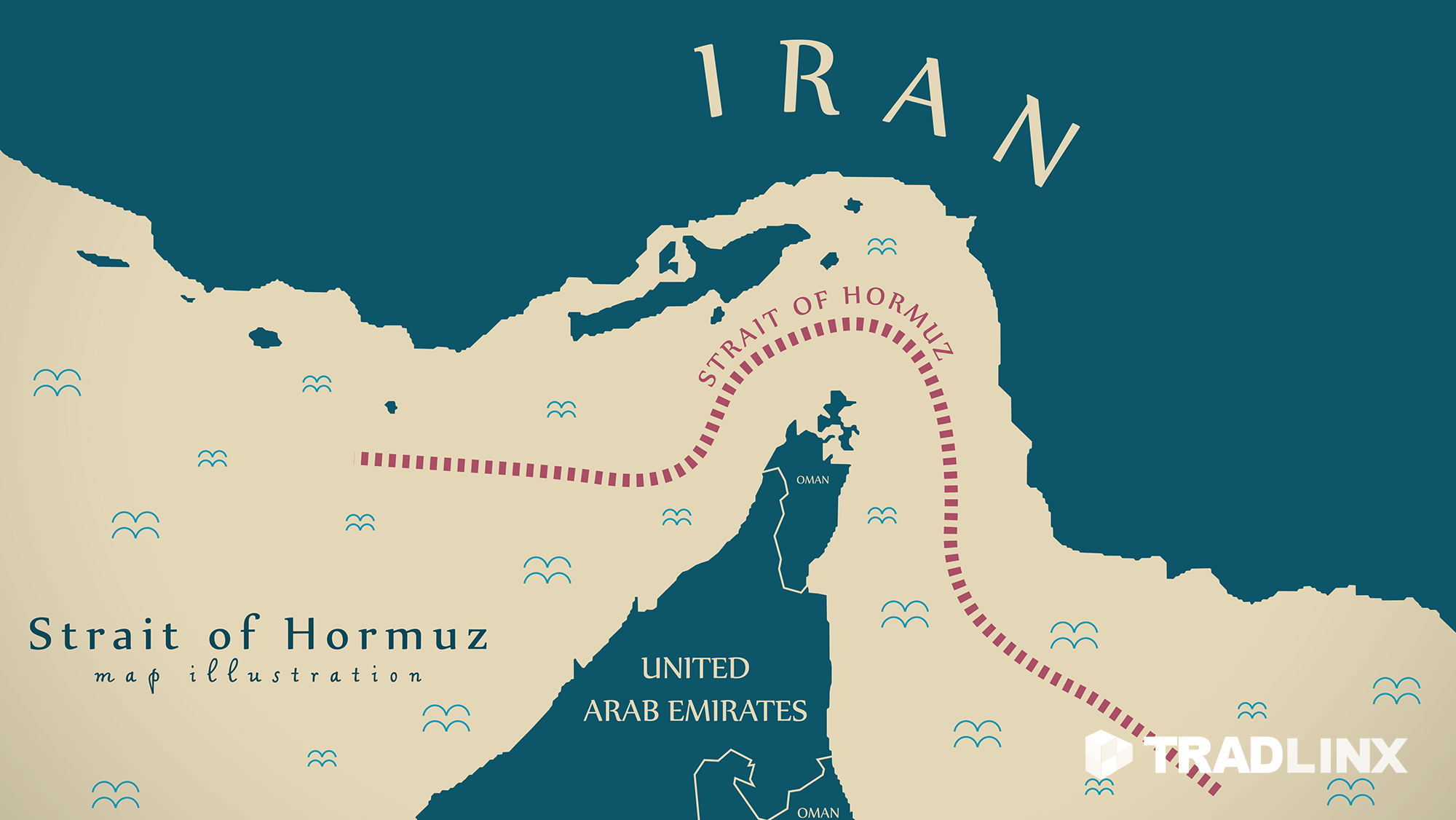
We can't ignore where our energy comes from. Relying on gas from unstable regions was a strategic blunder that Europe is still paying for. Nuclear fuel is different. Uranium is abundant and comes from diverse places like Canada, Australia, and Kazakhstan. You can also store years' worth of fuel in a very small space.
Energy independence isn't just a buzzword. It’s the difference between having a say in your own foreign policy and being held hostage by a pipeline. For countries like Poland or the Baltic states, nuclear energy is a security policy just as much as an environmental one.
What needs to happen next
If Europe is serious about this, it needs to stop over-regulating the industry into stagnation. Safety is non-negotiable, but the bureaucracy currently attached to nuclear is insane. We need a streamlined licensing process across the EU. If a reactor design is approved in France, it shouldn't take ten years to approve it in the Netherlands.
We also need to rebuild the supply chain. We’ve lost a generation of nuclear engineers and specialized welders. You can't just flip a switch and start building reactors if you don't have the people who know how to pour the concrete and forge the steel.
Start by looking at your local energy policy. Demand that your representatives stop treating nuclear as a "last resort" and start treating it as the foundation. Support the extension of existing plants. It's the fastest way to keep carbon out of the atmosphere. Then, keep an eye on the SMR projects in the UK and Poland. Those are the real test cases for whether we can actually build things again.
Atomic energy isn't a silver bullet, but it's the only tool we have that can produce the sheer volume of power we need without burning the world down. It’s time to grow up and use it.