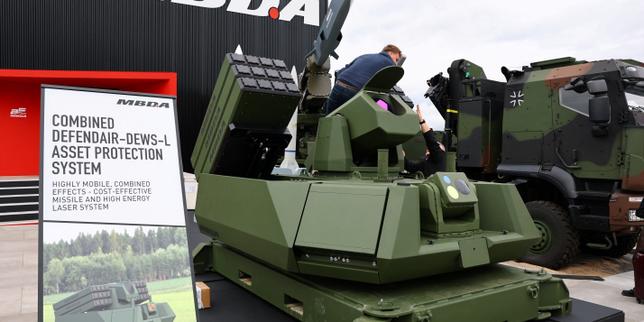
For years, the math inside European sustainable finance was simple. If a company made things that explode, you didn't buy it. Fund managers checked the environmental, social, and governance (ESG) rulebook, slapped an automatic exclusion tag on military hardware, and moved on. Defense was a sin stock, grouped right alongside tobacco and gambling.
Then reality hit.
The security landscape shifted violently, and Brussels realized that strategic autonomy doesn't mean much if your factories lack the cash to scale up production. Now, an intense regulatory and philosophical rewrite is happening across the continent. Military spending is being reframed not as an ethical failure, but as a foundational prerequisite for any stable society.
If you don't have security, you don't have sustainability. That's the argument rewriting the rules of European capital allocation right now.
The Regulatory Reset Trashing the Old Taboos
The old regime relied heavily on the vague term "controversial weapons" to lock defense firms out of sustainable investment pools. This created an administrative mess. Asset managers, terrified of being accused of greenwashing, built massive walls around the entire sector.
That system officially cracked open with a pair of highly technical but massive shifts from the European Commission. The publication of Commission Notice C/2025/4950 and Commission Delegated Regulation (EU) 2025/1775 drew a very specific line in the sand.
Starting June 30, 2026, the EU framework narrows automatic exclusion down to a strict legal shortlist. We're talking anti-personnel landmines, cluster munitions, chemical weapons, and biological weapons. That's it.
If a company makes standard defense equipment outside that forbidden list, it is no longer automatically excluded from sustainable benchmarks. The regulatory system is intentionally moving toward neutrality. Brussels is practically begging private markets to recognize that defending a democracy aligns with the "S" (Social) and "G" (Governance) pillars of ESG frameworks.
This isn't just about tweaking legal text. It solves a massive funding bottleneck. The European Commission's Defence Readiness Omnibus and the "ReArm Europe" plan aim to unlock huge chunks of investment. We're looking at an estimated €800 billion in defense investments over the coming years, supported by public mechanisms like the €150 billion Security Action for Europe (SAFE) loan program. But public money isn't enough to build the factory lines needed for true deterrence. Private equity and pension funds have to fill the gap.
Where the Money Is Actually Moving
The numbers prove that fund managers aren't waiting around for the 2026 deadlines. They are already buying.
Data from Morningstar and Sustainalytics shows a massive shift in "Article 8" funds—the financial products marketed under EU rules as promoting environmental or social characteristics. At the start of 2022, active Article 8 European equity funds had a tiny 0.6% average exposure to aerospace and defense stocks. By mid-2025, that exposure jumped significantly.
The percentage of these light-green ESG funds holding zero defense stocks dropped from 67% to 46%. Nearly one in five Article 8 funds now carries a defense exposure of 5% or higher.
Asset Exposure Shifts (2022 vs. 2026)
--------------------------------------------------
Mainstream Fund Defense Weight:  1.5%  --> 2.5%
Article 8 ESG Fund Weight:      0.6%  --> 1.4%
Article 8 Funds with Zero Arms: 67%   --> 46%
It helps that the financial returns have been staggering. European defense giants like Rheinmetall, Thales, and Leonardo watched their stock prices nearly triple between 2022 and the end of last year. When a sector outperforms the broader market by that much, institutional investors face intense pressure. Incorporating the new "national sovereignty is a social good" narrative makes it much easier to hold these stocks without facing a backlash from clients.
The Peace Washing Debate and Inherent Risks
Let's be completely honest about what's happening here. This isn't a magical reconciliation of values. It's a pragmatic reaction to geopolitical fear.
Human rights groups and NGOs are already yelling foul, calling this pivot "peace-washing." Their point is hard to ignore: weapons built in Europe don't always stay in Europe. A missile designed for deterrence on the Eastern flank can easily end up deployed in regions with horrific human rights records. Weighing export risks against a domestic security mandate makes ESG tracking messy.
Then there's the environmental reality. The defense sector is one of the most resource-heavy, high-emission industries on earth. Tanks don't run on electricity. High-explosive manufacturing isn't eco-friendly.
Labeling these businesses as sustainable creates a paradox for funds that promised their clients a path to net-zero carbon emissions. Because of this, "Article 9" funds—the dark-green products with strict, explicit sustainable investment goals—have largely kept their distance. Their defense exposure barely budged, hovering at minimal levels because their strict legal definitions require measurable green outcomes.
Real World Action for Investors
The era of blanket sector exclusions is dead. If you're managing corporate capital or evaluating institutional portfolios, treating defense as an automatic "no" is an outdated strategy that ignores current EU policy.
Assess holdings based on specific operational realities rather than old labels. Look closely at revenue splits. Companies like Safran or Airbus derive less than 25% of their revenue from military contracts, offering a softer entry point for mixed portfolios. Pure-play defense contractors like Rheinmetall require a deeper evaluation of supply chain governance and strict compliance with international weapon bans.
Verify how your asset managers navigate the upcoming June 2026 benchmark rules. The legal space for defense investing is widening, but the reputational risk remains high. True due diligence means evaluating whether a firm's governance structure can handle complex dual-use technologies while keeping its operations clean enough to survive intense public scrutiny. Sovereignty is now a recognized investment asset, but navigating its compliance framework takes real work.