Silicon Valley gets all the noise. People love to talk about apps, AI, and overnight tech billionaires who look like they haven’t slept since 2022. But if you want to understand how a massive, unshakable fortune is actually constructed, you need to look away from the coast and stare directly at a shingle.
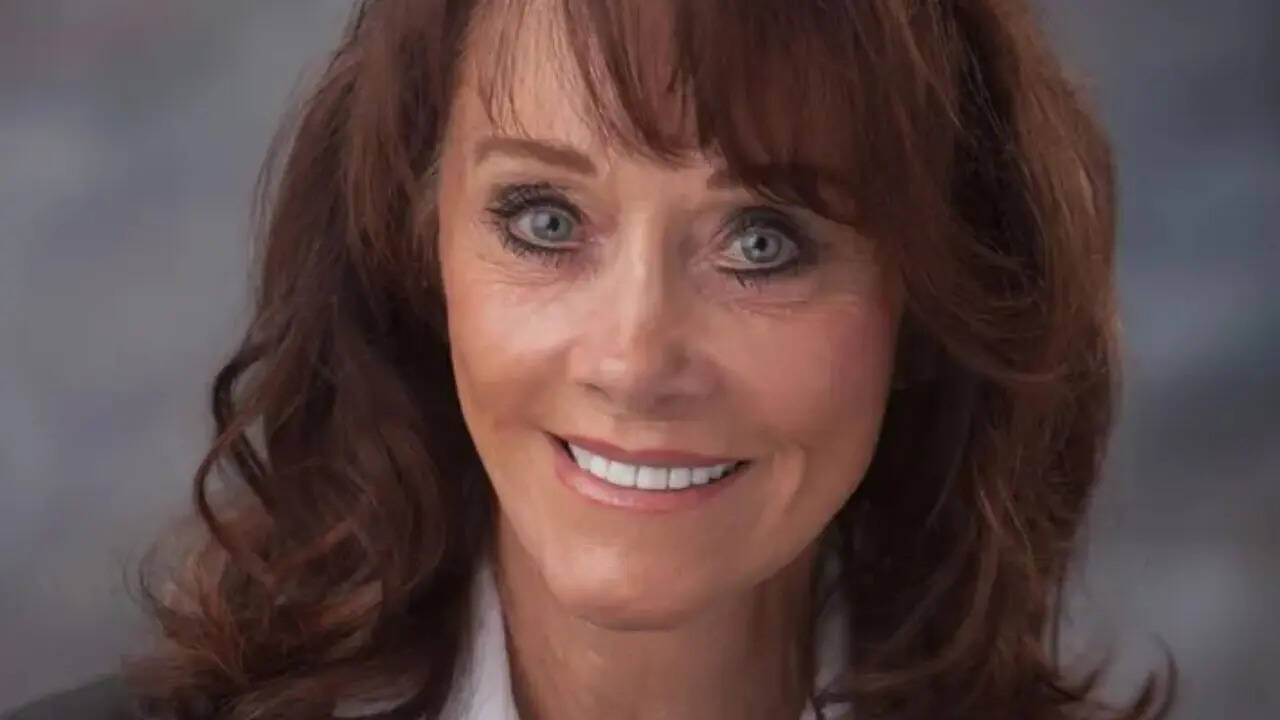
Diane Hendricks is the richest self-made woman in America. Her net worth sits at a staggering $21.7 billion. She didn't invent a new social network, and she didn't write code. She sells roofing, siding, and windows.
It's an unglamorous, blue-collar business. Yet, while trendy tech startups watch their valuations evaporate during economic shifts, her empire, ABC Supply, keeps churning. In 2025 alone, the company brought in $20.2 billion in revenue. Think about that the next time someone says you need a software background to change the world. Her journey from a Wisconsin dairy farm to the top of the Forbes list is a masterclass in grit, aggressive acquisition, and understanding exactly what blue-collar workers need to get the job done.
The Myth of the Perfect Backstory
Most executive bios read like a curated fairy tale. Elite universities, venture capital funding, and a smooth path to the C-suite. Hendricks had none of that.
She grew up as one of nine sisters on a dairy farm in Osseo, Wisconsin. Life was about hard work from day one. By 17, she was a teen mother finishing her senior year of high school from home. A few years later, she was a single mom navigating a divorce and taking whatever work she could find to keep her head above water.
She wasn't above any job. She assembled pens at the Parker Pen Company. She worked as a Playboy Bunny waitress. She did what it took to pay the bills while building a real estate career on the side.
Hendricks Career Path:
Dairy Farm -> Factory Worker/Waitress -> Real Estate Agent -> Industrial Property Developer -> ABC Supply Co-Founder
Eventually, she transitioned into selling custom-built homes for a local builder. That's where she met Ken Hendricks, a roofer and a high school dropout. They married in 1975, and they didn't just become life partners; they became business partners. They started small by buying old houses, fixing them up, and renting them out around Beloit, Wisconsin. Then they scaled up to industrial properties.
They saw a massive, glaring gap in the market. Contractors were treated like an afterthought by major manufacturers. In 1982, the couple secured a bank loan and launched ABC Supply. They had a simple thesis: treat contractors like heroes by giving them a single, reliable distributor that offered credit, massive inventory, and fast delivery.
How ABC Supply Dominated a Highly Fragmented Industry
The building materials market in the early 1980s was chaotic. If you were a roofing contractor, you had to source your materials from a patchwork of independent, regional supply yards. Availability was inconsistent. Delivery times were a gamble.
The Hendricks business model was a direct solution to this pain point. They built a wholesale distribution network that consolidated the industry. Contractors don't shift suppliers because of flashy marketing or slick UI. They care about two things:
- Is the material in stock right now?
- Will it arrive at the job site on time so my crew isn't sitting around wasting billable hours?
By focusing heavily on these operational realities, ABC Supply didn't just grow; it secured fierce customer loyalty. It took the company 16 years to cross the $1 billion annual sales mark in 1998. It was slow, steady compounding.
Then tragedy hit.
In 2007, Ken Hendricks died after a fatal fall through a roof under construction at their home. The business community wondered if the company would falter or sell out. Diane took over as chairwoman and did the exact opposite. She didn't retreat; she went on the offensive.
The Aggressive Playbook for Scaling Through Acquisitions
Many leaders become conservative after a crisis. Hendricks used her position to fundamentally reshape the market. She realized that trying to build hundreds of new branch locations from scratch was too slow. Instead, she bought out her competitors and integrated them into her system.
She spearheaded the two biggest acquisitions in the company's history. First came the buyout of rival distributor Bradco Supply in 2010. Six years later, she doubled down by acquiring L&W Supply in 2016.
These weren't just vanity plays to increase top-line revenue. They were strategic moves to swallow up market share, secure prime real estate locations, and expand the product catalog from exterior roofing to interior wallboards and ceiling tiles. Today, ABC Supply operates more than 900 locations across the country.
People think big tech companies have a monopoly on scale. But when you control the physical distribution points for the materials needed to fix millions of American homes, you have a moat that a tech startup can only dream of. You can't download a roof. You need a truck to deliver it, a warehouse to store it, and local expertise to manage the logistics.
Reinvesting Millions Where It Matters
A lot of billionaires move to tax havens or exclusive coastal enclaves the moment they hit it big. Hendricks stayed right in Beloit, Wisconsin. It's a blue-collar town of fewer than 37,000 people, and she has spent the last two decades using her capital to revitalize it.
She bought up abandoned industrial properties and transformed them into business hubs. She launched a local career center that hosts skills workshops for middle and high school students. The center exposes kids to trades like welding, coding, and construction.
It's a practical approach to philanthropy. Instead of funding abstract think tanks, she's pointing kids toward vocational paths that pay $50,000 or $60,000 straight out of school. She understands that the American economy doesn't run on PowerPoint presentations; it runs on skilled labor.
Her rise hasn't been completely free of scrutiny. In 2016, public records revealed she hadn't paid Wisconsin state income tax from 2012 through 2014. The news caused a stir. Her tax director clarified that it wasn't an illegal tax dodge; it was a legitimate byproduct of changing ABC Supply's corporate structure from a C-corp to an S-corp, which allowed the company to elect out of state tax-option status once federal obligations were met. It was entirely legal, but it highlighted the complex, aggressive financial engineering that happens at the multi-billion-dollar level.
The Hidden Lessons for Modern Entrepreneurs
You don't need a groundbreaking, never-before-seen idea to build a massive business. You just need to find a fragmented, slow-moving industry and execute better than everyone else.
If you want to apply the Hendricks playbook to your own business career, forget about hunting for VC money or waiting for the perfect market conditions. Start focusing on these concrete steps:
Identify unglamorous industries that rely on old-school relationships. Look at logistics, distribution, specialized manufacturing, or trade services. These sectors are rarely disrupted by flashy software, but they are ripe for operational efficiency.
Fix the distribution or availability bottleneck. If you can make it easier, faster, or more reliable for an unserved customer segment to get what they need, you don't need to compete on price. Reliability is its own premium.
Reinvest your cash flow into asset acquisition. Once your core business is stable, look for struggling competitors or complementary services you can buy. Organic growth is great, but strategic acquisition is how you leap from a local operation to a national powerhouse.