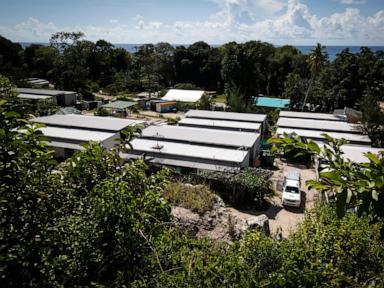
Australia has a talent for pretending its problems belong to someone else. The recent court decision to uphold the deportation of a convicted murderer to a small island nation isn’t a victory for "border integrity" or "public safety." It is a bureaucratic sleight of hand. We are watching a first-world nation take a product of its own society—a person who lived, breathed, and committed crimes within its borders—and dump the radioactive waste on a neighbor that lacks the infrastructure to handle it.
The legal consensus is lazy. It focuses on the black-and-letter law of Section 501 of the Migration Act. It celebrates the "tough on crime" optics. But it ignores the systemic reality: deportation in these cases is an admission of failure. If our rehabilitation systems failed so spectacularly that a resident turned into a killer, sending them to an island with fewer resources than a Melbourne suburb isn't justice. It’s littering.
The Myth of the Outsider
The fundamental flaw in the "deport them all" argument is the assumption that these individuals are foreign entities. Most high-profile deportees are "foreign" only on paper. They are cultural Australians. They were educated in Australian schools, worked in Australian jobs, and were shaped by Australian social dynamics.
When a person spends twenty or thirty years here and then commits a violent act, that act is a homegrown product. By deporting them, Australia is essentially saying, "We get the benefit of your labor and your taxes while you’re good, but the moment you break, you’re someone else’s problem."
This is a moral hazard of the highest order. It allows the Australian government to bypass the hard work of prison reform and psychiatric intervention. Why fix a broken soul when you can just buy them a one-way ticket to Nauru or New Zealand?
Sovereignty as a Weapon
We hear a lot about "sovereign rights" when the High Court dismisses these appeals. The logic goes that a nation has an absolute right to decide who stays. This is true in a vacuum. In the real world, it’s a form of soft imperialism.
Small island nations are often dependent on regional giants for aid and security. When Australia "returns" a hardened criminal who has no social ties, no family support, and a history of extreme violence to a small community, it effectively destabilizes that community. We are exporting recidivism.
Imagine a scenario where a small town of 10,000 people is suddenly forced to monitor and reintegrate a convicted murderer who doesn't speak the local dialect and has zero connection to the land. The local police force, likely underfunded and used to dealing with petty theft, is now tasked with managing a high-risk offender trained in the Australian penal system. This isn't diplomacy. It’s dumping.
The Economic Fallacy of "Safety"
The public cheers because they think deportation saves money. They see the cost of a lifetime in an Australian prison and compare it to the cost of a flight. This is short-sighted math.
- The Legal Black Hole: The government spends millions in taxpayer dollars fighting these appeals through every tier of the court system.
- The Diplomatic Tax: Every time we force a "returned citizen" on a neighbor, we burn diplomatic capital. That capital has a price tag when we need cooperation on trade, climate change, or regional defense.
- The Global Security Risk: Displacing violent offenders into unstable environments often leads them back into transnational crime. If a deportee joins a drug syndicate in a neighboring nation, the fallout eventually hits Australian shores anyway.
Safety is not a zero-sum game that ends at the maritime border.
The High Court's Blind Spot
The judiciary likes to pretend it operates in a vacuum of "administrative law." They look at whether the Minister followed the correct procedure. They check if "due process" was afforded. But the courts are increasingly becoming a rubber stamp for executive overreach.
By refusing to weigh the proportionality of the punishment against the reality of the individual’s life, the courts have abandoned the spirit of justice for the safety of the statute. We have replaced wisdom with a checklist. If the "Character Test" is failed, the outcome is binary. There is no room for the nuance of human history.
I have seen the internal workings of these policy shifts. I have watched as "discretion" became a dirty word in the Department of Home Affairs. The goal isn't to make Australia safer; the goal is to make the Minister look "strong" in a three-second soundbite on the nightly news.
Challenging the "People Also Ask" Logic
The common questions surrounding this topic are framed by a flawed premise.
- "Why shouldn't we deport non-citizens who commit crimes?"
Because "citizenship" is a legal fiction that doesn't always align with social reality. If a person has spent 90% of their life here, they are a product of this society. - "Doesn't this protect Australian lives?"
Only in the most immediate, superficial sense. It increases regional instability and ignores the root causes of why these crimes happen here in the first place. - "Is it fair to the victims?"
True justice for a victim is seeing the perpetrator held accountable and rehabilitated so it never happens again. Moving the perpetrator to a different country where they are likely to be unsupervised and unsupported is not accountability; it’s a gamble with other people's lives.
The Infrastructure of Exile
We are building a permanent class of the "stateless-adjacent." These are people who belong nowhere, held in a limbo of bridge visas and detention centers before being kicked into a vacuum.
If Australia wants to be a leader in the Pacific, it needs to stop treating its neighbors like a junkyard for "failed" residents. If we are "tough on crime," we should be tough enough to handle the criminals we created.
Stop pretending a plane ticket is a legal solution. It’s an escape hatch for a government too cowardly to face the consequences of its own social failures.
Keep your trash in your own yard.