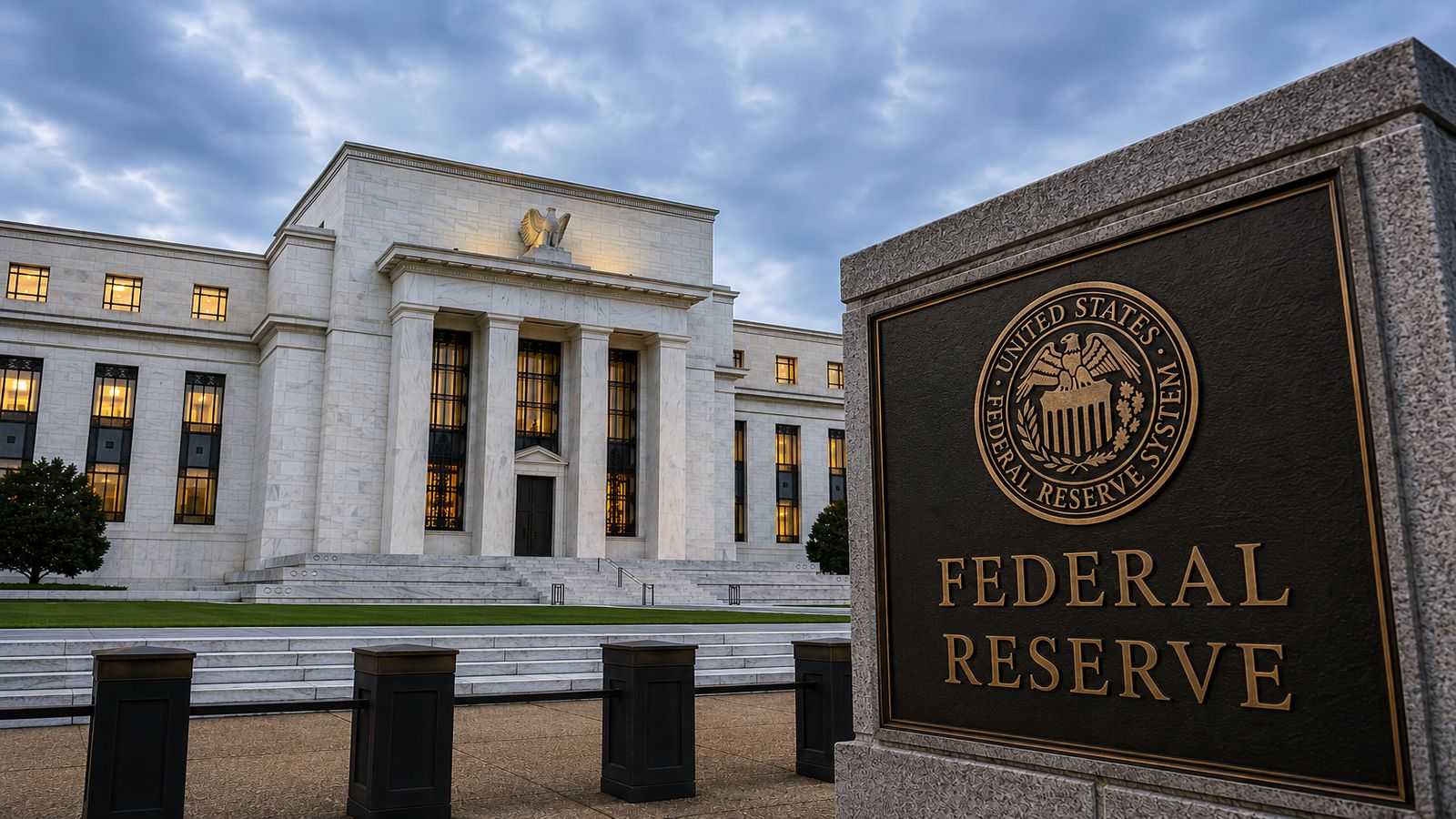
The Federal Reserve just dropped a regulatory bomb disguised as a technical update.
By proposing a new, highly restricted "payment account" category for non-bank financial institutions and fintech firms, the central bank is attempting to resolve a multi-year war over who gets to touch its core infrastructure. For years, tech-driven upstarts and state-chartered crypto institutions have sued, lobbied, and scratched at the doors of the central bank, demanding Master Accounts to bypass commercial Wall Street gatekeepers.
Now, the Fed is offering a compromise. But look closely at the mechanics, and it becomes clear that this is a gilded cage designed to neutralize the competitive threat of fintech while keeping the traditional banking cartel firmly in control.
The Illusion of Inclusion
Fintech firms and non-depository trust companies have long argued that forcing them to route payments through correspondent commercial banks is an anti-competitive tax. It introduces friction, delays, and counterparty risk.
The Fed's newly unveiled proposal appears to answer that grievance. It offers legally eligible, uninsured financial institutions a direct line to clear and settle transactions on the central bank's rails. On paper, it looks like a massive win for financial innovation.
The reality is far more restrictive. The proposed payment accounts are stripped-down, hollowed-out versions of traditional Master Accounts. Under the strict terms outlined by the Board of Governors, these new account holders will operate under severe operational handicaps.
- Zero Intraday Credit: Institutions cannot run daylight overdrafts to smooth out settlement peaks.
- No Discount Window Access: The traditional lender-of-last-resort safety net remains firmly shut to them.
- Zero Interest on Balances: Unlike commercial banks, which reap massive windfalls from Interest on Reserve Balances, these innovators will earn nothing on the capital they park at the Fed.
- Automated Overdraft Controls: The Fed will implement hard, algorithmic caps to instantly freeze transaction flows the second an account balance hits zero.
This is not a level playing field. It is a segregated tier of financial citizenship.
The Executive Order Pushback
The timing of this proposal is no accident. It dropped almost simultaneously with a sweeping executive order from the White House aimed at dismantling regulatory barriers that stifle fintech growth. The administration explicitly demanded that the Fed review its historical foot-dragging on account access and find ways to integrate digital assets and innovative platforms into the domestic payment ecosystem.
The Fed’s public comment request serves as a preemptive defensive strike. By offering this low-tier payment account, the central bank can claim it is complying with political pressure to support innovation while simultaneously ring-fencing the traditional financial system from the perceived contagion of non-bank actors.
The political fracture lines inside the central bank are already wide open. Fed Governor Michael Barr took the extraordinary step of publicly opposing the plan immediately upon its release. Barr argued that the proposed safeguards are completely inadequate to prevent these streamlined accounts from being exploited for money laundering and terrorist financing, particularly since the Fed does not directly supervise many of the state-chartered entities applying for access.
When the regulatory architecture itself is a battleground for internal ideological warfare, market participants should expect erratic enforcement and lengthy delays.
The Strategic Pause and the Tier Three Trap
To understand how the Fed plans to control this rollout, one must look at what they are doing while the public debates the text. The Board has explicitly instructed the regional Reserve Banks to halt all pending access decisions for "Tier 3" institutions.
Tier 3 entities are the most volatile category in the Fed’s Account Access Guidelines. They are legally eligible institutions that are not federally insured and are not subject to prudential supervision by a federal banking agency. Think Wyoming SPDI-chartered crypto banks, state trust companies, and novel payment processors.
By freezing these applications during the policy development phase, the Fed has effectively halted the momentum of pioneers like Kraken Financial, which previously secured a foot in the door. This temporary freeze acts as a strategic bottleneck. It ensures that no non-bank firm can slip through with a full-strength Master Account while the restricted, non-interest-bearing alternative is being finalized.
Structural Implications for Wall Street
Traditional commercial banks are watching this play out with a mix of anxiety and quiet satisfaction. On one hand, they despise any policy that diminishes their role as the exclusive gatekeepers of the American financial system. If a fintech firm no longer needs a correspondent banking partner to settle a transaction, the traditional bank loses both transaction fees and valuable deposit visibility.
On the other hand, the draconian restrictions on the new accounts ensure that commercial banks maintain a massive competitive moat. Because payment account holders cannot earn interest on their reserves and cannot access intraday credit, their operational costs will be significantly higher than those of a traditional bank. A fintech firm using this account must maintain substantial, idle, non-earning liquidity just to guarantee it never triggers an automated overdraft block.
The financial architecture of this proposal creates a structural penalty for being a non-bank. It allows tech firms to move money faster, but it strips away the economic incentives that would allow them to scale to a size that threatens JPMorgan Chase or Bank of America.
The Hidden Capital Tax
For corporate treasurers and fintech chief financial officers, the math on these proposed accounts simply does not add up yet. In a persistent high-interest-rate environment, leaving millions of dollars of settlement liquidity in a non-interest-bearing account at a regional Reserve Bank is an expensive proposition. It represents a massive opportunity cost.
Furthermore, the Fed intends to calibrate closing balance limits based entirely on an institution’s expected transaction volume. If a fintech firm experiences a sudden surge in consumer demand, it cannot rely on credit lines or flexible settlement windows. It will simply hit a hard wall. This reality will force non-banks to continue relying on hybrid models, mixing direct Fed settlement for specific corridors with traditional commercial bank credit lines to handle liquidity spikes.
The central bank has masterfully shifted the burden of systemic risk management directly onto the balance sheets of the innovators. If an upstart firm miscalculates its daily liquidity needs by even a fraction, the automated controls will halt its operations instantly. There will be no friendly phone calls from the discount window desk to smooth things over before the close of business.
The Coming Legal Warfare
This proposal will not pacify the industry. Instead, it sets the stage for a new wave of litigation. For years, institutions have fought battles in the federal courts over the definition of legal eligibility for central bank services. The central bank's explicit statement that this new proposal "would not expand or otherwise change legal eligibility" is a clear signal to the market that the core criteria for entry remain as rigid as ever.
The legal vulnerabilities of the Fed's stance are compounding. Recent appellate court decisions involving state-chartered institutions have exposed deep inconsistencies in how regional Reserve Banks interpret their statutory obligations to grant accounts. By creating a separate-but-unequal account class, the Fed is inviting lawsuits grounded in administrative law and constitutional equal protection claims.
Upstarts will argue that the Fed is using its monopoly power over the payment rails to protect an entrenched banking elite under the guise of safety and soundness.
The comment period over the summer will be filled with superficial talk of financial inclusion, modernization, and systemic resilience. Do not buy into the narrative. The Federal Reserve is not opening the gates to the future of finance; it is building a administrative checkpoint to ensure that the future of finance happens only on terms that keep the status quo safely intact.