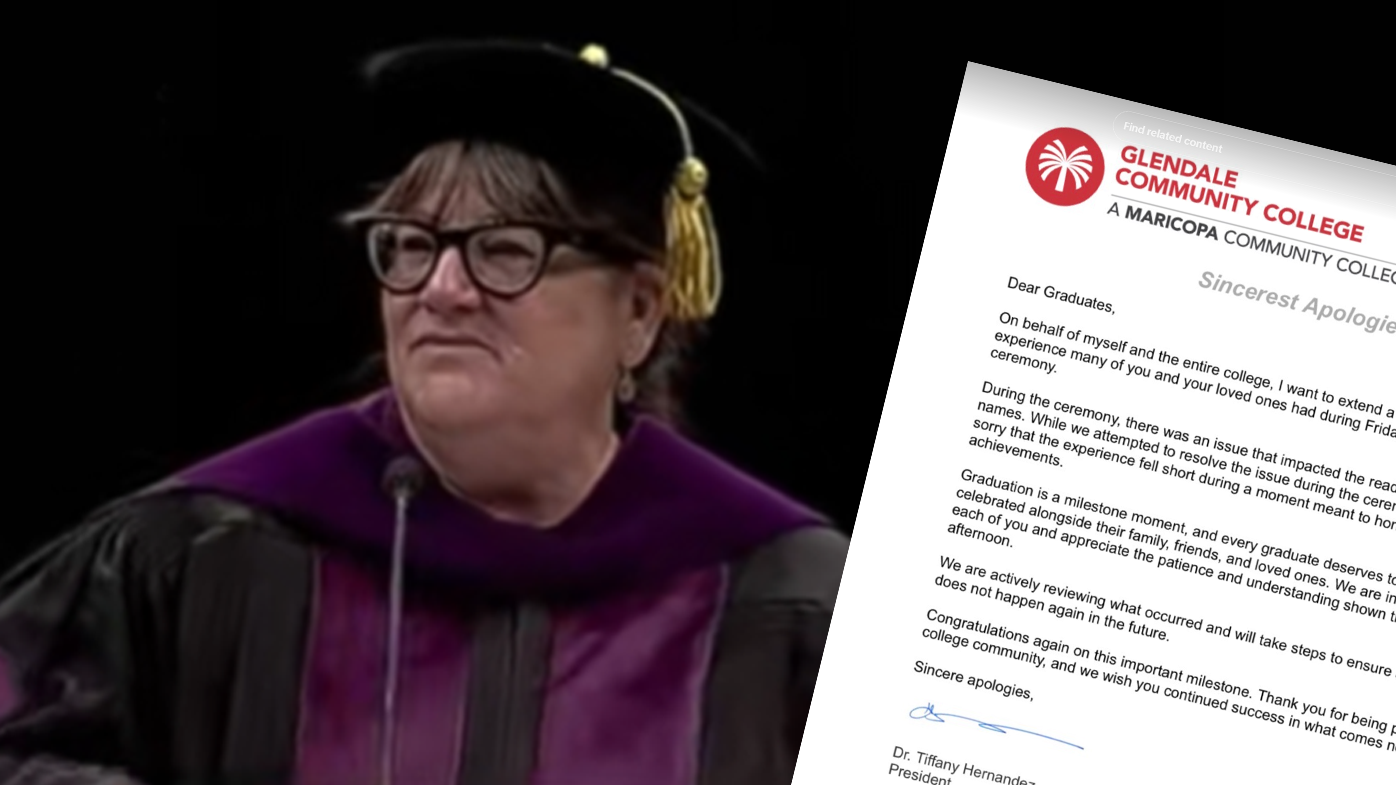
Tech executives and corporate speakers are walking into university graduation ceremonies expecting applause, but they're walking right into a wall of sound. It's not cheers. It's an aggressive, collective boo. If you think the current wave of artificial intelligence is universally loved, you haven't been paying attention to what just happened on college campuses.
Graduating students are angry. They aren't just skeptical about the marketing hype; they flat-out despise the corporate narrative that they should joyfully welcome their new algorithmic overlords.
Take what happened at the University of Central Florida. Real estate executive Gloria Caulfield stood before a crowd of arts, humanities, and communication graduates. She declared that the rise of artificial intelligence is the next industrial revolution. The reaction was immediate. A massive chorus of jeers and boos echoed through the arena. Caulfield paused, completely bewildered, and asked the organizers, "What happened?"
When she tried to pivot by saying that only a few years ago AI wasn't a factor in our lives, the audience didn't just quiet down—they erupted into passionate cheers for a time when generative models didn't exist. It was an awkward, highly revealing moment that went viral, and it's part of a much bigger shift.
The Massive Disconnect Between the Stage and the Seats
What corporate leaders fail to realize is that young people are entering the worst, most unstable entry-level job market in recent memory. The very people who fund, build, and promote these platforms are speaking to students who have seen their resumes automatically rejected by automated hiring algorithms before a human ever looks at them.
Look at former Google CEO Eric Schmidt. He stepped up to the podium at the University of Arizona commencement ceremony. Schmidt tried to acknowledge the tension, admitting that there's a rational fear that jobs are evaporating and that the future has already been written by machines. But his solution fell flat. He told the crowd that they should build a team of agents to handle parts of their work, adding that when someone offers you a seat on a rocket ship, you don't ask which seat—you just get on.
The students didn't want a seat on his rocket ship. They drowned him out with boos. Schmidt grew visibly frustrated, curtly asking the audience to let him finish his point, which only fueled the heckling.
The exact same thing happened to music industry executive Scott Borchetta at Middle Tennessee State University. He told graduates that AI is rewriting music production while they sit there. When the crowd started jeering, he went off-script and told them to just accept it.
This corporate tone-deafness is precisely why the room turns hostile. Executives treat job displacement like an exciting tech update, while the students view it as a direct threat to their livelihood.
Why Today's Graduates Refuse to Buy the Hype
The narrative from the tech elite is simple: AI is just a tool, like the internet or email, and you simply need to adapt. Caulfield tried this exact defense at UCF, comparing the anxiety around generative models to the trepidation people felt when the internet took off in the nineties.
But that comparison is deeply flawed. The internet created an entirely new ecosystem of industries, platforms, and hands-on jobs. Generative automation is explicitly designed to shrink headcounts and eliminate the foot-in-the-door roles that fresh graduates rely on to start their careers.
- Entry-level erasure: Companies are openly automating the basic copywriting, graphic design, junior coding, and data entry roles that historically served as the starting line for young professionals.
- The skill devaluation trap: Students pay massive amounts of tuition to develop specialized skills in writing, art, digital media, or programming. They're entering a workforce where executives tell them those hard-earned skills are obsolete, and that their actual job is now to just manage a prompt box.
- Widespread data scraping: Creative and humanities students are hyper-aware that generative models were trained by scraping the work of human artists, writers, and creators without compensation or consent. To them, the technology looks less like an innovation and more like organized plagiarism.
Data backs up this anger. A Gallup survey showed a stark decline in Gen Z's sentiment toward the technology. Enthusiasm dropped 14 points down to just 22%, while the percentage of young people expressing outright anger rose to 31%. Anxiety sits heavily at 42%. Another poll by the Institute of Politics at the Harvard Kennedy School revealed that a distinct majority of recent graduates view automation as a direct threat to their job prospects.
The Failure of Tech Evangelism
For years, Silicon Valley operated under the assumption that everyone would view tech progress as inherently good. They built a massive bubble. When an executive stands on a stage and uses terms like "disruption" or "the next industrial revolution," they expect people to marvel at the scale of human achievement.
Instead, the public is looking at rising electricity costs from massive data centers, an influx of low-quality automated content flooding the internet, and a corporate culture obsessed with cutting human staff to boost quarterly profit margins.
The tech world hasn't grappled with how deeply unpopular their creations are among the people expected to use them. When university organizations at the University of Arizona distributed leaflets encouraging students to boo Eric Schmidt, it wasn't just about his controversial personal history or his ties to elite circles—it was a rejection of his entire worldview.
Young workers see that the conversation around automated tools rarely focuses on making human lives easier. It focuses on reducing labor costs. They aren't sticking their fingers in their ears because they don't understand the technology. They understand it perfectly. They're booing because they see exactly who profits from it, and who gets left behind.
Navigating a Hostile Job Market
If you're graduating into this environment, you don't have to just sit there, accept it, and take whatever seat you're offered on a corporate rocket ship. You can take concrete steps to insulate your career from aggressive corporate automation strategies.
Stop competing on volume. Generative models can churn out generic text, basic code, and derivative images at scale. If your portfolio looks exactly like the standard industry template, an automated system will replace you. Focus heavily on hyper-specific, regional, or deeply specialized niches that require localized knowledge, deep human networking, or complex physical execution.
Build real-world relationships. Because automated tracking systems screen out thousands of applications, the traditional online application portal is increasingly a dead end. Shift your energy toward direct human connection. Attend local industry meetups, reach out to professionals for informational interviews, and secure freelance work through word-of-mouth networks where a hiring manager trusts your character, not just a digital document.
Lean into high-friction skills. The parts of a job that are messy, legally complicated, or highly collaborative are the hardest to automate. Focus on project management, client relations, ethical compliance, and hands-on troubleshooting. Companies can buy automated tools, but they still need competent, reliable people to fix the mess when those tools fail, hallucinate, or produce unusable results.


