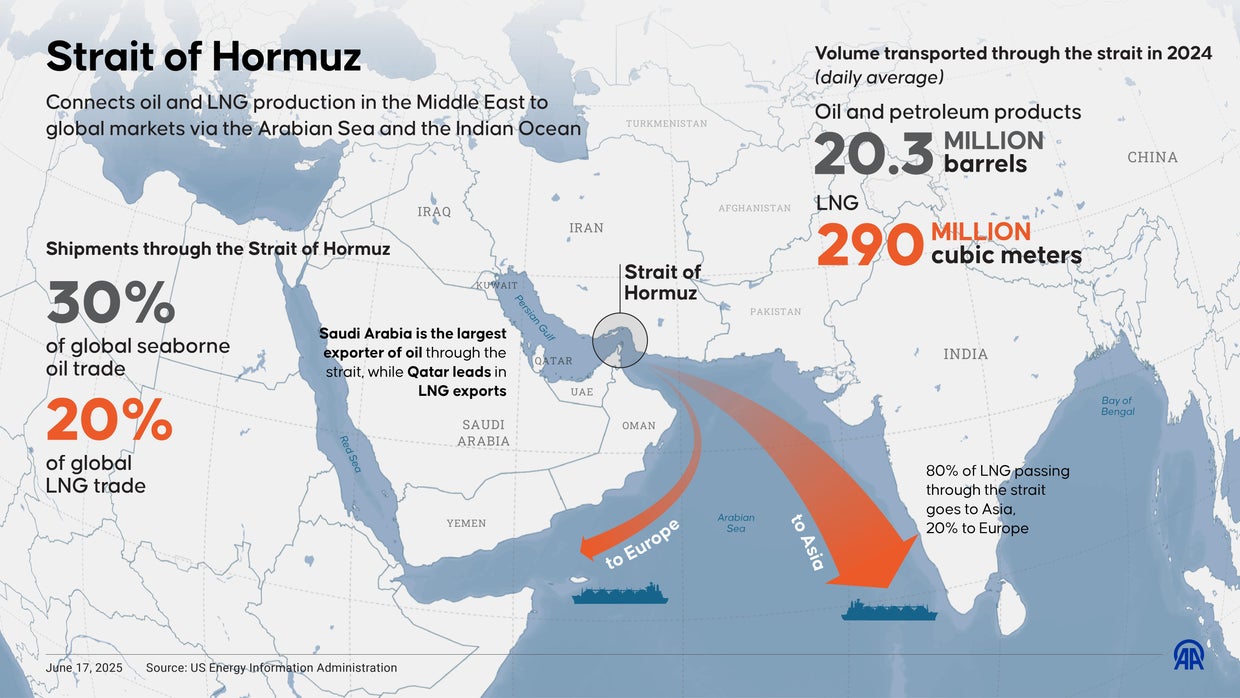
The stability of the Strait of Hormuz is currently governed by a fundamental misalignment between traditional security guarantees and contemporary energy flows. While the United States remains the primary underwriter of maritime security in the Persian Gulf, the physical molecules of oil and gas passing through the 21-mile-wide chokepoint primarily serve Asian industrial centers. This creates a structural imbalance where the entity providing the security (the U.S.) has decreasing skin in the game, while the entity with the highest risk exposure (China) maintains a policy of non-interference. For the Trump administration, the strategy to defuse a Hormuz crisis is not rooted in a pivot to isolationism, but in a calculated exercise of geopolitical arbitrage: forcing Beijing to internalize the costs of its own energy security.
The Energy Exposure Matrix
The reliance on the Strait of Hormuz is not uniform across global powers. To understand the leverage points available to the U.S. executive branch, one must categorize states by their Net Energy Import Dependency (NEID) and their Naval Power Projection (NPP).
- The Insulated Guard (U.S.): High NPP, Low NEID. Since the shale revolution, the U.S. is no longer a captive of Gulf crude. Its interest in the Strait is primarily about maintaining global price stability and supporting treaty allies, rather than preventing domestic industrial collapse.
- The Exposed Free-Rider (China): Low NPP (in the Gulf), High NEID. China imports roughly 10 million barrels of oil per day, with a massive percentage transiting Hormuz. Beijing has effectively benefited from a decades-long American subsidy on shipping security.
- The Regional Disruptor (Iran): High localized NPP, asymmetric capabilities. Iran’s leverage is the "threat of closure," a tool used to offset the crushing weight of economic sanctions.
The Trumpian logic dictates that if the U.S. reduces its security presence, the "subsidy" vanishes. China is then faced with a binary choice: allow its industrial base to be throttled by soaring energy costs and supply disruptions, or use its unique diplomatic and economic leverage over Tehran to enforce a ceasefire.
Three Pillars of Chinese Diplomatic Leverage
Chinese influence in Tehran is not based on shared ideology but on Monopsony Power and Capital Dependence.
The Monopsony Trap
China is the primary buyer of Iranian oil, often via "teapot" refineries and dark-fleet tankers. In a crisis where the Strait is threatened, China is the only entity capable of providing the Iranian regime with the hard currency required for domestic stability. If Beijing signals that its continued purchase of sanctioned oil is contingent on maritime de-escalation, the Iranian leadership faces a catastrophic revenue shortfall if they refuse. This is a mechanism of "negative incentives" that the U.S. cannot replicate because it does not trade with the target.
The 25-Year Comprehensive Strategic Partnership
Beyond immediate oil sales, the long-term infrastructure and technology investments promised by Beijing under the 25-year pact serve as a carrot. Iran’s aging infrastructure requires massive capital injections that Western firms will not provide. China’s role as the "lender of last resort" gives it a seat at the highest levels of Iranian strategic planning. Trump allies recognize that Beijing can threaten to freeze these long-term projects—effectively stalling Iran’s modernization—if the Strait is closed.
The Diplomatic Shield
China’s permanent seat on the UN Security Council provides Iran with a degree of protection against multilateral "snapback" sanctions. By hinting that this diplomatic cover is finite and tied to regional stability, China can exert pressure that bypasses the friction of direct military confrontation.
The Cost Function of Escalation
In any military friction within the Strait, the cost is not merely the price of a barrel of Brent crude. It is the Systemic Volatility Premium. When the Strait is threatened, insurance premiums for VLCCs (Very Large Crude Carriers) spike exponentially.
$$C_{total} = (P_{base} + P_{risk}) \times V + I_{war}$$
Where:
- $C_{total}$ is the total cost of energy delivery.
- $P_{base}$ is the market price of oil.
- $P_{risk}$ is the geopolitical risk premium.
- $V$ is the volume of shipment.
- $I_{war}$ is the war-risk insurance surcharge.
For the U.S., $C_{total}$ is an inflationary pressure that can be mitigated by domestic production. For China, $C_{total}$ is a direct tax on the manufacturing sector that cannot be offshored or avoided. The Trump strategy seeks to maximize $P_{risk}$ and $I_{war}$ specifically for ships destined for Chinese ports, thereby making the status quo of "Iranian aggression funded by Chinese purchases" economically unsustainable for Beijing.
Structural Bottlenecks in the De-escalation Strategy
While the logic of "outsourcing" de-escalation to Xi Jinping is theoretically sound, it faces several operational bottlenecks.
The first limitation is the Security-Accountability Gap. If China intervenes and successfully stabilizes the Strait, it gains significant prestige and "soft power" in the Middle East at the expense of U.S. hegemony. This creates a paradox for U.S. strategists: they want China to solve the problem, but they fear the geopolitical price of China being the solver.
The second limitation is the Internal Iranian Power Dynamics. The Islamic Revolutionary Guard Corps (IRGC) does not always operate on a purely economic calculus. If the IRGC perceives an existential threat to the regime’s survival, they may prioritize regional chaos over the economic warnings issued by Beijing. There is a risk that China’s influence is more "veto power" than "steering power."
The third limitation is the Transparency of the Dark Fleet. Much of the oil trade between Iran and China occurs through shadow banking and ship-to-ship transfers that bypass formal tracking. This makes it difficult to verify if Beijing is actually squeezing Tehran or merely repositioning its trade routes to hide its continued support.
The Operational Blueprint for U.S. Engagement
To execute this strategy, the U.S. executive must transition from a "Security Provider" to a "Risk Architect." This involves three specific tactical shifts.
Selective Maritime Protection
The U.S. Navy could pivot from generalized patrolling to selective escorting. By prioritizing the protection of tankers bound for U.S. allies (Japan, South Korea, Taiwan) while leaving unflagged or Chinese-bound tankers to fend for themselves, the U.S. forces a physical manifestation of the "risk premium." This forces the Chinese People's Liberation Army Navy (PLAN) to either deploy a blue-water fleet they are not yet ready to sustain in the Gulf or to pick up the phone and call Tehran.
Targeted Financial Friction
Instead of broad-based sanctions that punish the global market, the U.S. can target the specific financial nodes used by Chinese "teapot" refineries. By increasing the friction of these transactions, the U.S. lowers the profit margin of Iranian oil to the point where it is no longer worth the geopolitical headache for Beijing. This turns Iranian oil from a "cheap alternative" into a "liability asset."
The "Burden-Sharing" Ultimatum
Washington must communicate a clear timeline for the reduction of its 5th Fleet presence. By setting a "sunset clause" on American maritime subsidies in the Gulf, it creates a countdown for Chinese energy security. This forces Beijing to move from a reactive posture to a proactive diplomatic role.
Calculated Instability as a Tool of Statecraft
The traditional view of diplomacy seeks to minimize tension at all costs. The strategy currently being mapped by Trump allies views tension as a form of potential energy that can be directed. By allowing the "Hormuz Crisis" to weigh more heavily on China than on the U.S., Washington creates a scenario where Xi Jinping’s best path to domestic economic stability is to act as the enforcer of American-desired norms in the Middle East.
This is not a withdrawal; it is a re-tasking of the global order. The U.S. leverages its remaining military dominance to dictate the terms under which other powers must protect their own interests. The success of this strategy hinges on the U.S. remaining comfortable with a degree of market volatility that its competitors cannot endure.
The final strategic move in this sequence is the decoupling of the global oil price from the localized risk in the Strait. By expanding the "Clean Tanker" corridors and using strategic reserves to protect domestic prices, the U.S. can effectively insulate its economy while leaving the Strait's security as a "China-Iran problem." The objective is to reach a point where the IRGC realizes that their primary customer is also their most demanding supervisor, and Beijing realizes that its "no-strings-attached" energy policy has become the most expensive string in its foreign policy portfolio.