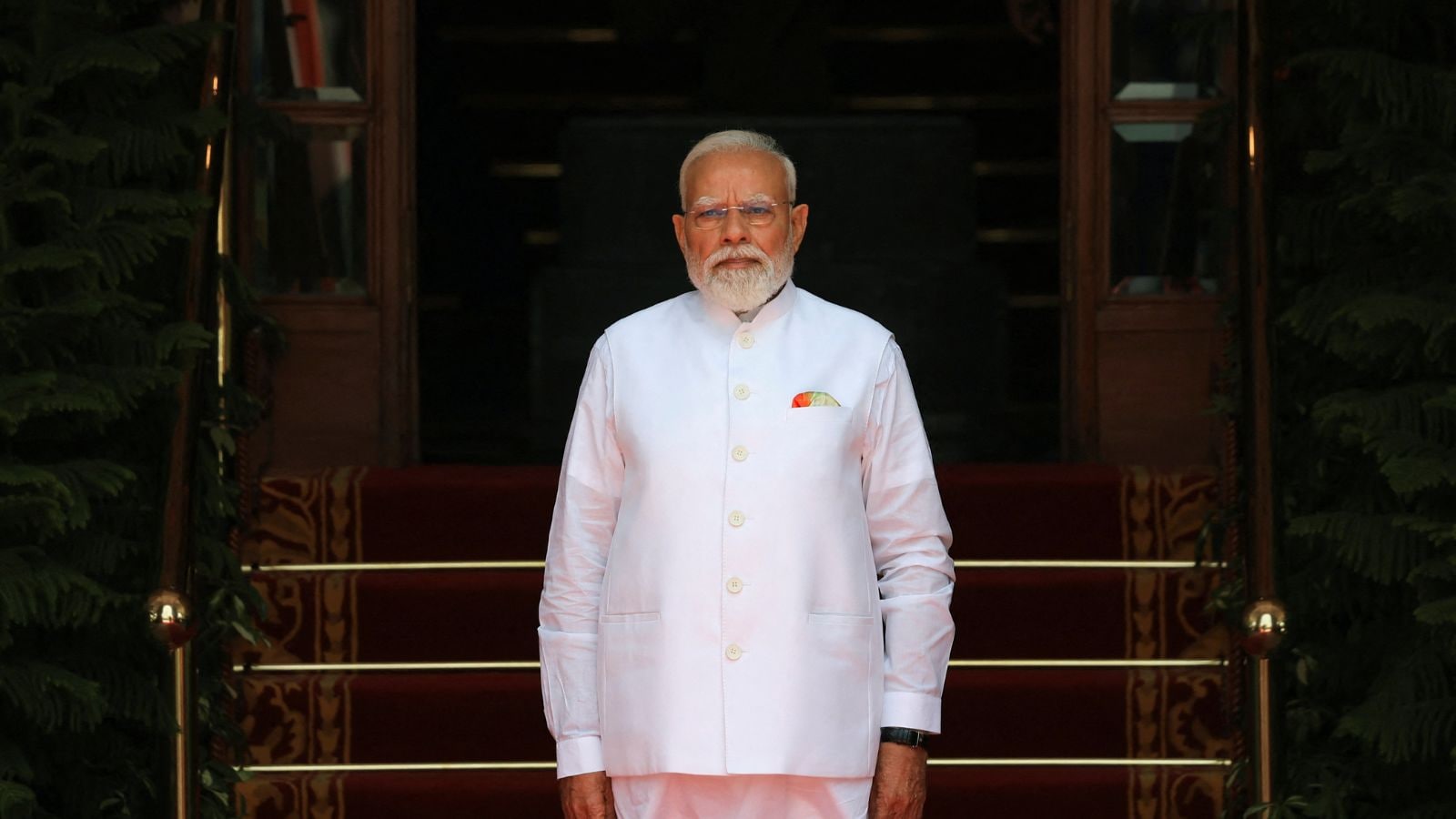
India’s foreign policy is undergoing a structural realignment toward the eastern maritime zones of the Indian Ocean and the broader Indo-Pacific. The upcoming three-nation tour by Prime Minister Narendra Modi to Indonesia, Australia, and New Zealand, scheduled from July 6 to July 11, 2026, functions as an operational execution of this pivot. By analyzing the distinct economic and security architectures of each stop, we can map how New Delhi intends to secure supply chains, cement recent free trade frameworks, and address strategic friction points in the region.
This itinerary is not merely a routine diplomatic circuit; it represents a systematic effort to counter regional supply-chain dependencies and establish institutionalized bilateral mechanisms with critical ocean economies.
The Three Pillars of India's Eastern Strategy
The tour bifurcates into clear strategic mandates: critical mineral acquisition, advanced institutional defense cooperation, and the operationalization of trade agreements.
Pillar 1: Resource Security and the Indonesian Nickel Vector
Indonesia represents India’s largest trading partner within the Association of Southeast Asian Nations (ASEAN). However, the core of the bilateral engagement in Jakarta has shifted from standard commodities like palm oil and coal toward upstream critical minerals.
- The Supply Chain Mandate: Indonesia holds the world’s largest reserves of nickel, an essential input for lithium-ion electric vehicle (EV) batteries and energy storage infrastructure. As India scales its domestic manufacturing capacity via Production Linked Incentive (PLI) schemes, securing a reliable corridor for unrefined or semi-refined nickel is mathematically vital to reducing exposure to market single-points-of-failure.
- The Maritime Security Function: Positioned along the Malacca Straits, Indonesia controls choke points that dictate the flow of global maritime trade. The alignment between India’s MAHASAGAR vision and Indonesia’s maritime doctrine serves as a direct counterweight to unilateral naval expansionism in the eastern Indian Ocean.
Pillar 2: High-Technology and Cybersecurity Integration with Australia
The second leg of the tour, localized in Melbourne for the third India-Australia Annual Summit, transitions the strategy from resource acquisition to defensive high-technology integration.
The institutional framework driving this engagement is the Comprehensive Strategic Partnership signed in 2020. While legacy cooperation focused on coal and education, the current strategic friction points demand a more complex payload:
[Critical Minerals Input] ---> [Advanced Tech Manufacturing] ---> [Secure Supply Chains]
         ^                                                                 |
         |------------------- [Cybersecurity Frameworks] ------------------|
The operational conversation will prioritize cybersecurity protocols, joint quantum computing research, and supply chain resilience for semiconductors. Furthermore, the bilateral agenda faces immediate friction regarding student mobility. Delays in processing Australian student visas for Indian nationals have created an economic bottleneck, suppressing the soft-power and financial exchange that underpins the Comprehensive Strategic Partnership. Resolving this systemic delay is an explicit tactical objective for the Indian delegation.
Pillar 3: Tariff Elimination and Capital Inflow in New Zealand
The final leg in Auckland marks the first visit by an Indian Prime Minister to New Zealand in 40 years, breaking a prolonged diplomatic stasis. This segment is defined almost entirely by the commercial mechanisms established under the newly minted India-New Zealand Free Trade Agreement (FTA) signed in April 2026.
The economic utility of this agreement rests on a clear asymmetric exchange:
| Matrix Component | New Zealand Export Profile | India Export Profile |
|---|---|---|
| Immediate Tariff Relief | 57% of exports become tariff-free from day one. | Elimination of duties on 100% of Indian goods entering New Zealand. |
| Long-Term Target | 95% tariff elimination upon full implementation. | Secure access to high-value technology and agricultural inputs. |
| Capital Commitment | $20 billion investment commitment to India over 15 years. | Market access to a consumer base of 1.4 billion people. |
The structural logic here allows New Zealand to diversify its export markets away from heavy reliance on any single East Asian economy, while India secures institutional capital commitments to fund domestic infrastructure.
Quantifying the Diaspora as a Strategic Asset
A frequently overlooked variable in Indo-Pacific statecraft is the demographic distribution of the Indian diaspora, which functions as an economic and political lever in host countries.
- Indonesia: A resident population of 140,000 citizens of Indian origin provides a baseline for cultural and localized retail integration.
- New Zealand: Approximately 300,000 Kiwi-Indians constitute roughly 6% of the national population. This concentration provides significant political leverage, ensuring that regardless of domestic political shifts in Wellington, maintaining a stable trade corridor with New Delhi remains a bipartisan priority.
- Australia: At nearly 970,000 individuals, the Indian diaspora represents a major economic force within Australia's technology, healthcare, and engineering sectors.
This dense demographic footprint minimizes the risk of sudden policy reversals by host governments, serving as an informal compliance mechanism for long-term bilateral treaties.
Strategic Recommendation
To maximize the return on this diplomatic deployment, India must move past high-level communiqués and execute three precise tactical plays. First, establish a formalized Joint Working Group on critical minerals with Jakarta that bypasses standard bureaucratic delays, ensuring direct equity stakes for Indian public sector undertakings in Indonesian nickel refining facilities. Second, leverage the Melbourne summit to secure a binding quota or expedited track for high-skill tech visas and student clearances, directly linking human capital mobility to defense technology cooperation. Finally, set up an immediate enforcement mechanism for the New Zealand FTA capital commitments, tracking the $20 billion investment pipeline quarterly against key infrastructure milestones in India.
Act East Policy in action
This video provides a concise overview of the diplomatic objectives and structural motivations behind Prime Minister Modi's historic visit to New Zealand and the broader Indo-Pacific region.