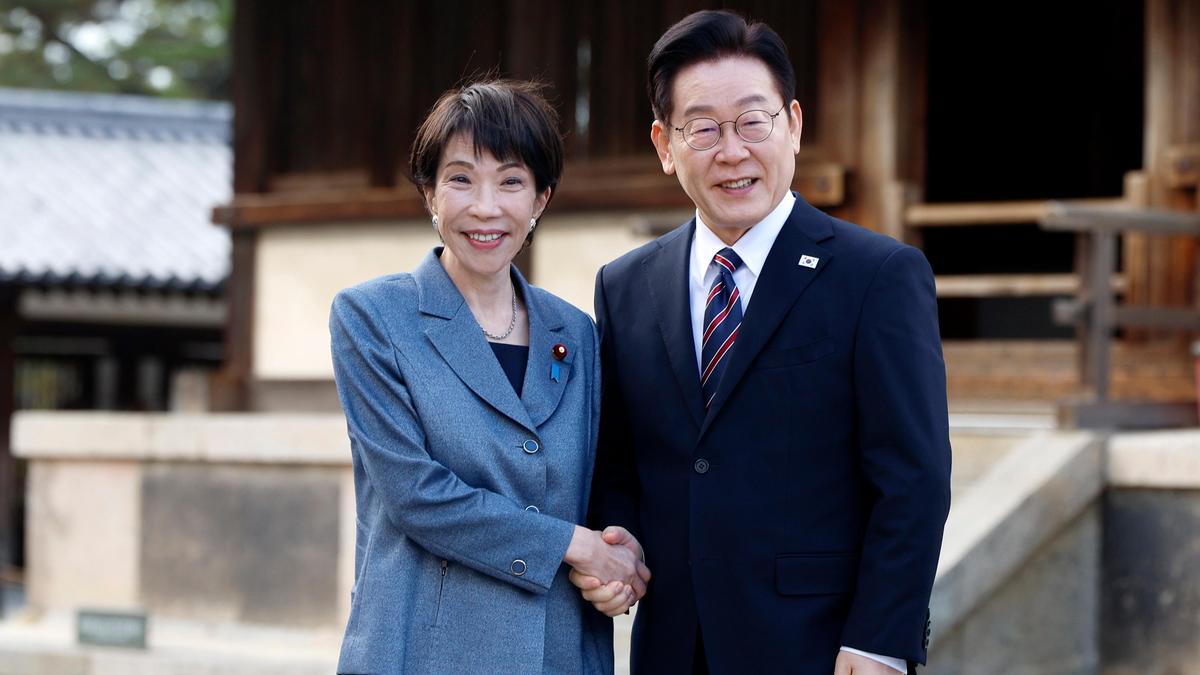
The strategic convergence between Tokyo and Seoul is driven by structural resource vulnerabilities rather than diplomatic goodwill. When Japanese Prime Minister Sanae Takaichi met South Korean President Lee Jae-myung in Andong, South Korea, on May 19, 2026, the optics of the "hometown summit"—following their January meeting in Takaichi’s home prefecture of Nara—served as a psychological buffer for a highly clinical, transactional agenda. The escalation of conflicts in the Middle East, culminating in the effective closure of the Strait of Hormuz following military strikes on Iran, has exposed both nations to a severe, shared energy supply shock. Because both economies operate under an identical structural vulnerability—extreme dependence on Middle Eastern crude oil—the bilateral meeting represents a defensive alignment designed to optimize supply chain resilience and institutionalize a mutual resource insurance policy.
This analysis deconstructs the bilateral mechanisms established during the summit, mapping the strategic frameworks that govern this economic and security alignment.
The Energy Security Cost Function
The primary objective of the Andong summit was the mitigation of systemic risks introduced by the disruption of maritime shipping lanes in the Middle East. Both nations operate under a high-risk energy profile. Japan relies on the Middle East for over 90% of its crude oil imports, while South Korea’s dependence hovers near 70%. The disruption of the Strait of Hormuz acts as a direct supply shock, immediately inflating input costs across all manufacturing sectors.
To minimize the economic damage of prolonged maritime blockades, Takaichi and Lee initiated a formal framework for public-private product swap arrangements. The operational logic of this mechanism relies on counter-cyclical inventory management:
- Bilateral Commodity Swaps: Establishing a formal protocol where either nation can draw down petroleum, liquefied natural gas (LNG), and refined distillates from the other's strategic reserves during localized distribution deficits.
- Refinery Optimization: Leveraging South Korea’s massive merchant refining capacity alongside Japan’s high-grade storage facilities to stabilize the regional spot price of petroleum products.
- Critical Mineral Supply Architecture: Diversifying the processing and supply chains of rare earth elements and critical minerals necessary for semiconductor and electric vehicle battery production, reducing reliance on single-source inputs from China.
By formalizing these mechanisms through a new senior-level dialogue between Japan's Ministry of Economy, Trade and Industry (METI) and South Korea's Ministry of Trade, Industry and Energy (MOTIE), the two administrations are building an institutional apparatus designed to survive domestic political volatility.
The Trilateral Security Matrix and Hedging Strategies
Beyond immediate resource constraints, the summit served as a critical alignment window following the high-stakes bilateral meeting between Chinese President Xi Jinping and U.S. President Donald Trump in Beijing. East Asian security architecture is dictated by a trilateral matrix where Tokyo and Seoul must balance their foundational security alliances with Washington against their deep economic interdependencies with Beijing.
          [ United States ]
             /        \
    Security /          \ Security
    Alliance /            \ Alliance
           /                \
   [ Japan ] --------------- [ South Korea ]
             Bilateral Energy &
             Defense Alignment
The structural reality of American foreign policy variations requires Tokyo and Seoul to institutionalize their defense cooperation independently of Washington's immediate political direction. The security framework discussed in Andong focuses on three distinct vectors:
- Real-Time Data Integration: Standardizing and hardening missile-tracking telemetry systems to counter North Korean tactical ballistic missile launches.
- Maritime Interdiction and Surveillance: Coordinating naval patrols and intelligence-sharing in the East China Sea to maintain freedom of navigation amid escalating regional naval deployments.
- Industrial Policy Alignment: Ensuring that respective semiconductor and advanced technology roadmaps are synchronized to protect intellectual property from state-sponsored espionage and forced technology transfers.
Strategic Vulnerabilities of the Rapprochement
While the current trajectory of Japan-South Korea relations lacks immediate diplomatic bottlenecks, an objective analysis requires mapping the structural vulnerabilities that could break this alignment. The rapid diplomatic thaw initiated by former South Korean President Yoon Suk-yeol in 2023, and sustained by President Lee despite his historically nationalist platform, rests on an unstable foundation of domestic political tolerance.
The first limitation is the persistent threat of historical revisionism. Decades of litigation and nationalist rhetoric surrounding colonial-era forced labor and territorial claims remain dormant but legally unresolved. Should a domestic political shock occur in either capital, these emotional flashpoints can be re-weaponized by opposition factions to disrupt trade and security agreements.
The second bottleneck is asymmetric economic priorities. While both nations share an interest in supply chain diversification, their corporate entities remain fierce global competitors in semiconductors, displays, and automotive manufacturing. Direct industrial competition limits the depth of technology sharing, as both METI and MOTIE prioritize national champions over cross-border industrial integration.
The Tactical Blueprint for Regional Alignment
To transition this symbolic rapprochement into a permanent structural axis, the corporate and bureaucratic architectures of both nations must execute a multi-layered optimization strategy:
- Institutionalize the Bureaucracy: Shift the agreements out of the executive branch and embed them into career-level regulatory bodies (METI and MOTIE). This insulates critical energy swap lines from shifts in presidential or prime ministerial leadership.
- Joint Infrastructure Investment: Fund cross-strait energy infrastructure projects, including shared LNG terminal capacities and undersea electricity grids, to create physical, un-unwindable economic linkages.
- Establish a Permanent Joint Risk Office: Create a continuous bilateral command center dedicated to scanning global maritime logistics, capable of triggering automatic inventory rebalancing protocols without requiring emergency head-of-state approval.
The Andong summit demonstrates that under severe external resource constraints, historic rivals can construct highly rational defense mechanisms. The durability of this alliance will not be determined by the warmth of cultural exchanges or hometown diplomacy, but by the cold utility of shared strategic reserves in the face of a fracturing global order.