Washington Stumbles in the Archipelago
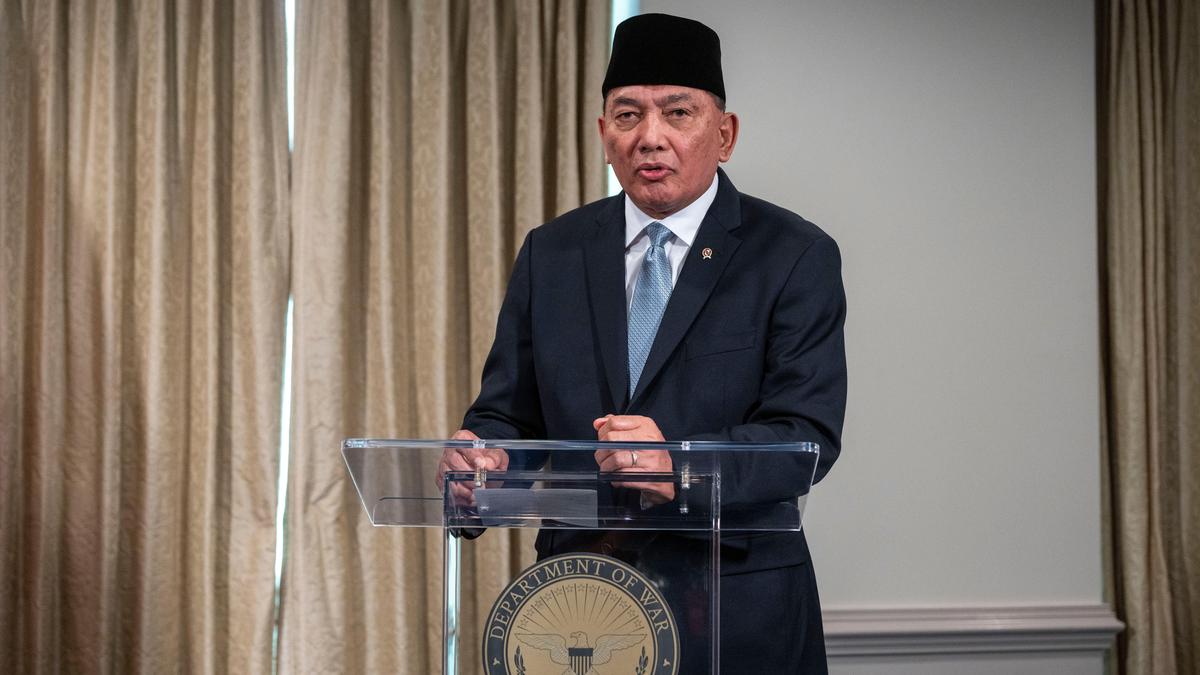
The United States recently failed to secure guaranteed military airspace access over Indonesia, despite high-level diplomatic efforts to lock Jakarta into a binding security framework. Indonesian Defence Minister Sjafrie Sjamsoeddin clarified that while Jakarta signed a preliminary letter of intent regarding bilateral defense cooperation, the document contains zero binding commitments allowing American military aircraft free rein over the archipelago. This distinction punctures Washington's hopes of rapidly integrating Indonesia into its containment strategy against Beijing. Jakarta remains firmly committed to its historical non-aligned foreign policy, refusing to become a forward staging ground for Western superpowers.
For decades, the Pentagon has viewed the Indonesian archipelago as the ultimate strategic choke point. The country sits astride the Malacca, Sunda, and Lombok straits. These maritime arteries carry trillions of dollars in global trade and serve as the primary transit routes for naval fleets moving between the Indian and Pacific Oceans. Control over the skies above these waters is the holy grail of Indo-Pacific military planning.
Yet, American diplomats frequently misread the bureaucracy of Southeast Asia. A letter of intent is often treated by Western officials as a breakthrough, a stepping stone to a formal treaty. In Jakarta, it is often the opposite. It is a diplomatic shield. By signing a non-binding document, Indonesian officials satisfy the immediate demand for diplomatic progress without compromising their nation's core sovereignty. Sjafrie’s public clarification was not an accident. It was a deliberate signal to both Washington and Beijing that Indonesia's sky remains its own.
The Strategic Myth of the Letter of Intent
Defense diplomacy relies heavily on ambiguity, but ambiguity has its limits. When news of the letter of intent first leaked, it was framed in some Western policy circles as a quiet shift in Jakarta’s alignment. The assumption was simple: Indonesia’s growing anxiety over Chinese maritime incursions in the North Natuna Sea would naturally push it into a tighter military embrace with the United States.
That assumption proved wrong.
To understand why, one must look at the legal and constitutional architecture of Indonesian foreign policy. Since the founding of the republic, the nation has adhered to a doctrine known as bebas aktif—independent and active. This is not passive isolationism. It is an aggressive refusal to join permanent military blocs.
Indonesia's Strategic Balancing Act
┌────────────────────────────────────────────────────────┐
│             Non-Aligned Foreign Policy                 │
└───────────────────────────┬────────────────────────────┘
                            │
              ┌─────────────┴─────────────┐
              ▼                           ▼
┌───────────────────────────┐┌───────────────────────────┐
│     Economic Reality      ││    Security Sovereignty   │
│ • Infrastructure reliance ││ • Non-binding agreements  │
│ • Chinese trade networks  ││ • Independent defense     │
│ • Investment capital      ││ • Defense diversification │
└───────────────────────────┘└───────────────────────────┘
A binding agreement granting foreign military forces regular access to domestic airspace would require parliamentary ratification. It would trigger massive domestic protests. The political cost for any Indonesian administration attempting to push such a deal through the House of Representatives would be catastrophic. Sjafrie, a veteran of the military establishment, understands this reality intimately. His swift public intervention served to defuse domestic criticism before it could gather momentum.
The Pentagon’s desire for airspace access is driven by operational necessity. In any potential conflict in the South China Sea or the Taiwan Strait, American aircraft operating from bases in Japan, Guam, or Australia would face immense logistical hurdles. Aerial refueling tankers and transport aircraft need safe, predictable corridors. Shaving hours off transit times by cutting directly through Indonesian airspace could change the logistics of a fast-moving crisis.
By keeping the door closed to formal commitments, Indonesia forces American planners to rely on a case-by-case diplomatic clearance process. This process is slow, bureaucratic, and entirely unpredictable.
The Beijing Factor and Economic Gravity
Sovereignty is the official explanation, but economic reality dictates the subtext. China is Indonesia’s largest trading partner and a primary source of foreign direct investment. From high-speed rail lines linking Jakarta to Bandung to massive nickel processing plants across Sulawesi, Chinese capital flows through the veins of the Indonesian economy.
Jakarta cannot afford to alienate Beijing for the sake of Washington’s security architecture.
┌─────────────────────────────────────────────────────────┐
│              The Asymmetric Dependency                  │
├────────────────────────────┬────────────────────────────┤
│       United States        │           China            │
├────────────────────────────┼────────────────────────────┤
│ Security Partner           │ Economic Lifeline          │
│ Joint Military Exercises   │ Infrastructure Investment  │
│ Advanced Weaponry Supplier │ Primary Commodities Buyer  │
└────────────────────────────┴────────────────────────────┘
Consider a hypothetical scenario where a state grants permanent military overflight rights to a superpower during a period of heightened regional tension. The rival superpower does not simply watch passively. It deploys economic leverage, restricts trade, halts infrastructure loans, and weaponizes supply chains. For Indonesia, the immediate economic fallout of such a move would far outweigh the abstract benefits of an American security umbrella.
Consequently, Jakarta plays a double game. It buys American F-15IDN fighter jets and conducts the large-scale Super Garuda Shield military exercises with U.S. forces to signal its capability to defend its own borders. Simultaneously, it reassures Beijing that these actions are strictly defensive and do not constitute a broader alliance. The refusal to formalize airspace access is the ultimate proof of this balancing act. It shows China that Indonesia will not participate in an American encirclement strategy.
Decades of Distrust and the Memory of Sanctions
American policymakers frequently forget history. Indonesian generals do not. The military relationship between Washington and Jakarta is scarred by the memory of the 1990s, when the United States imposed severe military sanctions on Indonesia over human rights abuses in East Timor.
The embargo crippled the Indonesian Air Force.
Squadrons of American-made F-16s and A-4 Skyhawks were grounded for lack of spare parts. Jakarta watched its frontline defense capabilities evaporate because of a political decision made thousands of miles away in Washington. That lesson changed Indonesian defense procurement permanently. It taught the military leadership that relying entirely on the United States for security is a profound risk.
Indonesian Fleet Diversification Post-1990s Embargo:
• Fighter Jets: Russian Su-27, Su-30; American F-16; French Rafale
• Naval Vessels: Dutch-designed frigates, South Korean submarines
• Air Defense: Mixed Western and Eastern European radar networks
This history explains why Indonesia’s current modernization drive is intensely diversified. Jakarta is buying French Rafale fighters, exploring partnerships with South Korea, and maintaining older Russian Sukhoi jets alongside its American platforms. A nation that deliberately builds an air force to avoid dependency on Washington is not going to hand over its skies via a backroom diplomatic agreement.
The Illusion of the Indo-Pacific Strategy
The friction over airspace access exposes a fundamental flaw in the broader American strategy for the region. Washington insists on viewing the Indo-Pacific through a binary lens. You are either with the rules-based international order, or you are with the authoritarian revisionists.
Southeast Asia rejects this binary.
Nations like Indonesia, Malaysia, and Vietnam view the regional order as a complex web of overlapping dependencies. They want American security presence to act as a counterweight to Chinese assertiveness, but they do not want that counterweight to swing so hard that it smashes the regional economy. They want balance, not victory.
When Defence Minister Sjafrie drew a hard line around the letter of intent, he was setting the boundaries of engagement. Washington can have access to joint training, it can sell advanced radar systems, and it can send its naval vessels for friendly port visits. But the moment the Pentagon attempts to formalize these interactions into something resembling an alliance, the system pushes back.
The coming years will test this stance as the naval build-up in the South China Sea intensifies. As Washington deploys more assets to the region, the pressure on Jakarta to grant access will grow. But the institutional memory of bebas aktif, combined with deep economic ties to China, means that Indonesia's airspace will remain a sovereign barrier. American strategic planners must build their contingencies around a simple truth: in a crisis, the skies over the archipelago will not be a free pass.