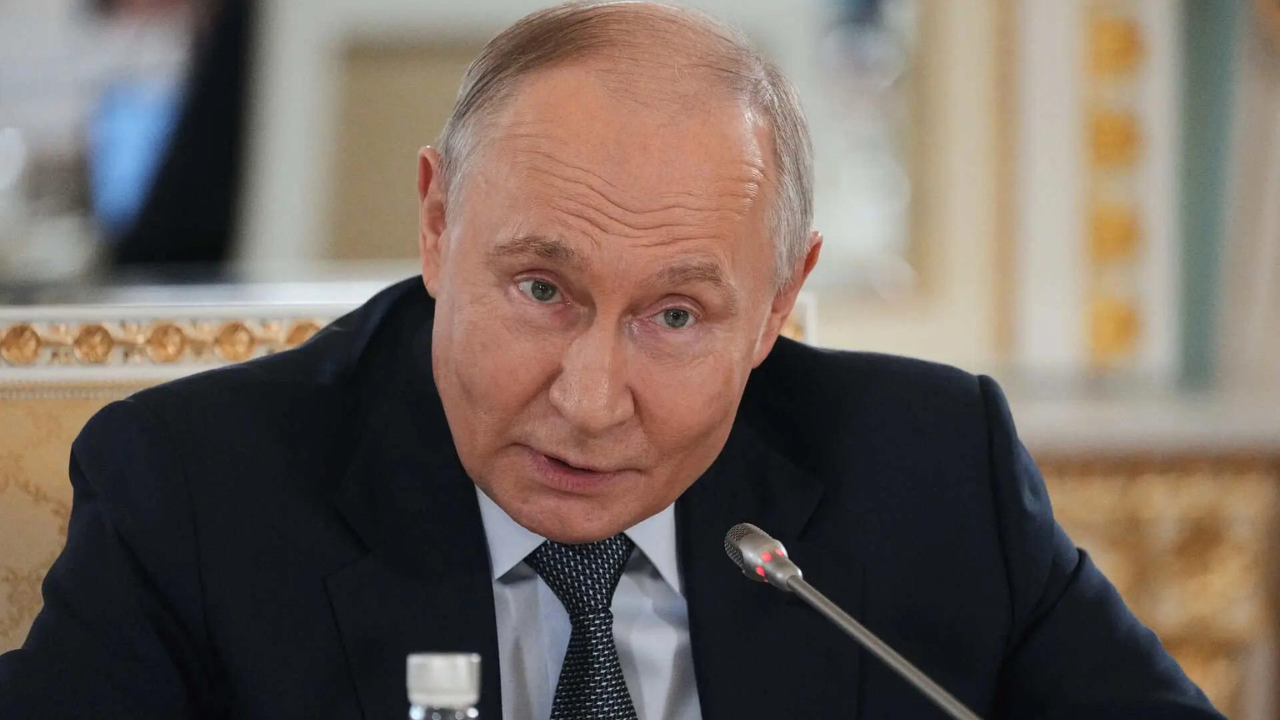
Global foreign policy pundits love a comfortable, predictable narrative. They tune into international summits, listen to carefully sanitized press statements, and immediately construct a fantasy world where state relations operate like high school cliques.
The latest bout of collective naivety stems from Vladimir Putin’s public commentary regarding the India-China border disputes and Islamabad’s relationship with Beijing. The consensus view among mainstream talking heads is simple, clean, and entirely wrong: they believe Russia is desperately playing peacemaker between New Delhi and Beijing while trying to soothe Western anxieties about a rising Sino-Pakistani axis.
This interpretation misses the entire structural reality of Eurasian metaphysics.
The corporate press treats diplomatic statements as confessions of intent. In reality, they are smoke screens designed to manage leverage. Moscow is not playing the role of the benevolent neutral arbiter. It is executing a cold, calculated strategy of dual dependency to ensure its own survival in a fractured global order. If you want to understand the actual mechanics of power in Eurasia, you have to stop listening to what these leaders say to reporters and start looking at the structural imperatives driving their behavior.
The Myth of the Neutral Russian Arbiter
The prevailing narrative suggests that Moscow views the friction between India and China as an unfortunate misunderstanding that threatens Eurasian unity. Analysts point to Russian statements urging bilateral resolution as proof of a genuine desire for peace.
This is a fundamental misunderstanding of how middle-power leverage works.
Russia does not want a war between India and China, but it absolutely benefits from a controlled state of tension between them. If New Delhi and Beijing suddenly resolved their structural border disputes and formed a seamless economic alliance, Russia’s geopolitical premium would evaporate overnight.
Consider the raw economic data. Since western sanctions restricted Russia's access to European energy markets, Moscow has relied heavily on two buyers to keep its economy afloat: China and India.
According to commodities tracking data, India’s imports of Russian crude jumped from less than 2% of its seaborne imports pre-2022 to over 40% in subsequent years. Concurrently, China remains the largest single buyer of Russian energy.
If India and China were completely aligned, they could easily collude to dictate prices to Rosneft and Gazprom, effectively breaking Russia's fiscal backbone. Because they remain fierce rivals, Moscow retains the upper hand. It can play both sides, offering discounted Urals crude to New Delhi while cementing strategic technology transfers with Beijing.
I have watched corporate analysts misjudge these supplier-buyer dynamics for two decades. They always mistake dependency for subservience. Russia is dependent on Asian markets, yes, but it uses the mutual hostility of those markets to prevent either one from dictating terms. Moscow's public "caution" regarding India-China ties isn't a plea for harmony; it is a calculated performance to maintain its position as the irreplaceable swing factor in Eurasia.
The Pakistan-China Delusion: Autonomy Is Not Control
The second pillar of the lazy consensus is the idea that Pakistan has become a helpless satellite state of Beijing, a claim that Putin recently dismissed to the confusion of Western observers. The conventional wisdom insists that through the China-Pakistan Economic Corridor (CPEC) and massive debt accumulation, Islamabad has forfeited its sovereignty to the Chinese Communist Party.
The reality is far more chaotic. Beijing does not control Pakistan; Beijing is trapped in a multi-billion-dollar security sinkhole of its own making.
To understand why the "vassal state" theory fails, you need to look at the balance of liabilities. In international finance and geopolitics, there is an old rule: if you owe the bank a hundred thousand dollars, the bank owns you; if you owe the bank a hundred billion dollars, you own the bank.
China has poured over $60 billion into CPEC infrastructure projects. What has it bought?
- Constant security threats to Chinese nationals from regional insurgencies.
- An economic partner perpetually on the brink of IMF bailouts.
- A military establishment that still maintains deep, institutionalized intelligence ties with Washington.
Islamabad knows exactly how important it is to Beijing’s strategy of encircling India and securing an alternative overland trade route to the Arabian Sea via Gwadar Port. Because Pakistan is too big and too unstable to fail, its leadership can continually extract financial lifelines from Beijing without ever fully aligning its domestic or foreign policy with Chinese preferences.
When a superpower cannot guarantee the safety of its own engineers inside a "vassal" country without threatening to deploy its own troops—a move Islamabad routinely resists—it does not possess control. It possesses an expensive security obligation. Russia's rejection of the "Pakistan under Beijing's control" narrative isn't a favor to China; it is a rare flash of brutal realism from Moscow.
Dismantling the "People Also Ask" Illusions
The public’s understanding of this triad is warped by flawed premises embedded in the very questions people ask about global politics. Let’s dismantle them one by one.
Is Russia forcing India to choose between Moscow and Washington?
The question assumes India can be forced. New Delhi's entire foreign policy doctrine since independence has been built around strategic autonomy. India is currently a member of the Quad (with the US, Japan, and Australia) and simultaneously a member of BRICS and the Shanghai Cooperation Organisation (with Russia and China).
India does not choose sides; it chooses its own interests. It buys S-400 missile defense systems from Russia while purchasing MQ-9B Predator drones from the United States. Moscow knows that demanding exclusivity from New Delhi would backfire instantly, driving India completely into the arms of the Pentagon.
Will China and Russia form a formal military alliance against the West?
Never. A formal military alliance requires a level of mutual trust and shared destiny that does not exist between Beijing and Moscow. Historically, their relationship has fluctuated between ideological brotherhood and bitter border conflicts, such as the 1969 Sino-Soviet clashes.
Today, they share a tactical alignment against American hegemony, but their long-term goals are fundamentally incompatible. China views itself as the rightful hegemon of Eurasia, a position Russia historically occupied and refuses to yield. An alliance would require Russia to accept the junior partner role—something the Kremlin’s political culture cannot tolerate.
The High Cost of the New Great Game
Let’s be completely transparent about the downsides of this contrarian reality. Accepting that Eurasia is governed by shifting, cynical balances of power rather than rigid blocs means admitting that stability is an illusion.
For India, the risk of playing the balancing game is immense. Relying on Russian military hardware while Russia becomes increasingly integrated with the Chinese economy leaves New Delhi vulnerable to supply chain disruptions in the event of a major conflict in the Himalayas.
For the West, the policy of trying to isolate Russia completely has failed because it ignored the economic appetites of New Delhi and Beijing. By forcing Russia to sell its resources at a discount, western policy inadvertently lowered the input costs for the two largest manufacturing and industrial economies on earth, making them more competitive, not less.
Stop Looking for Alliances Where Only Leverage Exists
The mistake Western policymakers make repeatedly is hunting for Cold War style blocs. They want to see a neat division: the democracies versus the autocracies.
Eurasia refuses to cooperate with this binary framework.
Russia is not China’s lackey, India is not the West’s proxy, and Pakistan is not Beijing's puppet. Every single actor in this theater is running a sophisticated hedging strategy designed to maximize their own freedom of maneuver while tying their neighbors into knots of economic and military dependency.
When a head of state speaks on these dynamics, they are not delivering an analysis; they are placing a bet in a high-stakes poker game. Putin's defense of Pakistan's autonomy and his cautious words on India-China relations are part of the same playbook. It keeps Beijing guessing, keeps New Delhi buying, and ensures that the road to Eurasian stability must always run through Moscow.
Stop analyzing the rhetoric. Follow the oil tankers, track the debt yields, and watch the weapons shipments. That is where the real geometry of power is written.