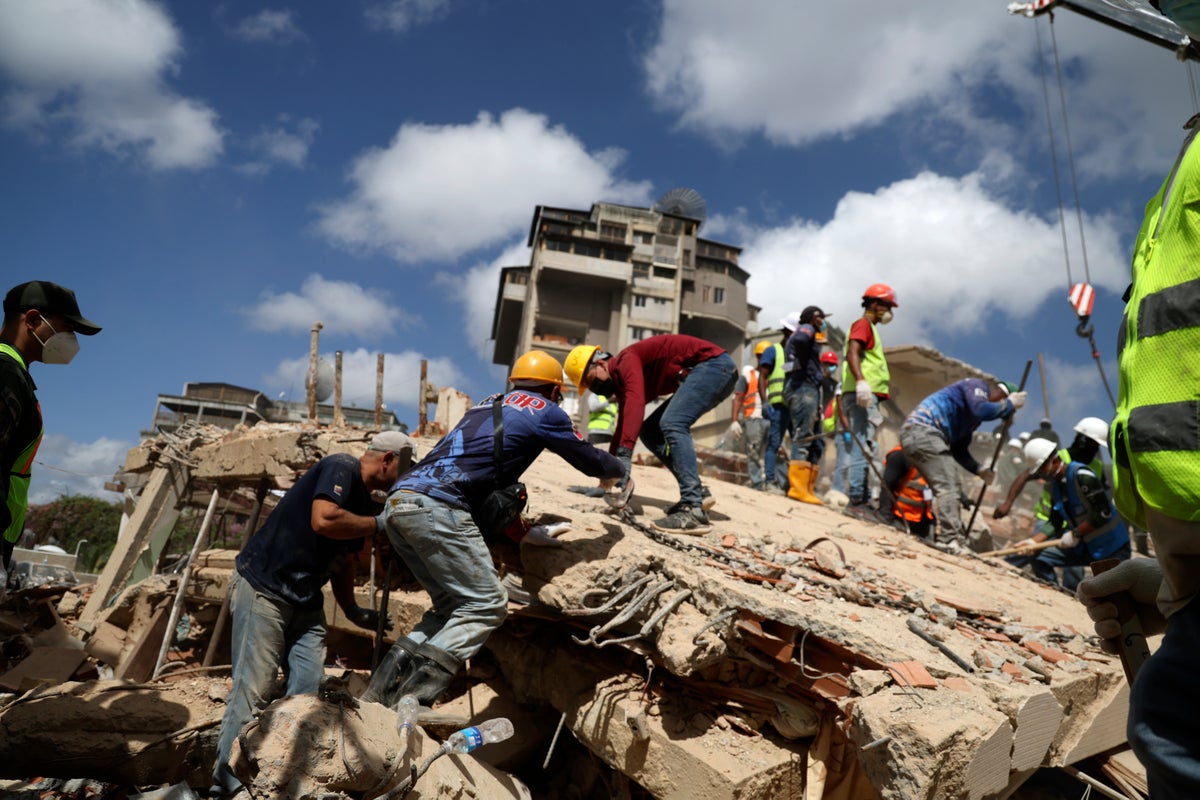
The concrete does not groan before it falls. It is too heavy for theatrics. When the fault line slips miles beneath the surface, the physical world transforms in less than seven seconds from a stable grid of streets and rooms into an chaotic crush of gray dust and jagged rebar.
Then comes the silence.
For the person trapped beneath the collapse, that silence is the first terrifying metric of a countdown they cannot see. For the search teams assembling on the broken asphalt above, it is the start of a brutal, mathematical race against human biology.
We have all heard the term "the golden 72 hours." Media reports broadcast it after every major seismic event, treating it as a rigid expiration date for hope. The narrative is familiar: three days to find them, or all is lost. But anyone who has ever stood over a pile of collapsed masonry, listening through a specialized acoustic microphone for the faint, rhythmic scratching of a survivor, knows that the 72-hour window is a mathematical fiction. It is a statistical average masquerading as a rule.
The reality of survival beneath the rubble is far more volatile, deeply personal, and entirely dependent on a delicate triage of physics, biology, and sheer luck. People die in hours. People walk out after weeks.
To understand why, we have to look into the dark.
The Chemistry of the Void
Consider a hypothetical survivor. Let’s call him Timur. When the ceiling of his apartment building pancaked, a reinforced concrete beam caught the edge of a heavy oak dining table just four inches above his chest. He is uninjured, but he is encased in a space roughly the size of a coffin.
Timur’s immediate threat is not starvation. It is not even dehydration. It is the composition of the air he breathes.
In a sealed, confined space, a human being consumes roughly 20 to 30 liters of oxygen per hour while at rest. As Timur breathes, he draws down the finite supply of oxygen in his small pocket of survival and replaces it with carbon dioxide. If the void is entirely unventilated, hypercapnia—carbon dioxide poisoning—takes hold long before the first sunset. The symptoms begin with a deceptive mildness: a dull headache, a slight quickening of the pulse, a subtle sense of confusion. Within hours, as the concentration of carbon dioxide in the air crosses the 10% threshold, the brain slips into unconsciousness.
But collapse zones are rarely completely airtight. Concrete is porous. Fractured drywall lets air seep through the cracks. If Timur has a steady micro-draft of outside air, his countdown shifts from hours to days.
Now his primary adversary is water.
The human body is an incredibly resilient machine, but it cannot override the laws of thermodynamics. Under normal conditions, an adult loses about two to three liters of water a day through sweat, respiration, and urination. Trapped beneath the rubble, in an environment choked with fine particulate dust that dries out the mucous membranes with every breath, that rate increases.
Dehydration changes the blood. As fluid leaves the system, blood volume drops, making it thicker and harder for the heart to pump. The kidneys, starved of the pressure they need to filter waste, begin to shut down. This is where the 72-hour average comes from. It is the rough estimate of how long a healthy human kidney can endure severe fluid deprivation before irreversible damage occurs.
Yet, even here, the math is malleable. If the environment is cold and damp, the body’s metabolic rate slows down, conserving precious moisture. If the survivor finds a source of condensation—even water dripping from a ruptured, non-potable pipe—the survival window stretches dramatically. In the 2010 Haiti earthquake, survivors were pulled from the ruins of Port-au-Prince after 12, 14, and in one extraordinary case, 27 days. They survived because they were protected from the blistering tropical heat by the very concrete that imprisoned them, and they found tiny pools of water within their wreckage.
The Weight of the Concrete
The calculation changes entirely if the rubble is not just around you, but on you.
Imagine another scenario. A woman—we will call her Leyla—is trapped beneath the collapse of her office building. Her legs are pinned beneath a massive section of masonry. She feels no pain initially; the pressure is so intense that it has numbed the nerves. She is conscious, she can speak, and she can wait.
This is the deception of crush syndrome.
When heavy debris compresses a large muscle group, like the thighs or calves, it cuts off the blood supply. Deprived of oxygen, the muscle cells begin to die, a process called rhabdomyolysis. As these cells rupture, they release massive quantities of myoglobin, potassium, and lactic acid into the surrounding tissue.
As long as the concrete remains on Leyla’s legs, she may seem stable. The pressure acts as a grotesque tourniquet, keeping the toxins isolated. But the moment a rescue team lifts that stone, the floodgates open. The blood rushes back into the damaged limb, washing a toxic wave of potassium and myoglobin straight to the heart and kidneys.
High levels of potassium disrupt the heart’s electrical signals, causing sudden, fatal arrhythmias. Myoglobin clogs the microscopic filters of the kidneys like wet sand in a pipe, causing acute renal failure within hours.
During the 1988 earthquake in Armenia, rescue workers noted a devastating phenomenon: victims were pulled from the rubble alive, smiling and thanking their rescuers, only to collapse and die minutes later on the stretchers. They called it the "smile of death." Today, specialized search and rescue teams carry intravenous fluids directly into the tunnels, hooking survivors up to saline drips before the debris is lifted to dilute the toxic wave before it hits the central organs.
The Acoustic Battle
Above the ruins, the atmosphere is a chaotic symphony of heavy machinery, shouting crowds, and idling diesel engines. But periodically, a whistle blows, a horn blasts, and everything stops.
Total silence is mandated across the pile.
Searchers use seismic and acoustic detectors—instruments so sensitive they can pick up the vibration of a fingernail scratching against stone through ten feet of debris. For the rescue teams, this is a psychological tightrope. They must move massive chunks of concrete to reach the voids, but every movement risks shifting the unstable matrix of rubble, potentially crushing the very people they are trying to save.
Survival Probability Over Time (General Statistical Curve)
===========================================================
Day 1: [██████████████████████████████] ~85-90% Chance
Day 2: [███████████████████████]       ~60-70% Chance
Day 3: [██████████████]                 ~30-40% Chance (The 72-Hour Mark)
Day 4: [███████]                        ~10-15% Chance
Day 5+: [█]                             <5% Chance (Requires specific anomalies)
===========================================================
The graph above represents a cold statistical truth, but it fails to capture the anomalies that define human endurance. The drop off after Day 3 is steep, not because hope evaporates, but because the compounding factors of dehydration, exposure, and untreated injuries begin to intersect.
Yet, search and rescue protocol handles every operation as a rescue, not a recovery, long past that third day. The decision to call off a search and bring in the heavy bulldozers to clear the site is one of the most agonizing choices a local authority can make. It is an admission that the mathematical probability of life has dropped to zero.
But human beings are not data points.
The Invisible Engine
There is an intangible element that medical textbooks struggle to quantify: the psychological toll of the dark.
When a person is trapped in total darkness, stripped of any sensory input, the mind quickly turns on itself. Auditory and visual hallucinations set in within twenty-four hours. The sound of shifting debris can be misinterpreted as a rescue team arriving, or conversely, as an impending second collapse.
Panic is a physical drain. A racing pulse consumes oxygen faster. Hyperventilation accelerates dehydration. The survivors who beat the odds are often those who manage to maintain a grim, methodical control over their mental state. They ration their movements. They shout only when they hear noises directly above them, conserving the moisture in their throats. They create an internal schedule, measuring time by the phantom routines of their old lives.
The human body can endure catastrophic structural failure, extreme dehydration, and profound isolation if the brain refuses to surrender. Survival is an active process, a quiet, stubborn rebellion against the weight of the earth.
When the dust finally settles after a disaster, the numbers reported in the news—the tallies of the missing, the dead, and the saved—give a clean shape to a messy, chaotic reality. But behind those statistics are individuals like Timur and Leyla, sitting in small spaces, counting their breaths, waiting for the sound of a shovel against stone. The 72-hour mark will come and go, but as long as there is air to breathe and a mind determined to see the daylight again, the fight beneath the concrete continues.
The rescuer's microphone drops into a dark crevice. A technician adjusts the headset, filtering out the distant hum of the city. They hold their breath.
And from deep beneath the gray ruin, a faint, rhythmic tap answers back.