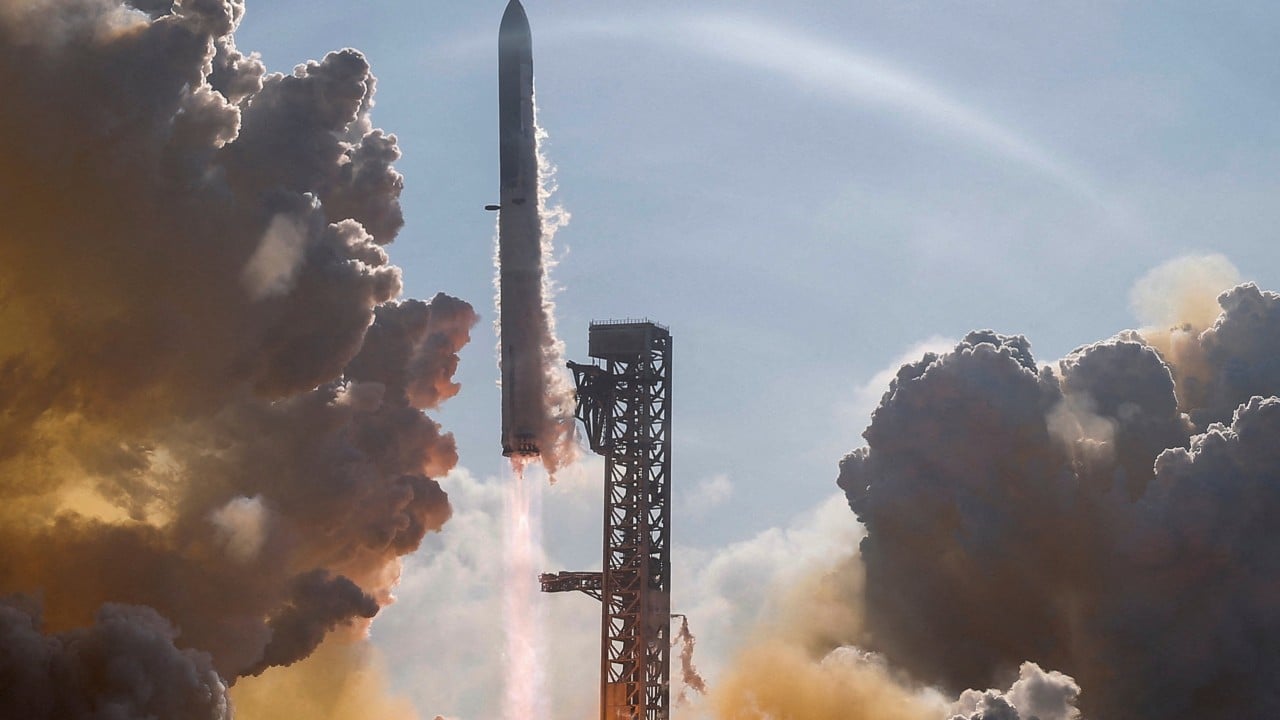
Every few minutes, a low rumble rolls across the salt marshes of Boca Chica, Texas. It is a sound that vibrates in the chest before it hits the ears. For the engineers staring at screens in the control rooms, and for the millions watching via webstreams, that noise represents the undisputed heavyweight champion of the modern space age.
Elon Musk’s SpaceX does not just dominate the launch market. It dictates it. Discover more on a similar issue: this related article.
Step back into the early 2000s. The aerospace industry was a cozy, slow-moving club of defense contractors. Rockets were expendable, staggering pieces of architecture built to fly once and sink into the ocean. Launching a satellite required a sovereign budget and years of bureaucratic patience. Then came the Falcon 9. It didn't just lower costs; it shattered the existing financial model of orbital access by doing what everyone said was impossible: landing upright on a drone ship in the middle of the Atlantic.
Today, SpaceX launches more mass into orbit than the rest of the planet combined. Between its commercial launch dominance and the growing constellation of Starlink satellites, the company has effectively built a private toll road to the stars. Additional analysis by Engadget explores comparable perspectives on the subject.
But look past the roaring exhaust plumes and the celebratory tweets. A quiet, unsettling question is beginning to echo through the corridors of Washington, Brussels, and Tokyo.
What happens when a single company owns the sky?
Monopolies are rarely born out of malice. Usually, they are born out of sheer competence. SpaceX won the launch race because it was faster, bolder, and radically cheaper than anyone else. But a market without viable options is a fragile ecosystem.
Consider a hypothetical commercial satellite operator—let's call her Sarah. Sarah runs a mid-sized earth-imaging startup in Colorado. Her company monitors deforestation and agricultural yields. To stay in business, she needs to get her new hardware into low Earth orbit.
When Sarah looks at the market, she doesn't really have a choice. She can wait years for a legacy competitor whose rocket isn't built yet, or she can sign a contract with SpaceX. If SpaceX raises its prices by twenty percent next Tuesday, Sarah pays it. If a SpaceX launch anomaly grounds the Falcon 9 fleet for three months, Sarah’s company faces bankruptcy. Her entire livelihood, and the data her climate-monitoring clients rely on, depends on the operational health of one single corporation.
This is the hidden vulnerability of the new space economy. The bottleneck isn't technology anymore. It is dependency.
The Pentagon feels this anxiety acutely. For decades, military doctrine insisted on "assured access to space," a policy requiring at least two independent rocket families capable of launching national security payloads. The goal was simple: if one rocket failed, the country wouldn't be locked out of orbit. Now, the U.S. government finds itself in a paradoxical position. It relies heavily on SpaceX to launch its most sensitive spy satellites and transport its astronauts, even as antitrust regulators watch the company’s market share edge toward total supremacy.
It is a deeply uncomfortable partnership. On one hand, SpaceX delivers flawless execution at a fraction of the historical cost. On the other hand, relying on a single provider for critical national infrastructure violates every rule of strategic redundancy.
The pressure is mounting from other directions, too. Starlink, SpaceX's satellite internet division, now controls the vast majority of active satellites currently circling the globe. For a remote village in the Andes or a maritime vessel in the Pacific, Starlink is a lifeline. It brings education, telemedicine, and economic opportunity to places the traditional internet forgot.
But that lifeline belongs to a private entity. When geopolitical conflicts erupt, the question of who controls the kill switch becomes terrifyingly real. We have already seen glimpses of this tension when decisions regarding satellite coverage over conflict zones spark intense international debate. The global community is realizing that a private company now wields the kind of geopolitical leverage traditionally reserved for nuclear-armed states.
Gravity, however, has a funny way of catching up with everyone.
The assumption that SpaceX will maintain this absolute dominance forever overlooks a fundamental truth about technology: advantages erode. The very success of the Falcon 9 has created a fierce, well-funded counter-movement. Empires look invincible right up until the moment they aren't.
Europe, burned by its current lack of independent launch capability, is pouring billions into revitalizing its Ariane program. Rocket Lab, a lean and aggressive competitor, is systematically scaling up its Neutron rocket to challenge the medium-lift market. Blue Origin, backed by the immense wealth of Jeff Bezos, is finally moving its massive New Glenn rocket toward regular operational status.
At the same time, the regulatory landscape is shifting. Governments are no longer viewed as mere customers writing blank checks. They are beginning to act like regulators who are deeply wary of a monoculture in orbit. Antitrust scrutiny, orbital debris regulations, and frequency allocation disputes are quietly forming a web of compliance that will slow down even the most agile corporate giant.
The space race of the twentieth century was a clash of national ideologies, fought with unlimited budgets and driven by geopolitical pride. The space race of the twenty-first century is something entirely different. It is a messy, high-stakes commercial scramble to control the next economic frontier.
SpaceX won the first round by an absolute knockout. They taught the world how to reuse rockets, forced a stagnant industry to innovate, and made the spectacular look routine. They deserve the history books.
But the sky is too vast to belong to one person, one company, or one vision. The true maturity of the space age won't be measured by how high SpaceX can build its empire, but by how quickly the rest of the world builds a crowded, competitive, and resilient ecosystem alongside it.
The rumble in Boca Chica is impressive. But a healthy ocean needs more than one whale.