The global art community is currently swooning over the announcement of a massive, five-year restoration project targeting the Raphael Loggia in the Apostolic Palace. Media coverage reads like a breathless press release issued directly from the Holy See. They praise the preservation of history. They marvel at the technical prowess required to scrub centuries of grime off Renaissance frescoes. They celebrate that this space—traditionally reserved for popes, heads of state, and elite dignitaries—will be meticulously stabilized for the next generation.
It is a comforting narrative. It is also entirely wrong.
The standard approach to cultural preservation is fundamentally flawed. By turning living, breathing architectural spaces into static, hyper-sanitized museum artifacts, we are not saving art. We are embalming it. The multi-million-dollar effort to freeze the Raphael Loggia in time ignores a harsh reality: art was never meant to be immortal, and the obsession with pristine preservation actively strips these spaces of their historical soul.
The Myth of the Original Intent
Step into the shoes of a traditional art restorer, and you are taught to chase a phantom known as "the artist’s original vision." It sounds noble. In practice, it is an impossibility driven by ego.
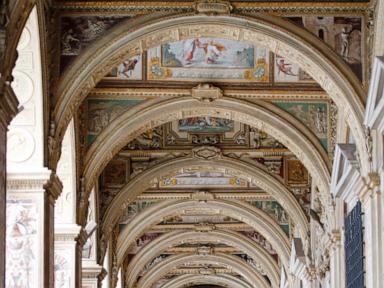
When Raphael and his assistants painted the Loggia between 1517 and 1519, they were not designing a sterile gallery. They were decorating a functional, open-air corridor exposed to the elements, Roman humidity, and the soot of flickering torches. The grottesche designs—inspired by the excavated ruins of Nero's Golden House—were meant to mimic the grit and mystery of classical antiquity.
Modern restoration attempts to reverse the clock by scraping away centuries of accumulated history to reveal the "true" colors underneath. This process assumes that 500 years of environmental interaction is a defect rather than a feature. It is a form of cultural amnesia. When we strip away the candle soot of the Renaissance papacies, the grime of foreign occupations, and the natural oxidation of pigments, we are not viewing Raphael. We are viewing a 21st-century interpretation of Raphael, scrubbed clean for an audience obsessed with high-definition clarity.
Consider the historical precedent of the Sistine Chapel restoration in the 1980s and 1990s. When restorers washed away the layers of animal glue and soot, they sparked a fierce, decades-long debate among art historians. Critics argued that the team inadvertently removed crucial over-paintings—shadows and dry-brushed details applied by Michelangelo a secco (after the plaster had dried) to give the figures depth. What was left behind was undeniably bright, but many argued it was flat and fundamentally altered from what the master intended. The current five-year campaign on the Loggia risks making the exact same mistake: prioritizing vibrancy over historical depth.
The Tourism Industrial Complex
Why do we insist on this endless cycle of deep-cleaning antiquity? Follow the money. The restoration industry does not exist in a vacuum; it is explicitly tied to global tourism and political optics.
A closed, undergoing-restoration monument creates a powerful narrative of exclusivity and impending rebirth. It generates headlines. It attracts wealthy donors and corporate sponsors eager to plaster their names next to a Renaissance master. But the tragedy happens when the scaffolding comes down.
Once a space like the Raphael Loggia is fully restored, it is subjected to strict microclimate controls. Windows are sealed. HVAC systems hum to life to regulate temperature and humidity down to the decimal point. The open-air loggia, designed to interact with the Roman breeze, becomes an airtight glass box.
By isolating the artwork from the environment for which it was built, we transform architecture into a display case. The space loses its function. It ceases to be a place where history happens and becomes a place where history goes to die. We are sacrificing the sensory experience of historic architecture on the altar of visual consumption.
The Cost of Freezing Time
I have spent years studying how cultural institutions manage legacy assets, and the pattern is always the same: organizations pour millions into high-profile cosmetic restorations while basic structural maintenance elsewhere crumbles.
Let’s dismantle a common justification found in the "People Also Ask" columns of the art world: Doesn't restoration preserve these works for future generations to study?
Strictly speaking, yes. But at what cost? When you freeze an object in time, you prevent it from evolving. Art historically functioned as a layer cake. Romans built over Etruscans. Renaissance masters painted over medieval walls. Baroque architects transformed Renaissance facades. This constant destruction and rebirth is what kept cities like Rome vibrant for millennia.
The modern conservation movement has halted this cycle entirely. We have decided that our current era has no right to create, only to maintain. By declaring that the Raphael Loggia must look exactly like it did in 1519 forever, we are expressing a profound lack of confidence in our own cultural relevance. We have become curatorial janitors, terrified of letting time take its natural course.
A Contrarian Blueprint for Conservation
We need to stop treating historical sites like fragile glass figurines. A superior approach to cultural heritage requires a radical shift in philosophy: accept decay as an essential component of an object's story.
Instead of deploying aggressive chemical solvents to strip away 500 years of environmental history, conservation should focus strictly on structural stabilization. Stop the plaster from falling off the wall, but leave the patina of time alone. If the colors fade, let them fade. There is immense pedagogical and aesthetic value in witnessing the natural aging process of materials.
If the public wants to see the vibrant, day-one colors of Raphael’s frescoes, we should leverage high-fidelity digital projections and virtual reality reconstructions. Leave the physical pigment on the wall to age gracefully, and use technology to satisfy the craving for bright, pristine visuals. This protects the physical reality of the site from the damage of physical interventions while providing scholars and tourists with the data they desire.
The obsession with eternal youth is a modern sickness. When applied to the Renaissance, it robs us of the true weight of history. The Raphael Loggia is magnificent not because it looks brand new, but because it has survived five centuries of a chaotic, changing world. Scrubbing away that survival doesn't honor Raphael; it insults his legacy. Stop trying to fix the past. Learn to live with its wrinkles.