The air inside a packed arena behaves differently than it does anywhere else. It grows thick with a collective, sour heat—the smell of thousands of bodies suspended in a state of perpetual anticipation. If you stand near the press riser, just far enough from the speakers to escape the worst of the distortion, you can hear the strange, low hum of a crowd waiting for a savior. Or a show. In the modern political arena, the line between the two evaporated a long time ago.
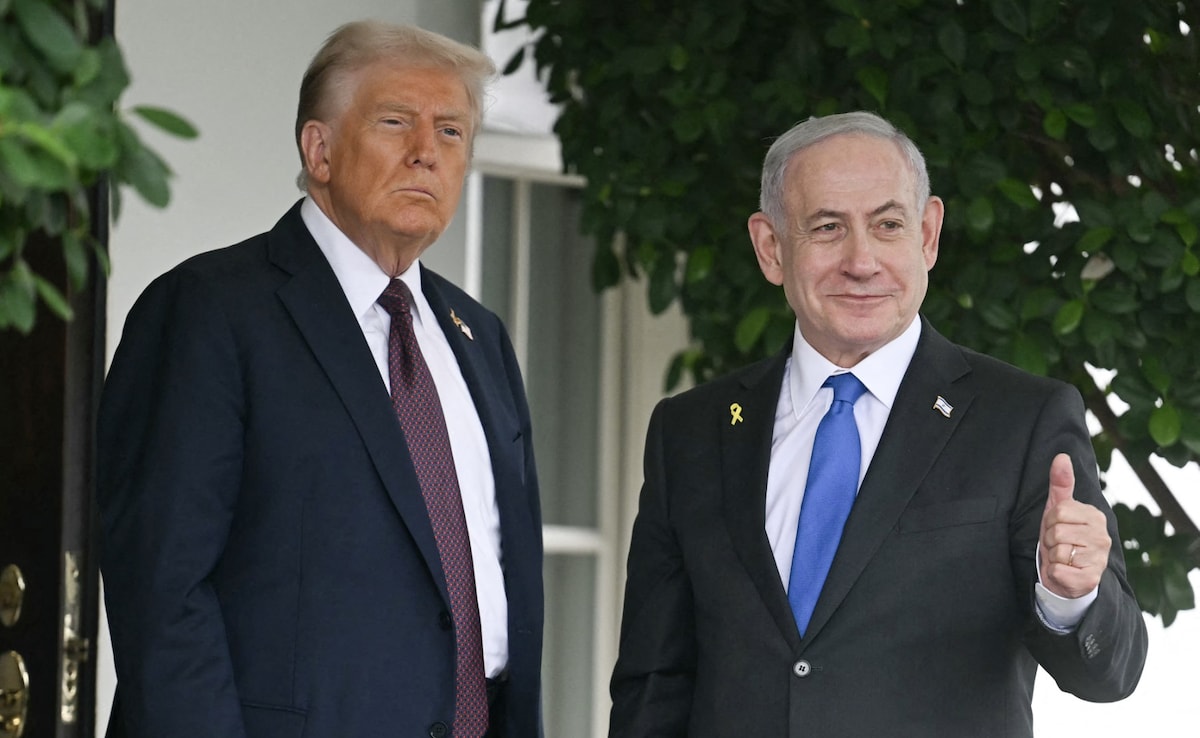
When Donald Trump walked onto the stage in California, the noise was deafening, a wall of sound designed to project absolute, unshakeable power. But beneath the roaring bass of the entrance music, something else was unfolding. It was invisible to the cameras broadcasting the spectacle to millions, but glaringly obvious to anyone watching the man himself.
He looked tired. Not the ordinary exhaustion of a traveler or a campaigner, but a deep, bone-weary fatigue that seemed to pull at the corners of his posture.
For nearly a decade, the core appeal of the Trump phenomenon has been its relentless, chaotic vitality. He was the man who never slept, the fighter who shrugged off controversies that would have buried a dozen ordinary politicians, the master showman who treated the American political system like a personal playground. Yet, during this specific appearance, the spectacle felt strained. The voice, usually a booming instrument of grievance and triumph, possessed a raspy, thinned-out quality. The cadence was slightly off, a beat behind the usual rhythm.
Then came the line that stopped the room’s momentum dead in its tracks.
"If Jesus Christ came down and was the vote counter, I would win California."
It was delivered with the familiar bravado, but it landed with the heavy thud of desperation. California. A state that hasn't voted for a Republican presidential candidate since 1988. A place where he lost by over five million votes in the previous election. To suggest that only a divine intervention of literal biblical proportions could reveal his true victory there wasn't just typical political hyperbole. It felt like a window into a deeply isolated psychological landscape.
Consider what happens next when the reality of a situation diverges so violently from the narrative being sold. The crowd still cheered, because cheering is the contract you sign when you enter the building. But the energy changed. It shifted from the triumphant roar of a winning team to the defensive, protective rallying of a community trying to shield its leader from the cold intrusion of reality.
The human mind is a fragile machine, even when housed inside a billionaire. We are all bound by the limits of our biology. Sleep deprivation, relentless stress, and the crushing weight of public scrutiny take a toll that no amount of ego or ambition can entirely offset. When an aging public figure begins to falter under that weight, the reaction from the public says far more about us than it does about them.
We have become a culture obsessed with the outward signs of decline, scanning every speech, every stumble, and every raspy breath for a definitive diagnosis. We parse transcripts like ancient texts, looking for the precise moment the armor cracked.
But the real problem lies elsewhere. It isn't just about whether a seventy-eight-year-old man had a bad night or a bout of laryngitis. It is about the ecosystem that requires him to be immortal.
Imagine a hypothetical local theater troupe where the aging lead actor begins to forget his lines. In a healthy community, someone steps in. The director calls for a break. The understudy prepares. The audience offers a polite, sympathetic round of applause and allows the man to rest. But if that theater troupe's survival depends entirely on that one actor staying on stage forever, the dynamic becomes terrifying. The director whispers the lines from the wings. The cast pretends every missed cue was an intentional stroke of genius. The audience screams louder to drown out the silence.
That is the invisible pressure cooking inside the modern political apparatus. The stakes are so high, the financial and ideological investments so massive, that the human being at the center of it all is no longer allowed to be human. He cannot be sick. He cannot be tired. He cannot misspeak out of simple fatigue. Every utterance must be a calculated strategy, even when it sounds like a cry from a man trapped in his own mythology.
This creates a profound sense of whiplash for the casual observer. On one channel, you see a clip of a man looking visibly unwell, his voice cracking as he claims victory in a state that fundamentally rejects his platform. On another channel, you hear a frantic defense explaining that the comment was a brilliant metaphorical critique of election integrity.
The truth is usually much simpler, much sadder, and far more relatable.
Anyone who has ever cared for an aging parent, or watched a brilliant mentor slowly lose their grip on their peak abilities, knows the specific ache of that transition. You recognize the moments where the old fire flashes, followed immediately by a period of wandering confusion. It is a universal human experience. It evokes pity, empathy, and a desire to comfort.
Yet, when that process happens beneath the glaring lights of a presidential campaign, empathy is the first thing to be discarded. It is replaced by weaponized analysis. One side uses the frailty as a political bludgeon, a proof-positive sign of unfitness. The other side denies the frailty exists at all, demanding that we disbelieve our own eyes and ears.
This denial requires a massive amount of psychic energy from the followers. To believe that Donald Trump could win California if the votes were counted fairly is to reject the basic math of American geography. It requires a total decoupling from the physical world. When a leader demands that level of faith, he is no longer asking for a vote; he is asking for an alignment of reality itself.
And that is where the exhaustion truly lives. It is not just in the candidate’s raspy vocal cords or his slower gait. It is in the collective exhaustion of a country forced to participate in this perpetual psychodrama.
We are trapped in a loop where the physical health of a few elderly individuals determines the trajectory of the entire free world. We watch them closely, nervously, like passengers watching a pilot who has been at the controls for thirty hours straight. We notice the slight tremble in the hand, the heavy blink of the eyes, the brief moment where they seem to forget which direction they are flying.
Instead of demanding a system that doesn't rely on the superhuman endurance of a few septuagenarians, we simply argue over whether the pilot is actually tired or if he is just executing a complex tactical maneuver.
The California rally eventually ended. The music swelled again, the boilerplate classic rock blaring through the arena speakers to signal that the event was a success. Trump waved, threw a few hats into the crowd, and walked off into the wings, disappearing toward a waiting motorcade and another flight to another city.
The crowd filed out into the cool California night, leaving behind a floor littered with discarded signs and spilled soda. Outside the arena, away from the manufactured heat and the blinding spotlights, the world was exactly as it had been before the show started. The numbers hadn't shifted. The reality of the electorate remained stubborn and unchanged.
As the buses pulled away and the stadium lights were flicked off one by one, the image that remained was not one of a conquering hero or a dangerous demagogue. It was the image of a man on a stage, surrounded by thousands of people, yet utterly alone in the dark expanse of his own illusions, shouting into a microphone about a victory that never was, waiting for a miracle that isn't coming.