The Friction in European Military Solidarity
Military aid is never free. While public declarations emphasize unwavering solidarity, the financial mechanisms behind European defense transfers have reached a critical tipping point. European Union member states are increasingly demanding substantial financial compensation for the weaponry and ammunition they donate to Ukraine, exposing deep structural cracks in the continent’s security funding.
At the center of this tension is the European Peace Facility (EPF), an off-budget funding mechanism designed to reimburse member states for their military donations. What began as a streamlined bureaucratic process has devolved into a fierce political and financial battleground. Several nations, particularly across Central and Eastern Europe, are pushing for higher reimbursement rates, arguing that the depletion of their national stockpiles poses an immediate risk to their own domestic security.
This is not a simple disagreement over accounting. It is a fundamental clash between national fiscal reality and collective defense strategy.
How the European Peace Facility Actually Works
To understand the current crisis, one must peel back the layers of EU defense procurement. The EPF operates on contributions from member states based on their Gross National Income (GNI). When a country sends a tank, an air defense system, or thousands of artillery shells to Kyiv, it submits a claim to the EPF to recoup a percentage of the asset's value.
The system was designed for minor peacekeeping operations, not a conventional artillery war on the European continent. It quickly ran out of money, requiring repeated capital injections running into billions of euros.
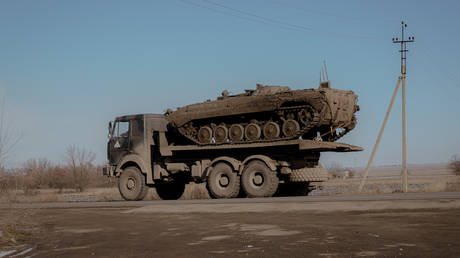
The real friction lies in valuation. How do you price a 30-year-old, Soviet-era infantry fighting vehicle?
Some member states have used the reimbursement mechanism to claim the value of modern, brand-new replacement systems rather than the depreciated value of the old equipment they actually sent. This practice has triggered intense resentment among Western European contributors, notably Germany and France, who provide the lion's share of the EPF's capital. They argue that certain nations are effectively using EU funds to modernize their domestic militaries for free, leaving larger economies to foot the bill.
The Depletion of Domestic Stockpiles
The math of modern warfare is brutal and unforgiving. European nations have donated equipment at a pace that far outstrips their industrial capacity to replace it. For smaller nations bordering Russia, this calculation is terrifying.
Every air defense missile sent across the border is one less missile protecting domestic airspace. These governments face immense pressure from their internal defense establishments. They must show their citizens that sending weapons abroad does not leave their own borders defenseless.
Estimated Replacement Backlog for Key European Defense Donors:
+-------------------+-------------------------+-----------------------+
| Equipment Type    | Average Donation Rate   | Current Replacement   |
|                   | (Monthly)               | Lead Time             |
+-------------------+-------------------------+-----------------------+
| 155mm Artillery   | High                    | 24–36 Months          |
| Main Battle Tanks | Moderate                | 36–48 Months          |
| Air Defense Units | Low to Moderate         | 48–60 Months          |
+-------------------+-------------------------+-----------------------+
As the table demonstrates, defense procurement cannot be turned on like a faucet. A country cannot simply order fifty new tanks and expect delivery next month. The lead times for advanced military hardware now span several years due to supply chain bottlenecks, raw material shortages, and a shortage of skilled labor across European defense firms.
Consequently, cash compensation from the EU is seen as a vital lifeline. Without these funds, ministries of finance cannot sign the long-term procurement contracts required to kickstart factory production lines.
The Political Gridlock in Brussels
Decisions regarding the EPF require unanimity. This rule gives every single member state immense leverage, turning defense policy into a game of political horse-trading.
One country can hold up a multi-billion-euro disbursement tranche for months over a bilateral dispute or an unrelated domestic grievance. This gridlock has paralyzed the system. Nations that have already delivered weapons find themselves waiting indefinitely for the promised financial relief.
This delay creates a dangerous chilling effect. When a government realizes that donating weapons means facing a multi-year budget deficit and a hollowed-out military without guaranteed compensation, its willingness to provide future aid plummets. The political rhetoric remains supportive, but the logistical reality tells a completely different story.
The Industrial Reality Check
Europe’s defense industry is built for peacetime efficiency, not wartime endurance. For decades, Western nations prioritized lean supply chains and just-in-time manufacturing models. They slashed defense budgets and allowed manufacturing infrastructure to rust.
Now, the continent is paying the price for that peace dividend. Reversing decades of industrial decline requires hundreds of billions of euros in sustained investment, not just sporadic, short-term cash injections.
Defense contractors are hesitant to build massive new factories based on temporary spikes in demand. They demand long-term, ten-year commitments from governments before breaking ground on new facilities. Without clear, uninterrupted funding from national budgets—backed by reliable EU reimbursements—those contracts will not be signed.
The financial standoff over weapon compensation directly undermines Europe's ability to deter future conflicts. It signals to adversaries that beneath the veneer of unity, the continent remains deeply divided over who pays the bill for collective security.
Moving Beyond the Compensation Crisis
The current model is unsustainable. Relying on an ad-hoc, retrofitted peace fund to manage the logistics of a major continental war has pushed European financial solidarity to its absolute limit.
"True strategic autonomy requires an honest accounting of defense costs, where risk and financial burden are shared equitably rather than bartered over behind closed doors."
Fixing this structural failure requires moving away from the retroactive reimbursement model entirely. Instead of paying countries back for empty warehouses, the European Union must transition toward a centralized procurement strategy. Joint purchasing agreements, funded directly through dedicated defense bonds or a restructured common budget, would eliminate the bickering over valuation. It would allow the continent to leverage its collective purchasing power to buy weapons at scale, lowering unit costs and providing defense contractors with the long-term predictability they desperately need to expand production.
Until that shift occurs, the backroom battles over compensation will continue to stall aid deliveries, drain domestic stockpiles, and expose the stark limitations of European defense integration.