The pre-dawn quiet of a hotel lounge is a specific kind of stillness. It is the heavy, artificial calm of people who live their lives between time zones. On a late May evening in Hiroshima, two women sat in that quiet, watching the condensation drip down the sides of their glasses. They were cabin attendants for Japan Airlines. One was a seasoned chief purser in her 50s, a woman who had spent decades managing the complex human ecosystem of a widebody jet. The other was an attendant in her 30s. They knew the rules. Every commercial crew member knows them. The boundary between a relaxing evening and a safety violation is not a gray area; it is measured in hours and milligrams.
Yet, they stayed. They drank past the strict cutoff time mandated by company regulations.
The real crisis did not happen in that lounge, though. It happened the next morning, as the sun came up over Hiroshima and the reality of a 7:40 a.m. departure to Tokyo’s Haneda Airport loomed.
Panic changes how people calculate risk. When the younger attendant realized she was unfit for duty, she reported feeling unwell and removed herself from the flight. The chief purser, however, chose a different path. She tried to beat the system. She delayed taking her mandatory pre-flight alcohol breathalyzer test, hoping the ticking clock would burn off the evidence in her bloodstream. When the breath test inevitably flashed red, showing alcohol still in her system, she denied it. During the immediate internal investigation, both women gave false reports, spinning a web of misdirection to cover up the violation.
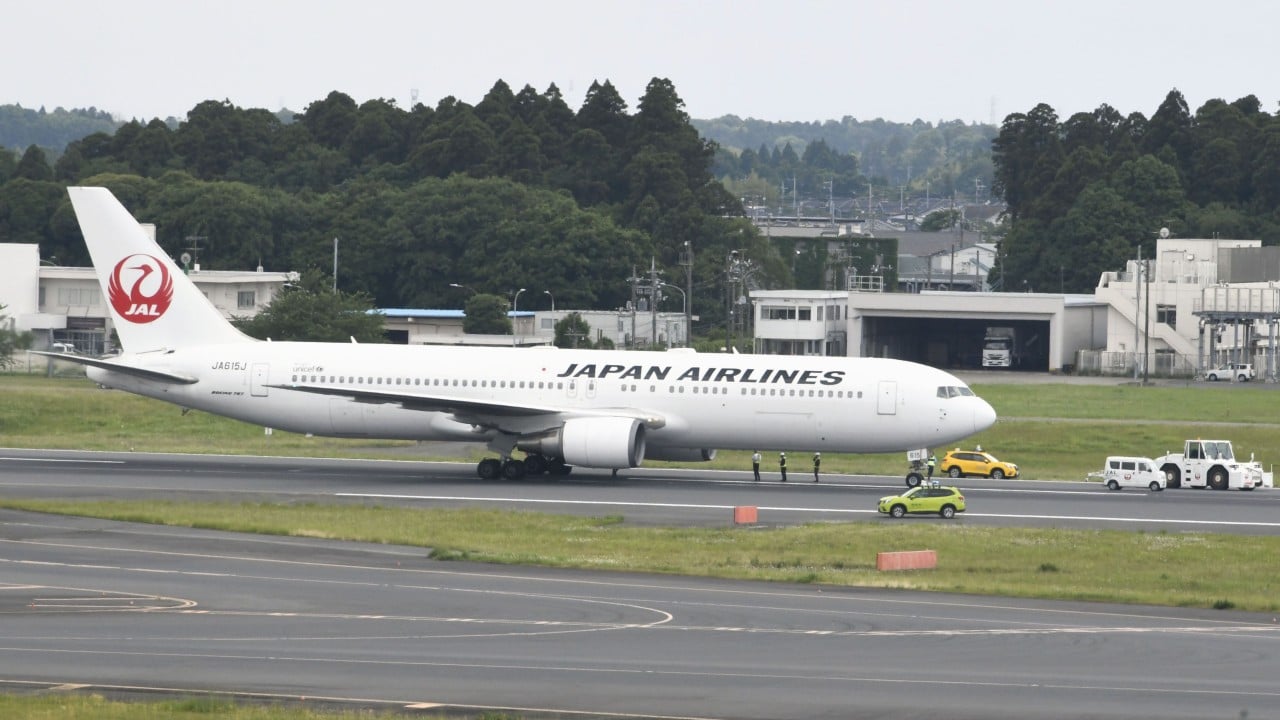
The flight, JL252, did eventually take off. It left 42 minutes late, carrying passengers who likely groaned at the delay, entirely unaware of the frantic human drama that had just unfolded in the crew room.
The fallout from those 42 minutes, however, went all the way to the top of the corporate ladder in Tokyo.
The Weight of the Bow
In Japanese corporate culture, leadership is not a detached privilege. It is an accountability contract. When a frontline employee breaks the trust of the public, the executive suite bleeds first.
Consider the position of Mitsuko Tottori. Her appointment as President and CEO of Japan Airlines was historic—she had risen through the ranks from the cabin crew itself. She knew exactly what it felt like to stand at the galley door and welcome passengers. Now, she sat at the pinnacle of a global corporation, forced to answer for the exact behavior she had spent her early career preventing.
The Ministry of Land, Infrastructure, Transport and Tourism issued a stern reprimand to the airline. The government’s assessment was biting: the incident proved that safety awareness had still not been thoroughly ensured across the organization. The institutional memory was too short. The safety culture was leaking.
Tottori did not deflect. Japan Airlines announced that she would take a 30 percent pay cut for two months. The chief safety officer and the head of the cabin attendants division saw their compensation slashed by 20 percent. The chief purser who hid her drinking was fired; her younger colleague was suspended.
To an outsider, docking a CEO's salary over an extra drink consumed by an employee hundreds of miles away looks like performative theater. It feels like an ancient, rigid ritual designed for public relations.
But look closer. The punishment reflects an underlying truth about high-stakes corporate management: a safety failure is never just an individual lapse. It is a systemic echo.
The Anatomy of a Repeating Shadow
This was not an isolated midnight mistake. It was part of a recurring pattern that Japan Airlines has spent years trying to break.
The human mind is remarkably adept at normalizing small deviances until they become standard practice. If you break a rule once and nothing happens, the rule becomes softer. It happens in medical operating rooms, it happens in nuclear power plants, and it happens in aviation.
Just months earlier, in December 2024, JAL had to dock executive pay after two male captains were caught over the alcohol limit before a flight from Melbourne to Tokyo, delaying hundreds of passengers for three hours. Go back to September 2025, and the airline took the unprecedented step of cutting the salaries of 37 separate executives after a captain in Honolulu drank three bottles of high-alcohol beer the day before a flight, triggering cascading delays of up to 18 hours across three flights. That captain was dismissed.
Every time an executive bows in apology at a Tokyo press conference, they are acknowledging a breakdown not in mechanics, but in psychology.
Why do highly trained professionals risk their careers, their freedom, and the lives of hundreds of passengers for a drink? The answer is rarely a simple desire to break rules. It is usually found in the exhaustion of hyper-scheduled lives, the isolation of layovers, and the deeply human belief that "I will be fine this time."
The real danger to an airline isn't just the alcohol. It is the silence that follows it.
The Culture of the Cover-Up
When the chief purser decided to delay her test and lie to investigators, she revealed the true flaw in the system.
An organization can have the most advanced breathalyzer technology in the world, but if the cultural pressure to avoid shame or punishment is greater than the incentive to be honest, people will hide the truth. They will gamble. They will hope the 40-minute delay goes unnoticed.
The aviation industry relies entirely on a concept known as a "Just Culture." It is a delicate balance. It means that honest mistakes or self-reported errors are treated as learning opportunities, while deliberate violations and cover-ups are met with zero tolerance. If employees fear total destruction for a mistake, they bury it. And a buried mistake is a landmine waiting for a future flight.
By firing the purser and punishing the executive suite, JAL attempted to draw a sharp, unmistakable line. The message was clear: the drinking was a violation, but the deception was an existential threat to the company.
The Invisible Network of Trust
Every time we step onto an airplane, we perform a massive, unconscious act of faith. We walk down a carpeted jet bridge, step into a metal tube, and hand our lives over to people we have never met. We trust that the mechanics tightened every bolt. We trust that the software is flawless.
Most of all, we trust that the people in the uniforms are clear-headed, sharp, and fully present.
We take that trust for granted because, ninety-nine percent of the time, the system works perfectly. The checks pass. The crew is rested. The flight is boringly uneventful.
But that trust is fragile. It is maintained by thousands of invisible choices made in hotel lounges, crew rooms, and executive boardrooms every single day. It is maintained when a pilot looks at a beer and says, "Not tonight." It is maintained when an attendant admits, "I am not fit to fly today," even if it means letting her team down.
Mitsuko Tottori’s pay cut is a reminder that the responsibility for those invisible choices goes all the way to the top floor. The leader must carry the weight of the crew's choices, because the leader sets the environment where those choices are made.
As Japan Airlines prepares its formal recurrence prevention measures for the Civil Aviation Bureau, the focus will likely be on stricter testing, tighter windows, and external specialists. They will try to engineer the human element out of the equation.
But technology can only do so much. The ultimate safeguard remains the culture of the room—the shared understanding that a delayed flight is a minor inconvenience, but a compromised truth is a tragedy waiting to happen.
The next time you look out an airplane window at the tarmac below, remember that the smoothness of the journey isn't just a triumph of engineering. It is a triumph of human restraint, sustained by the quiet discipline of people who know exactly what is at stake when the cabin door closes.