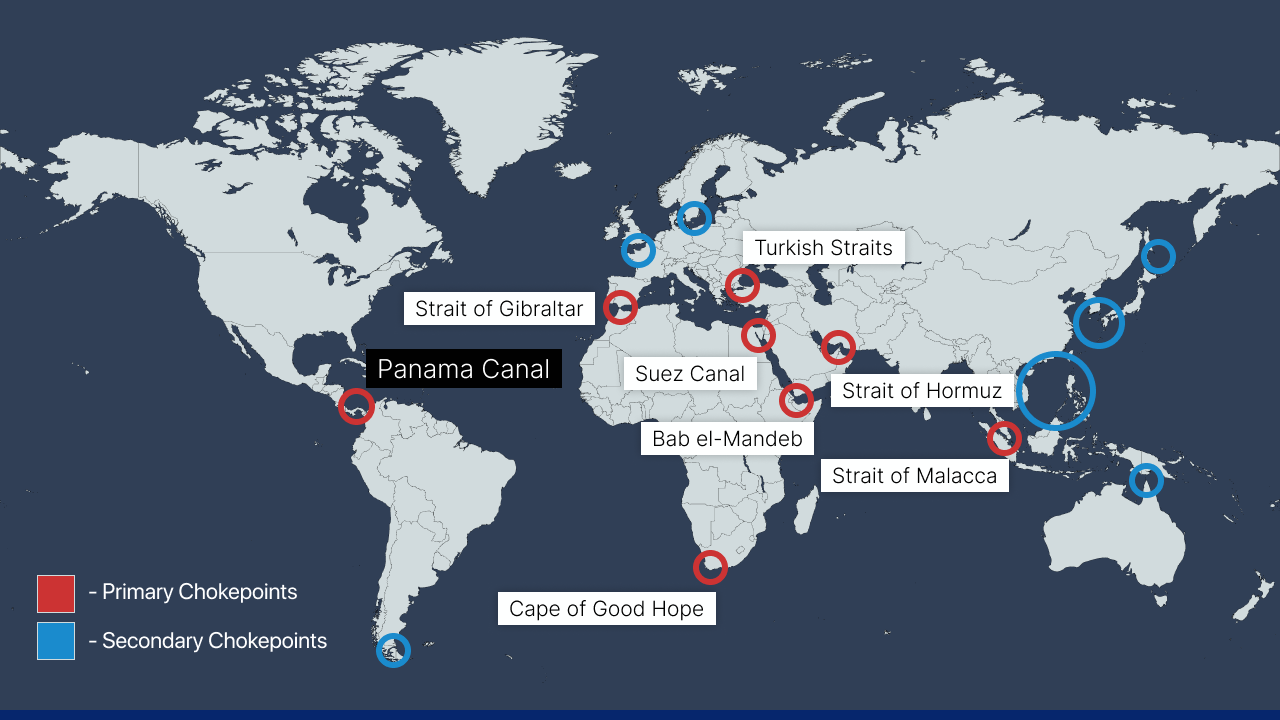
The Strait of Hormuz is traditionally viewed through the lens of petroleum throughput, yet a more critical, invisible vulnerability exists beneath the surface: the concentration of fiber-optic subsea cables that facilitate the digital connectivity of the Persian Gulf and broader Eurasia. Iran’s strategic consideration to exert domestic control over all seven undersea cables passing through its territorial waters represents a shift from kinetic naval posturing to "Digital Sovereignty" enforcement. This move is not merely a regulatory adjustment; it is a calculated effort to internalize the physical layer of the internet, creating a centralized kill-switch and surveillance nexus over regional data flows.
The Architecture of Vulnerability
Subsea cables are the high-capacity nervous system of the global economy, carrying over 97% of international data. The geography of the Persian Gulf creates a natural bottleneck where international cables—connecting Europe to Asia via the Red Sea and the Indian Ocean—must navigate narrow maritime corridors.
Iran’s intent to centralize these cables into a state-controlled gateway relies on three operational pillars:
- Physical Landing Sovereignty: Control over the Cable Landing Stations (CLSs) where the fiber-optic lines emerge from the sea and interface with terrestrial networks.
- Traffic Interception (Deep Packet Inspection): The technical capacity to monitor, filter, or redirect data packets at the point of entry.
- Kinetic Leverage: The ability to disrupt maintenance or physically sever lines under the guise of national security or maritime "accidents."
The concentration of seven major cables in this specific maritime theater creates a high-density risk profile. If Tehran successfully mandates that all transit traffic must pass through a unified Iranian-managed infrastructure, the distinction between "transit" (data passing through) and "domestic" (data consumed within) disappears. This creates a unilateral decryption and censorship environment.
The Cost Function of Digital Hegemony
Executing full control over international subsea infrastructure involves a complex trade-off between geopolitical leverage and economic isolation. The "Strategic Friction" of this move can be quantified through its impact on latency and reliability.
The Latency Tax
Directing all subsea traffic through Iranian-controlled nodes introduces hardware-level delays. Every time a data packet undergoes inspection or redirection via state-managed servers, milliseconds are added to the round-trip time. While negligible for asynchronous communication like email, this "Latency Tax" is catastrophic for:
- High-frequency financial trading.
- Real-time industrial automation systems.
- Regional cloud computing hubs in Dubai and Doha.
Reliability Degradation
By forcing traffic through a centralized state gateway, Iran replaces a distributed, redundant network with a Single Point of Failure (SPOF). In standard network architecture, if one cable is damaged, traffic is rerouted. If Iran mandates that all seven cables must terminate or interface through a singular state-monitored hub, any technical failure at that hub results in a total regional blackout.
The Geopolitical Power Projection Model
The move to control subsea cables serves as a digital extension of the "Anti-Access/Area Denial" (A2/AD) strategy. Historically, A2/AD focused on preventing enemy naval assets from entering the Persian Gulf. Digital A2/AD focuses on the data layer.
Data as a Ransom Asset
In a conflict scenario, the threat of cutting subsea cables is more potent than a physical blockade. A physical blockade of the Strait of Hormuz triggers immediate global military escalation. Conversely, "accidental" damage to subsea cables or the "technical suspension" of data transit offers a layer of plausible deniability. This allows Iran to exert pressure on neighboring economies—specifically the UAE, Saudi Arabia, and Qatar—without firing a single missile.
Surveillance and Intelligence Extraction
By controlling the physical cable infrastructure, Iran bypasses the need for complex hacking or cyber-espionage. When data resides on a cable you own, you possess the "Mirror Port" of the region. This enables the mass extraction of unencrypted metadata, identifying communication patterns between regional actors and Western allies. Even encrypted data remains vulnerable to traffic analysis—the study of packet sizes and timing to determine the nature of the communication.
The Technical Barriers to Total Control
While the strategic intent is clear, the implementation faces significant engineering and legal headwinds.
The Complexity of Landing Rights International cables are typically owned by consortiums (e.g., SeaMeWe-5, AAE-1). These consortiums operate under strictly defined landing party agreements. For Iran to take "full control," it would essentially have to nationalize private international assets. This triggers a legal "force majeure" environment, discouraging future infrastructure investment in the region.
Subsea Maintenance Dependency The specialized vessels required to repair subsea cables are often owned by a handful of global firms. If Iran seizes control of the lines, these firms may refuse to enter Iranian waters due to sanctions or insurance risks. This creates a paradox: the more control Iran exerts, the more fragile the infrastructure becomes, as they lack the specialized domestic fleet required for deep-sea repairs of high-tension fiber optics.
Economic Counter-Pressures
The primary deterrent to Iran’s plan is the potential for "Bypass Architecture." If the risk of Iranian interference becomes too high, global tech conglomerates and neighboring states will fund alternative routes. We are already seeing the emergence of the "Trans-Arabian" land routes—fiber optic cables buried alongside oil pipelines through Saudi Arabia to Jordan and Israel, completely bypassing the Strait of Hormuz.
This creates a competitive market for "Political Low-Latency." Data will always flow through the path of least resistance. If Tehran increases the "resistance" through surveillance and control, it effectively devalues its own geographic advantage. The Persian Gulf states are already investing in "Blue-Raman" systems—cables that link India to Europe via the Red Sea, intentionally skirting Iranian maritime boundaries.
The Mechanics of Signal Interception
To understand how Iran would exercise this control, one must look at the Physical Layer (Layer 1) and the Data Link Layer (Layer 2) of the OSI model.
- Layer 1 (Physical): Iran could install optical splitters at landing stations. These splitters divert a portion of the light signal to a secondary fiber, allowing for passive monitoring of all incoming and outgoing data without disrupting the original signal.
- Layer 2 (Data Link): By controlling the switches and routers at the landing point, the state can implement "BGP Hijacking." This involves falsely announcing that the Iranian servers are the fastest route for specific global traffic, "sucking" data into Iranian territory that was never intended to pass through it.
Strategic Play: The Digital Chokepoint
The objective for regional stakeholders is no longer to prevent Iranian involvement, but to build for a "Zero-Trust" infrastructure. This involves three tactical shifts:
- End-to-End Encryption (E2EE) at the Hardware Level: Treating the subsea cable as a "compromised medium" by default.
- Route Diversification: Moving away from the "Hormuz-centric" model toward terrestrial trans-peninsula routes and satellite-based backhaul (LEO constellations) to mitigate the impact of a cable cut.
- Virtualization of Landing Stations: Moving the intelligence of the network away from the physical shore and into decentralized cloud nodes that can instantly reroute traffic if a specific landing station is compromised.
Iran's maneuver is a recognition that in 2026, the ability to throttle data is as strategically significant as the ability to throttle oil. The centralization of these seven cables represents the birth of a "Digital Strait of Hormuz." The regional response must be a shift toward "Topological Resilience"—ensuring that no single geography, regardless of its naval power, can hold the global internet hostage.
The most probable outcome is not a total seizure, but a "Gray Zone" exertion of control: slow-rolling maintenance permits, intermittent "technical glitches" during periods of political tension, and selective metadata harvesting. For the global telecommunications industry, the Persian Gulf has transitioned from a high-traffic corridor to a high-risk zone, requiring an immediate and massive capital reallocation toward bypass infrastructure.


