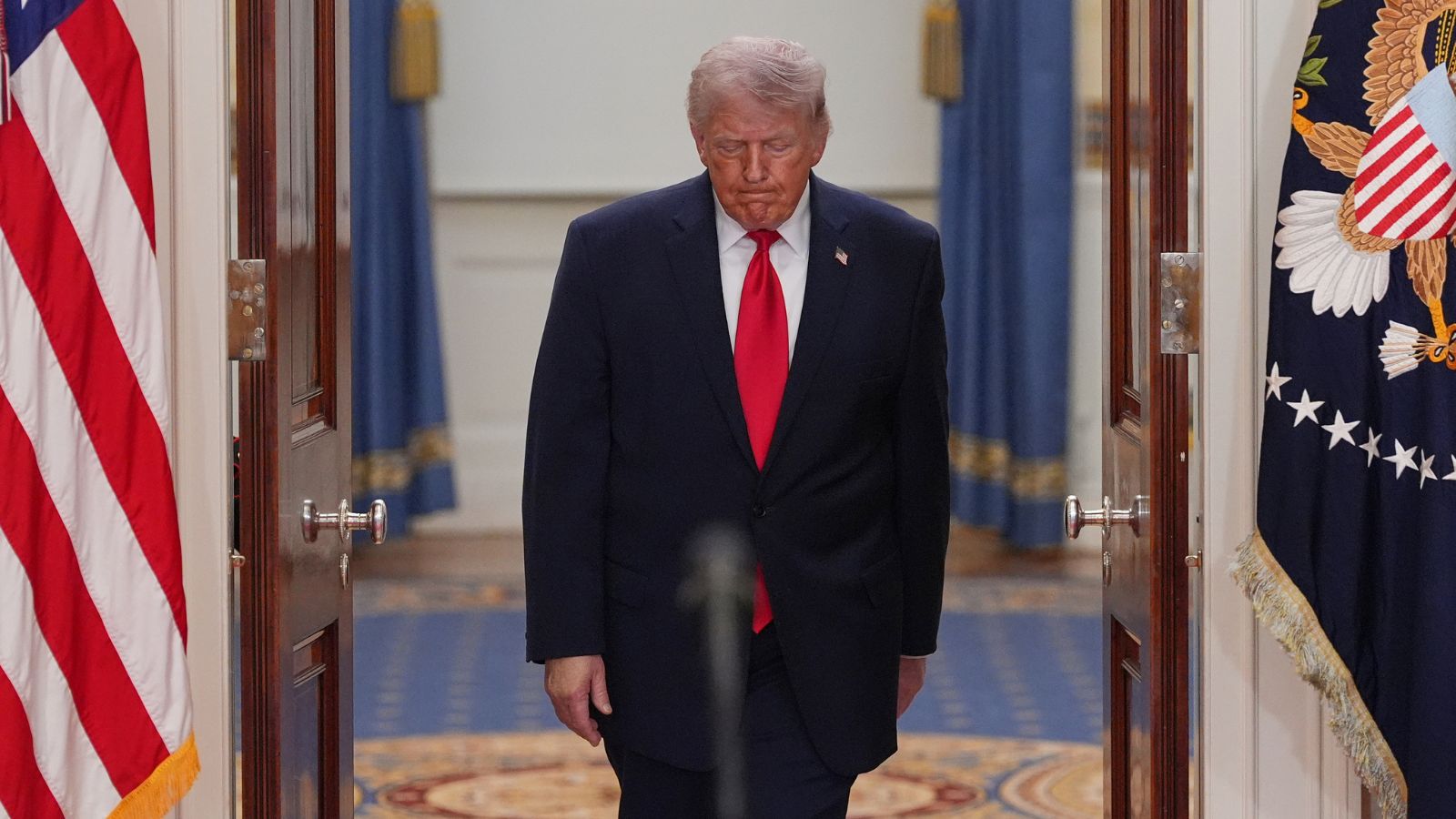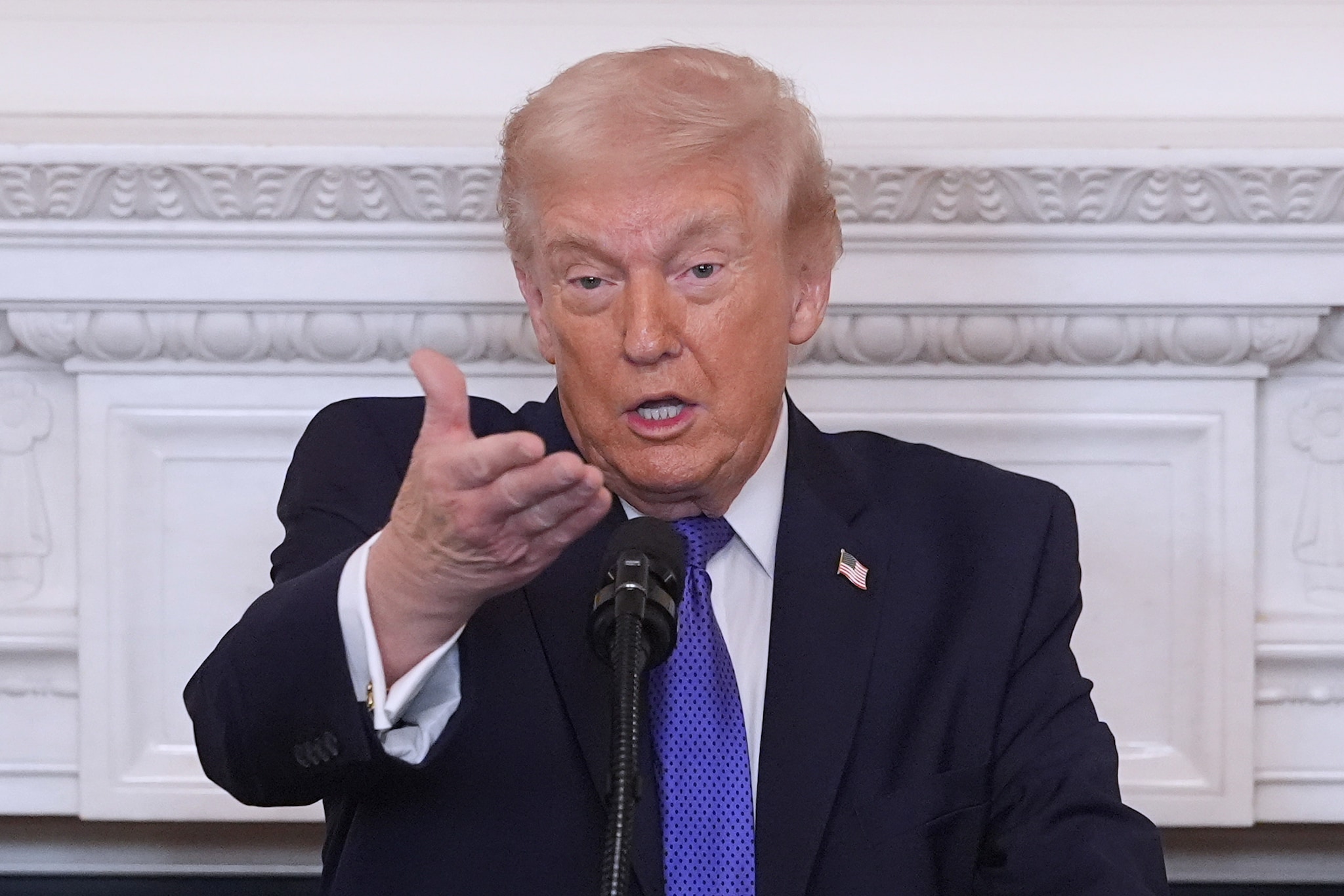
The myth of absolute air superiority died somewhere over the Khuzestan Province on Friday. For weeks, the White House maintained a narrative of a "decimated" Iranian military, yet the smoldering wreckage of an F-15E Strike Eagle and a downed A-10 Thunderbolt II tell a different story. President Donald Trump, speaking with a characteristic blend of defiance and dismissal, told reporters that these losses would not stall diplomatic talks. "No, not at all. No, it's war. We're in war," he told NBC News.
But the reality on the ground is far messier than a phone interview suggests. As search-and-rescue teams fly low-altitude, high-risk sorties to recover a missing crew member, the administration is grappling with a stark revelation: Iran’s integrated air defense systems (IADS) are not as "annihilated" as the Pentagon claimed.
The Gap Between Rhetoric and Radar
Just forty-eight hours before the dual downings, the president delivered a prime-time address asserting that the U.S. had "beaten and completely decimated" Iran. He claimed the operation was nearing its end, suggesting the Iranian radar network was "100 percent annihilated."
The loss of an F-15E—a sophisticated, twin-engine strike fighter—suggests a significant intelligence failure or a tactical evolution by Iranian forces. While one crew member was successfully recovered and is in U.S. custody, the hunt for the second pilot continues under the shadow of Iranian state media broadcasts offering rewards for their capture.
The A-10, a rugged ground-attack jet known as the "Warthog," reportedly went down in the Persian Gulf after being struck. While the A-10 is built to withstand heavy ground fire, its loss underscores the danger of operating in contested airspace that the administration had already declared "safe."
The Rebirth of Iranian Air Defenses
Military analysts are now looking at how a supposedly blind Iranian military managed to lock onto and down two distinct types of American aircraft in a single day. There are three likely scenarios:
- Mobile Reserve Units: Iran has long invested in road-mobile surface-to-air missile (SAM) systems like the Bavar-373 and the Khordad-15. These units can remain "dark"—keeping their radars off to avoid detection—until a target is within a lethal envelope.
- Foreign Intelligence Integration: There are growing concerns that "blind spots" in U.S. electronic warfare coverage are being exploited via real-time data sharing from sympathetic third-party actors.
- Asymmetric Ambush: Using low-tech optical tracking rather than radar to guide missiles, Iranian crews may have set "Flak Traps" along known flight corridors used for the ongoing bombardment.
Diplomacy at Gunpoint
The administration’s insistence that negotiations remain on track feels increasingly disconnected from the diplomatic vacuum in Muscat and Geneva. While Trump claims Iran is "desperate" for a deal, Tehran has publicly rejected a U.S.-proposed 48-hour ceasefire.
The Omani-mediated backchannels that showed "substantial progress" in February have largely frozen. Iranian Foreign Minister Abbas Araghchi has retreated from the table, and the Iranian Parliament has branded the talk of a deal as a move to "manipulate financial and oil markets."
The leverage the U.S. hoped to gain through its February 28 "decapitation" strikes has evaporated into a war of attrition. By continuing to strike while simultaneously signaling a desire to talk, the administration has created a "negotiation by fire" that Iran appears willing to endure.
The Economic Shrapnel
The war is no longer confined to the borders of the Middle East. It is hitting American wallets at a rate the White House cannot ignore. With Iran restricting transit through the Strait of Hormuz—the artery for 25 percent of the world’s oil—global markets are in a state of permanent shock.
| Economic Indicator | Pre-Conflict (Feb 2026) | Current (April 2026) |
|---|---|---|
| Crude Oil (WTI) | $74 / barrel | $128 / barrel |
| U.S. National Avg Gas | $3.45 / gal | $5.82 / gal |
| Global Shipping Insurance | Standard rates | 400% Increase in Gulf region |
The strike on the Bubiyan Island military depot in Kuwait and the retaliatory strikes on Qatari gas fields have pushed energy prices to historic highs. For a president who campaigned on domestic economic stability, the "forever war" being decried by governors like Maryland’s Wes Moore is becoming a political liability.
The Search and Rescue Gamble
The most immediate crisis isn't the price of gas, but the fate of the missing F-15E crew member. Combat Search and Rescue (CSAR) is the most dangerous mission in the Air Force playbook. It requires Pave Hawk helicopters and C-130 tankers to fly slow and low into the very teeth of the defenses that just downed a supersonic fighter.
If the missing airman is captured, the diplomatic "talks" Trump refuses to halt will transform into a hostage crisis. The president has already declined to say how he would respond if the pilot is harmed, stating only, "We hope that’s not going to happen."
In the high-stakes world of international conflict, hope is not a strategy. The downing of these aircraft signals that the "endgame" is further away than the White House admits. The Iranian military is bloodied, but it is still swinging, and it has just proven that the American "shield" in the sky is far from impenetrable.
The wreckage in the desert is a reminder that in war, the enemy always gets a vote. As of this morning, Iran has cast its ballot for escalation.