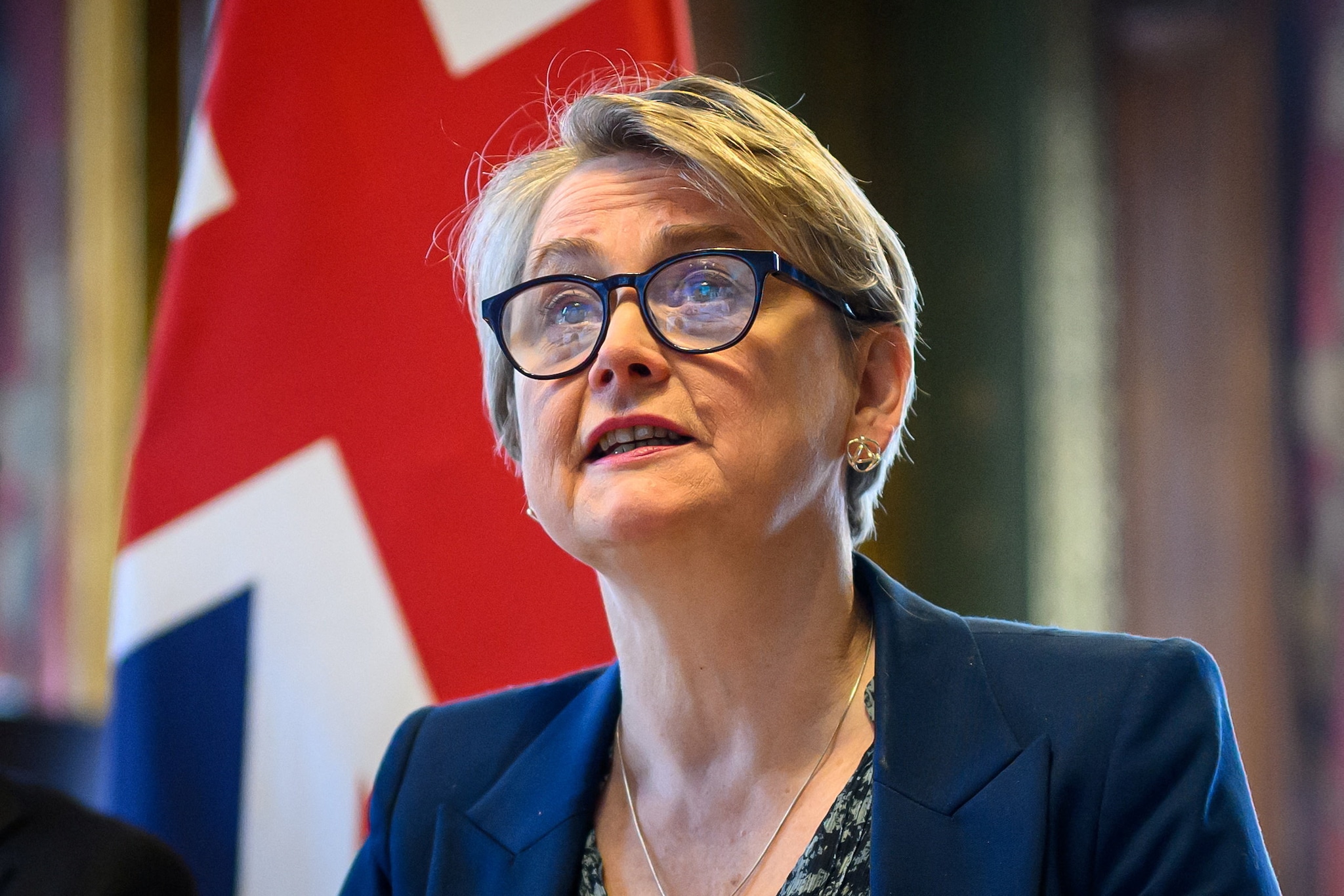
UK Foreign Secretary Yvette Cooper is embarking on a high-stakes diplomatic tour to China and India. Officially, the Foreign, Commonwealth and Development Office states that the trip aims to address pressing global issues, including the crisis in the Strait of Hormuz, the ongoing war in Ukraine, and the latest Ebola outbreak in Africa. However, the real motivation behind this sudden diplomatic push is far less altruistic. Domestically, Prime Minister Keir Starmer is reeling from historically low approval ratings, while the British economy remains bogged down by sluggish growth and soaring energy costs resulting from the recent US-Israeli war on Iran. Cooper is not traveling to dictate global terms, but rather to salvage Britain’s dwindling economic relevance.
For decades, British foreign policy operated on the assumption that London’s voice carried inherent weight in Asian capitals. That era is over. Cooper’s itinerary includes meetings with Chinese Foreign Minister Wang Yi and Vice President Han Zheng in Beijing, a technology-focused detour to Shenzhen, and a subsequent flight to New Delhi to hold talks with Indian External Affairs Minister S. Jaishankar. By packaging these two distinct nuclear powers into a single headline about global governance, Whitehall is attempting to project an image of a global broker. In reality, China and India view the UK through a pragmatic lens of economic utility and geopolitical posturing, largely ignoring London’s sermons on international security.
The Price of Admission in Beijing
The British government spent the last several years oscillating between aggressive rhetoric toward Beijing and desperate overtures for capital. In January, Keir Starmer became the first British prime minister to visit China in eight years, seeking a reset in bilateral ties. That visit resulted in vague promises of cooperation on trade and technology. Cooper’s arrival in Beijing is the direct follow-up, an attempt to transform that rhetorical reset into tangible investment.
China understands the structural weakness of the British position. The UK economy is hungry for foreign direct investment, yet Westminster faces intense pressure from Washington to restrict Chinese involvement in critical national infrastructure. This leaves British diplomats walking an impossible tightrope. In Beijing, Cooper will likely raise concerns regarding China’s tacit support for Russia’s military industrial base and maritime safety in the Middle East. Beijing’s response will almost certainly be polite indifference.
The real action will occur when Cooper visits Shenzhen, the tech hub adjacent to Hong Kong. Britain wants access to Chinese innovation and manufacturing capital, but it wants it on terms that do not anger its transatlantic security partners. Beijing is well aware that the UK cannot afford a decoupling from the world's second-largest economy, and Chinese negotiators will use this leverage to push back against any UK trade restrictions or nationalization plans affecting Chinese-linked industrial assets.
The Free Trade Delusion in New Delhi
If the visit to Beijing is fraught with ideological contradictions, the journey to New Delhi is a sobering lesson in commercial friction. Last July, Starmer and Indian Prime Minister Narendra Modi signed off on a landmark Free Trade Agreement, embedded within the broader UK-India Vision 2035 framework. The deal was heralded as a massive win for post-Brexit Britain, promising to supercharge a bilateral trade relationship that reached 47.4 billion pounds in 2025.
The agreement has hit a significant wall. Implementation of the Comprehensive Economic and Trade Agreement has been abruptly stalled by London’s decision to impose new steel import curbs, aimed at protecting domestic producers. New Delhi viewed this move as a direct violation of the spirit of the deal. Indian Trade Secretary Rajesh Agrawal made it clear that India will not overlook protectionist measures disguised as regulatory adjustments.
| Metric | UK-India Trade Profile (2025) |
|---|---|
| Bilateral Trade Value | 47.4 billion pounds |
| Year-on-Year Increase | 11.7 percent |
| Primary Structural Hurdle | UK steel import restrictions |
| Strategic Framework | UK-India Vision 2035 |
When Cooper meets S. Jaishankar, she will discover that India’s diplomatic elite has little patience for Western anxiety regarding the Strait of Hormuz or the battlefield dynamics in Eastern Europe. India has consistently maintained an independent foreign policy, purchasing discounted Russian oil despite Western sanctions and navigating the Middle Eastern conflict based strictly on its own energy security needs. Cooper’s attempt to rally India behind a unified Western stance on these global challenges is bound to fail. India wants a resolution to the steel dispute and greater mobility for its professionals, not a lecture on global responsibility.
Shifting Priorities in a Fragmented Order
The fundamental flaw in Britain's current diplomatic approach is the belief that global challenges can be used as a conversational bridge to secure economic concessions. Cooper is framing her journey around shared international crises because it sounds grander than admitting Britain needs market access.
Consider the agenda item regarding the Ebola outbreak in Africa. While public health cooperation is commendable, neither Beijing nor New Delhi views London as the primary coordinator for global health security anymore. China addresses African challenges through its own extensive bilateral infrastructure networks, while India utilizes its pharmaceutical export dominance to build direct ties across the Global South. The UK is increasingly a spectator to these relationships.
The strategy of combining visits to China and India during a single diplomatic tour also carries significant risk. The two Asian giants remain locked in a tense border dispute and compete fiercely for regional dominance. By attempting to manage both relationships in a single week, Cooper risks signaling to both capitals that the UK lacks a deep, dedicated strategy for either nation.
British foreign policy requires a structural reassessment. London must stop projecting the illusion of a global arbiter and instead accept its role as a medium-sized economy seeking specific, transactional advantages. Cooper’s trip will yield plenty of carefully staged photographs and bland communiqués about mutual understanding. The true measure of the tour’s success will not be found in these statements, but in whether London can lift its steel restrictions to save the Indian trade deal, and whether it can secure Chinese capital without alienating its Western allies.