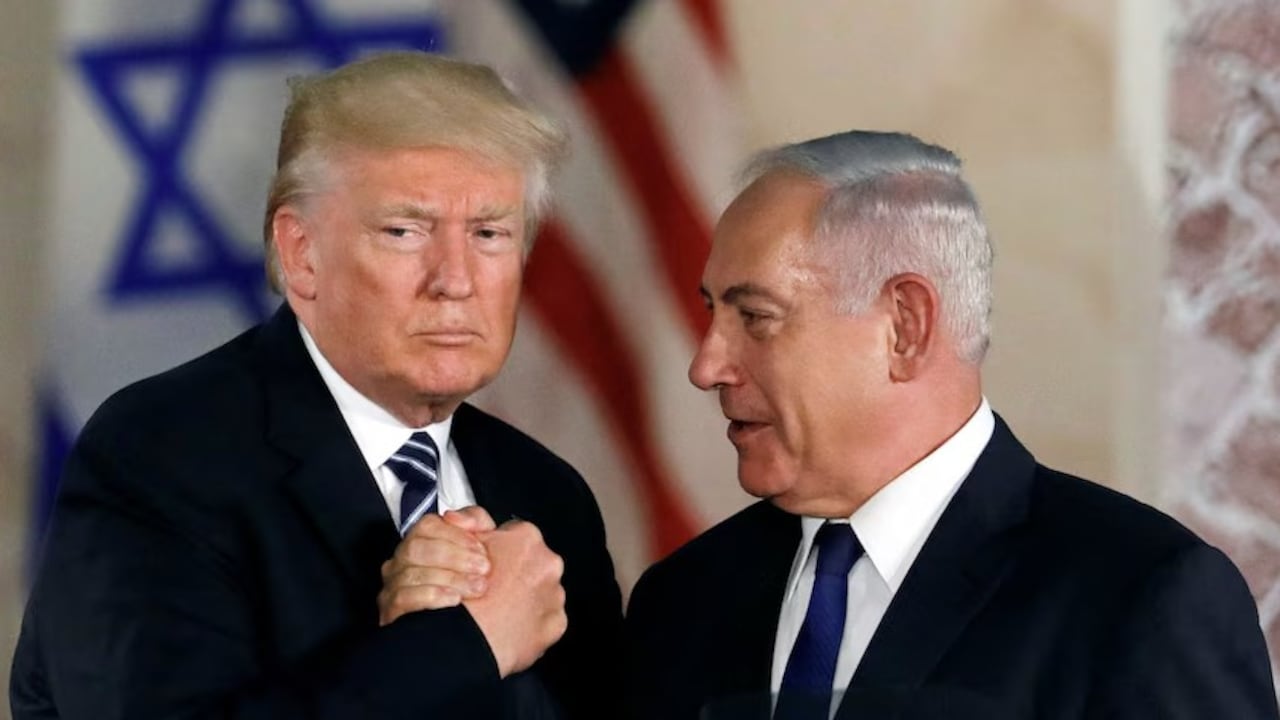
The diplomatic circuit in New York is fond of euphemisms. When Donald Trump pressured Israeli Prime Minister Benjamin Netanyahu to abruptly halt a planned wave of airstrikes in Beirut, the ensuing friction was quickly characterized by Israeli diplomats as a mere lovers' spat. It is a comfortable narrative. It implies a foundational intimacy, a temporary disagreement between two deeply aligned allies who will inevitably find their way back into each other's arms.
But this cozy framing misreads the fundamental mechanics of the current White House. This is not a lovers' spat. It is the friction of a transaction where one party has suddenly realized he no longer needs the other's political leverage. Trump's recent ultimatum to Netanyahu over regional escalations demonstrates that the blank-check era of U.S.–Israel relations has been replaced by a rigid, time-bound calculus driven entirely by American domestic priorities.
The Beirut Freeze and the 60-Day Clock
The current crisis traces back to a Monday phone call. Behind closed doors, Trump demanded that Netanyahu call off intensive bombardments targeting the Lebanese capital. The White House was simultaneously attempting to hammer out a 60-day memorandum of understanding with Tehran to lock in a fragile, highly volatile regional pause. Netanyahu’s military apparatus, aiming to permanently cripple Hezbollah’s remaining infrastructure, found itself slammed against a wall of American resistance.
Washington's leverage is absolute, even if Israeli officials publicly downplay the constraints. Israeli Ambassador to the UN Danny Danon has spent weeks maintaining a posture of total strategic alignment, framing past joint military operations against Iranian nuclear facilities as proof of an unbreakable bond. Yet the reality on the ground is far more transactional. Trump’s administration has explicitly mapped out its red line: American troop deaths.
Following a series of missile and drone skirmishes in the Persian Gulf that claimed an international airport casualty, the White House made it clear that while it will tolerate minor regional friction, it will not allow Israeli tactical ambitions to drag the United States into a full-scale regional war during a delicate negotiation window.
Why the Netanyahu Doctrine Fails the Transactional Test
For years, Netanyahu’s geopolitical strategy relied on a predictable formula. He positioned Israel as the indispensable Western bulwark against Iranian hegemony, assuming that any American administration—especially a conservative one—would indefinitely underwrite Israeli security operations. That assumption has collided with Trump’s "America First" realism.
Trump’s foreign policy is not governed by ideological commitment to regional democratic alliances. It is governed by a desire for definitive, theatrical deal-making. Trump has openly boasted about a looming end-of-war agreement that would dismantle Iran's enriched uranium stockpiles and permanently reopen the Strait of Hormuz. To achieve this, the White House requires a stable theater of negotiation.
Every time Israeli jets strike near Beirut or expand the northern front, they disrupt the diplomatic stage Trump is trying to construct. The administration does not view these strikes as essential self-defense; it views them as counter-productive noise that complicates a high-stakes transaction with Tehran.
The Iran Dilemma and the Limits of Attrition
The core flaw in the current Israeli diplomatic calculus is the belief that maximum military pressure can be maintained without triggering an American veto. Israeli officials have frequently noted that previous joint strikes delivered a massive setback to Tehran’s nuclear ambitions, arguing that Iran is too weak to risk a broader conflict.
This view ignores the perspective of Iran's leadership. Supreme Leader Ali Khamenei has already rejected initial U.S. overtures, calling Trump’s demands for zero uranium enrichment "dictation, not negotiation." When Washington dictates terms to Tehran, it must appear strong and unbothered by regional distractions. If Israel continues to initiate massive escalations in Lebanon, it signals to Iran that Washington cannot control its primary client state, eroding Trump’s perceived leverage.
Furthermore, the economic blockade imposed by the U.S. cannot last forever without consequences. Trump has hinted the blockade could extend through the summer, but a prolonged stalemate risks spikes in global energy markets—an outcome the White House is desperate to avoid. Netanyahu wants to use this window to reshape the map of the Levant; Trump wants to use it to secure a signing ceremony. These two objectives are fundamentally incompatible.
The Illusion of Total Autonomy
Publicly, Jerusalem maintains an air of complete operational independence. The state department issued joint statements regarding a renewed ceasefire between Israel and Lebanon, yet hostilities with Hezbollah continue to flare on a daily basis.
The harsh truth is that Israel’s strategic depth is inextricably tied to American logistics, intelligence, and diplomatic cover at the UN Security Council. When an American president tells an Israeli prime minister to stand down in Beirut, the choice is not between compliance and defiance. The choice is between compliance and strategic isolation.
The "lovers' spat" rhetoric is a necessary fiction designed for domestic consumption in both nations. It allows Netanyahu to preserve his image as a strongman who answers to no one, while allowing Trump to project the image of a loyal ally who is simply managing a rowdy partner.
But beneath the diplomatic gloss lies a chilling reality for the Israeli security establishment. The United States is currently pursuing a unilateral agenda in the Middle East, and if Israeli military objectives conflict with the timeline of an American diplomatic victory, those objectives will be discarded without hesitation. The administration has drawn its red lines not in the sands of the Galilee or the ruins of Beirut, but on the balance sheets of American political capital.