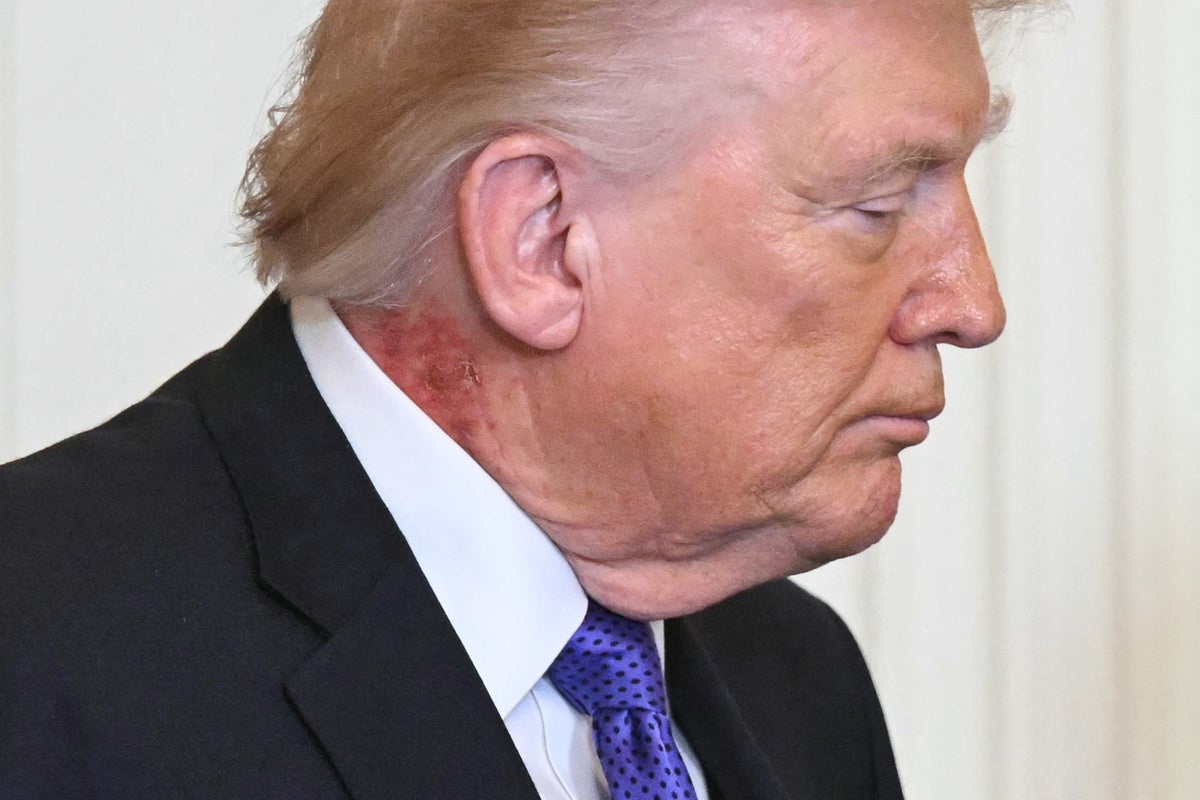
The official White House medical memo released Friday insists that President Donald Trump remains in excellent health and is fully fit for duty, yet it carefully downplays a significant diagnosis that directly impacts his daily physical presentation. While the three-page report by Navy Captain Dr. Sean Barbabella shifts public attention toward a 14-pound weight gain and standard recommendations for diet and exercise, it minimizes his previously diagnosed chronic venous insufficiency. This vascular condition explains the visible lower-leg swelling and hand bruising that observers have noted for months, illustrating how modern executive medical summaries function more as public relations tools than comprehensive health disclosures.
A close reading of the document reveals a classic Washington strategy. Acknowledge a minor, relatable flaw to project an aura of total transparency, while keeping the more complex systemic realities strictly managed.
By focusing the public narrative on the president weighing 238 pounds—flirting right on the edge of the clinical definition of obesity with a Body Mass Index of 29.7—the administration successfully steered the conversation toward a familiar, mundane struggle. Everyone understands weight gain. It makes for easy headlines and predictable late-night punchlines. The real diagnostic story, however, hides in the clinical footnotes regarding his circulatory system and his daily medication regimen.
Chronic venous insufficiency is a progressive vascular condition where the veins struggle to send blood back from the limbs to the heart. In older adults, the tiny valves inside the veins weaken, allowing blood to pool in the lower legs and ankles. This causes noticeable swelling, a symptom that has occasionally been visible during the president's public appearances and travel schedules.
The report notes slight lower leg swelling but claims an improvement from last year. What it glosses over is how this condition interacts with his long-standing daily medication routine.
The medical brief explicitly states that Trump is taking a low-dose aspirin regimen for cardiac prevention alongside two cholesterol-control medications. For a patient with compromised venous return, routine aspirin therapy introduces a distinct side effect. It thins the blood, making the capillaries highly fragile.
This mechanism provides the clinical explanation for the persistent bruising visible on the president's hands during recent international summits and domestic rallies. The administration previously attributed this bruising to frequent and vigorous handshaking. While physical impact triggers the marks, the underlying vulnerability stems from the intersection of aging vascular walls and preventative antiplatelet therapy.
White House physicians have historically occupied a conflicted professional space. They are uniformed military officers bound by duty, yet they serve at the literal pleasure of the commander-in-chief, who retains ultimate authority over what parts of their own medical records are shared with the electorate. There is no federal statute, constitutional clause, or bureaucratic mandate requiring a sitting president to publish a single scrap of medical data.
The public reports we receive are entirely curated. They are edited by political communications teams and approved by the patient before they ever touch a press room scanner.
This structural lack of independent oversight has allowed successive administrations to treat physical updates as political messaging campaigns. When the president completed his three-hour assessment at Walter Reed National Military Medical Center, he immediately declared on social media that everything checked out perfectly. The subsequent release of a perfect 30 out of 30 score on the Montreal Cognitive Assessment was deployed to neutralize persistent questions from political opponents regarding his mental stamina and rambling rhetorical style.
A cognitive screening test is not a comprehensive neurological evaluation. The assessment is designed to detect major impairments, early-stage dementia, or severe cognitive deficits. Passing it proves the absence of clinical pathology, but it does not measure executive processing speed, stress tolerance, or the subtle wear and tear of a punishing executive schedule on an individual approaching his 80th birthday.
Independent medical analysts note that evaluating a 79-year-old leader requires looking past the curated numbers. The report details an extensive array of diagnostic imaging, including a cardiac CT scan and preventative cancer screenings managed by a panel of 22 medical specialists. The sheer scale of this medical defensive line indicates an acute awareness of the vulnerabilities inherent in advanced age, regardless of the excellent health label stamped on the cover.
Voters are left to parse the gaps between the official narrative and observable reality. We see an executive who maintains a grueling public calendar, yet the physical toll is managed through a carefully calibrated mix of cosmetic adjustments, tailored wardrobe choices, and highly selective medical disclosures. The focus on a 14-pound weight gain serves as an effective distraction, keeping the public debate centered on diet and exercise rather than the structural realities of managing chronic vascular conditions in the highest office in the land.
This pattern of selective disclosure is not unique to the current administration, but the stakes increase as the age of leadership climbs. The modern presidency demands absolute clarity regarding the physical capabilities of the person holding the nuclear codes, yet the current system ensures we only receive the version of health that serves the immediate political objective.