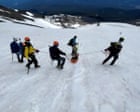
A novice climber recently survived a harrowing 1,500-foot slide down the icy slopes of Mount San Antonio, known locally as Mount Baldy. While mainstream media outlets have treated the incident as a miraculous tale of human survival, seasoned mountaineers and search and rescue personnel view it as a symptom of a much larger, systemic crisis. Social media platforms and accessible GPS tracking apps are luring completely unprepared hikers into highly technical winter environments, turning regional peaks into high-stakes rescue zones.
The individual survived with minor injuries after losing footing on an icy ridge, but the incident underscores a dangerous reality. Southern California mountains present a deceptive hazard because their trailheads sit just an hour away from major metropolitan areas, masking the alpine perils that await above the tree line.
The Deceptive Geography of Urban Alpine Traps
Mount Baldy rises over 10,000 feet above the Los Angeles basin. In the summer, it is a strenuous but straightforward hike requiring little more than sturdy boots and adequate water. In the winter, the entire landscape changes. Pacific storms coat the upper bowls in heavy snow, which rapidly freezes into a hard, unforgiving sheet of boilerplate ice due to the region's intense daytime sun and freezing night temperatures.
Most casual hikers do not understand the difference between snow and alpine ice. Walking on ice requires specific equipment and the knowledge of how to use it. When a climber slips on a 35-degree icy slope without the proper tools, acceleration happens instantly. Within seconds, a falling body reaches highway speeds, bouncing over rocks, exposed roots, and frozen debris. Gravity does not negotiate.
The problem lies in the psychological transition from the city to the wilderness. A hiker can leave a coffee shop in Pasadena and stand at the base of a treacherous ice chute ninety minutes later. This proximity creates a false sense of security. It strips away the psychological barrier that usually keeps untrained individuals out of extreme environments.
The Equipment Trap and Misplaced Confidence
Search and rescue teams frequently find victims wearing inadequate gear, or worse, brand-new technical gear they have no idea how to operate. Retailers sell microspikes—small metal chains with tiny teeth that slip over standard running shoes—to hikers looking for traction on flat, packed trails. These consumer-grade traction devices are utterly useless on steep alpine ice.
To safely navigate these slopes in winter, a climber needs rigid mountaineering boots, actual climbing crampons with front points, and a traditional mountaineering ice axe. Furthermore, carrying an ice axe is completely pointless unless the user possesses the muscle memory required to execute a self-arrest.
Self-arrest is the technique of driving the pick of an ice axe into the slope while using one's body weight to friction-stop a slide. It must happen within the first two seconds of a fall. After that, the climber is moving too fast to control the tool, and the axe itself can become a weapon, impaling the person holding it.
💡 You might also like: The Anatomy of Tactical Friction: Why the Israel Hezbollah Ceasefire Inherently Fails
The Training Deficit
True mountaineering competency takes years to build. It requires mentorship, formal instruction, and repeated practice in controlled environments. Today's wilderness visitors often substitute digital data for actual experience. They download a GPS track to their smartphone, view a few curated photos online, and assume they have all the information required to execute the climb safely.
A smartphone screen cannot teach you how to read weather patterns, judge snow stability, or assess the strength of an ice crust. When a phone battery dies in sub-freezing temperatures, the digital safety net vanishes, leaving the user blind in a hostile environment.
The Public Burden of Private Risk
Every time an under-equipped hiker slides down a mountain face, a massive, taxpayer-funded apparatus springs into motion. Search and rescue operations in rugged terrain require volunteer ground teams, specialized avalanche dogs, and military-grade helicopters capable of operating at high altitudes in turbulent mountain air.
These operations are not inherently safe. Helicopter pilots must fly dangerously close to canyon walls and rock faces, battling unpredictable thermal updrafts. Ground teams risk their lives traversing the exact same unstable ice slopes that triggered the initial accident. The narrative surrounding these events often focuses entirely on the survival of the hiker, completely ignoring the massive risks imposed on the rescuers who pull them off the mountain.
| Equipment Item | Intended Use | Alpine Reality |
|---|---|---|
| Microspikes | Flat, packed snowy trails | Fails completely on steep, hard alpine ice |
| Trekking Poles | Balance on uneven ground | Cannot be used to arrest a high-speed slide |
| Smartphone GPS | Route navigation | Battery drains rapidly in sub-freezing temperatures |
| Trail Runners | Dry summer hiking | Offer zero ankle support or protection against frostbite |
Changing the Safety Paradigm
The current approach to wilderness safety education is failing because it relies on passive warnings. Signs posted at trailheads advising hikers of winter conditions are routinely ignored. To stem the tide of preventable mountain accidents, regional authorities and outdoor communities must shift toward active intervention and clearer regulatory frameworks.
Some public lands agencies have experimented with mandatory permits during winter months, requiring users to demonstrate they possess the necessary safety gear before entering high-risk zones. While enforcement across vast wilderness areas is difficult, the mere existence of a permitting system forces recreationists to pause and evaluate their readiness.
Education must also shift away from sugarcoated promotion of nature and toward stark reality. The mountains are indifferent to human intent. A 1,500-foot fall is not an adventure story to be celebrated on social media; it is a catastrophic failure of preparation that luckily avoided a fatal conclusion. True mastery of the outdoors means knowing when to turn around before the slope turns into a slide.


