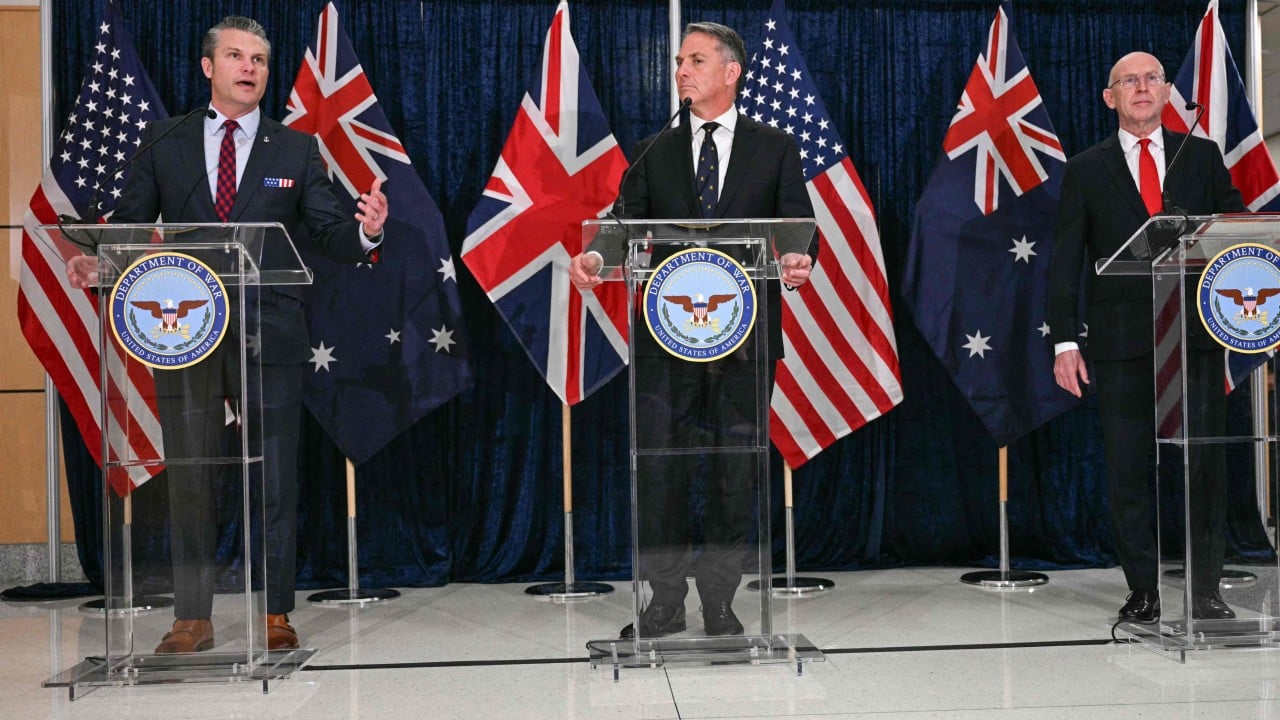
The grand geopolitical architecture known as the Indo-Pacific is fracturing under the weight of its own unfulfilled promises. For nearly a decade, Washington and its allies pushed this geographic framing to counter China's rising dominance, tying maritime security to economic integration. It is failing because the strategy offers plenty of military hardware but almost no economic access to the Western markets these developing nations need to survive. This policy vacuum has handed Beijing a massive opportunity to reassert itself as the indispensable economic anchor of Asia, bypassing military tensions through trade, infrastructure, and supply chain dominance.
While Western policymakers congratulate themselves on launching naval patrols and signing defense pacts, regional leaders in Southeast Asia and the Pacific are quietly looking at their balance sheets. The United States withdrew from the Trans-Pacific Partnership (TPP) and offered nothing in return but the Indo-Pacific Economic Framework (IPEF), a toothless initiative that explicitly excludes market access or tariff reductions. China, conversely, is signed onto the Regional Comprehensive Economic Partnership (RCEP) and is aggressively lobbying to join the successor to the TPP. The result is a widening gulf between security rhetoric and economic reality.
The Fatal Flaw in the Maritime Strategy
Geopolitics is an expensive game, and Washington forgot to fund its share. The Indo-Pacific construct was designed to shift the global focus from a narrow East Asia lens to a massive maritime theater spanning two oceans. The goal was simple: bind India, Japan, Australia, and the United States together to box in Chinese naval ambition.
It worked on paper. It failed on the ground.
Developing nations in the region do not have the luxury of viewing every port, railway, and semiconductor factory through a national security lens. They need capital. When the United States warns an ASEAN nation against using Chinese telecommunications equipment or accepting infrastructure loans, the immediate response is a request for a viable alternative. Western capital, driven by private returns rather than state directive, rarely delivers.
Consider the trade data. Despite years of "de-risking" rhetoric, Southeast Asia's trade volume with China has scaled new heights, routinely outpacing its trade with the United States. Beijing has leveraged this by making itself central to the green energy transition. Western strategies heavily focus on freedom of navigation in the South China Sea, yet the ships sailing through those waters are increasingly carrying components destined for Chinese-backed supply chains.
How Beijing Exploited the Economic Vacuum
China did not need to dismantle the Indo-Pacific concept. It merely waited for the West to underfund it. While the Quad—comprising the US, Japan, Australia, and India—debated maritime domain awareness, Beijing integrated its economy so deeply with regional neighbors that decoupling became a functional impossibility.
The true battlefield is not the Taiwan Strait or the Second Thomas Shoal. It is the plumbing of global commerce. Through RCEP, China has helped establish a unified rules-of-origin framework across fifteen Asia-Pacific nations. This allows manufactured goods to flow across borders with minimal friction, cementing China's position as the primary supplier of intermediate inputs. A factory in Vietnam or Thailand assembling electronics or electric vehicles still relies on raw materials, components, and machinery shipped from Shenzhen or Ningbo.
The Institutional Capture
Western analysts frequently mischaracterize China’s strategy as purely coercive. It is actually deeply institutional. Beijing has pivoted from high-profile, high-risk infrastructure megaprojects to what its state planners call "small beautiful projects." These are targeted investments in digital infrastructure, subsea cables, and local manufacturing hubs that are cheaper to build but create long-term technological dependency.
- Digital Silk Road infrastructure: Fiber-optic networks and data centers built across developing Asian hubs, making Chinese technical standards the default architecture.
- Local currency settlement agreements: Bypassing the US dollar in bilateral trade to shield regional commerce from Western financial sanctions.
- Industrial parks: Direct investment in processing critical minerals, particularly nickel in Indonesia, forcing Western automotive supply chains to run through Chinese-managed facilities.
This approach exploits the core weakness of the Western model. The US can offer advanced fighter jets and anti-ship missiles, but it cannot force an American private equity firm to build a deep-water port or a solar wafer factory in a developing country if the quarterly margins do not align.
The Mirage of Alternative Supply Chains
The fashionable consensus in Washington and Brussels is that India or Vietnam will simply replace China as the world's factory. This view is detached from the realities of modern manufacturing. Supply chains are not LEGO sets that can be picked up and reassembled in another room.
When a multinational corporation moves an assembly plant from southern China to northern Vietnam, the underlying dependency rarely changes. The new Vietnamese facility typically imports its specialized machinery, engineering expertise, and chemical inputs directly from Chinese suppliers. This creates a highly profitable illusion of diversification. The final product gets a "Made in Vietnam" stamp, but the economic value-add and the technological control remain anchored in China.
[Raw Materials / Components] -> [Chinese Industrial Base] -> [ASEAN Assembly Hub] -> [Western Consumers]
This structural dependency makes the "Indo-Pacific" label feel like an elite Western project rather than a shared regional vision. For an Indonesian factory worker or a Malaysian logistics manager, the concept does not mean higher wages or cheaper energy. It means navigating a minefield of trade restrictions and security compliance metrics imposed by capitals thousands of miles away.
Security Cooperation Cannot Replace Market Access
Military alliances are useful deterrence mechanisms, but they are lousy economic engines. AUKUS and the Quad have strengthened defense ties among wealthy democracies, but they have failed to present a compelling proposition to the rest of the geography.
India’s position illustrates this internal contradiction perfectly. While New Delhi is a critical pillar of the anti-China security alignment, it pointedly walked away from the economic pillars of RCEP to protect its domestic industries. India wants Western technology and defense cooperation, but it cannot open its markets to the rest of Asia without destabilizing its own agricultural and manufacturing sectors. This leaves the security side of the equation completely disconnected from regional economic integration.
The IPEF Disaster
The Indo-Pacific Economic Framework was meant to bridge this gap. Instead, it exposed Western political paralysis. Because domestic political pressure in the United States prevents the signing of traditional free-trade agreements, Washington pitched a framework that offered zero tariff reductions.
"We are being asked to raise our environmental and labor standards to match Western expectations, but we aren't getting any market access in return," a senior Southeast Asian diplomat noted during negotiations. "That isn't a trade policy. It's a lecture."
By treating trade as an exercise in regulatory compliance rather than an exchange of market opportunities, Western planners have left the door wide open for Beijing. China does not lecture regional regimes on governance or labor standards; it offers immediate, friction-free trade under RCEP and direct state capitalization.
The Tech Standard War the West is Ignoring
The most dangerous miscalculation in the current Western strategy is the assumption that holding a lead in foundational technology, such as advanced logic semiconductors, is enough to secure the region. The real power lies in setting the operational standards for legacy technology and infrastructure.
While Western export controls have successfully restricted China's access to sub-2-nanometer silicon, Beijing has poured hundreds of billions into mature-node semiconductors. These are the 28-nanometer and above chips that power everything from medical devices and home appliances to container ships and automobiles. By flooding the Indo-Pacific market with cheap, reliable, foundational chips, China is creating a technological ecosystem where switching to Western alternatives is cost-prohibitive.
[Image diagram showing the ubiquitous distribution of mature-node semiconductors in consumer and industrial infrastructure]
If every smart crane in an Asian port, every cellular tower in a Pacific island nation, and every digital payment system in a Southeast Asian metropolis runs on Chinese legacy silicon and software protocols, the Western navy's ability to patrol those waters becomes strategically irrelevant. The territory is already spoken for in the digital layer.
A Strategy Devoid of Reality
The Indo-Pacific label is losing its lustre because it was built on an idealistic assumption: that regional capitals would willingly sacrifice their primary economic partnership for an abstract commitment to maritime rules. They will not.
The current Western playbook relies on an unsustainable dichotomy. It expects nations to rely on America for security and China for prosperity. As economic competition intensifies and trade walls go up, that middle ground is evaporating. But instead of adapting by offering genuine economic incentives, Western policy has doubled down on security alliances, turning a deaf ear to the material needs of the countries it claims to defend.
The hard truth is that you cannot counter an economic superpower with an arms catalog alone. Until the West creates an economic engine that can match China's domestic market draw and state-backed capital deployment, the Indo-Pacific strategy will remain a sophisticated defense architecture built on a foundation of economic sand. Beijing does not need to win a war to dominate the region; it just needs to keep trading while its competitors keep talking.