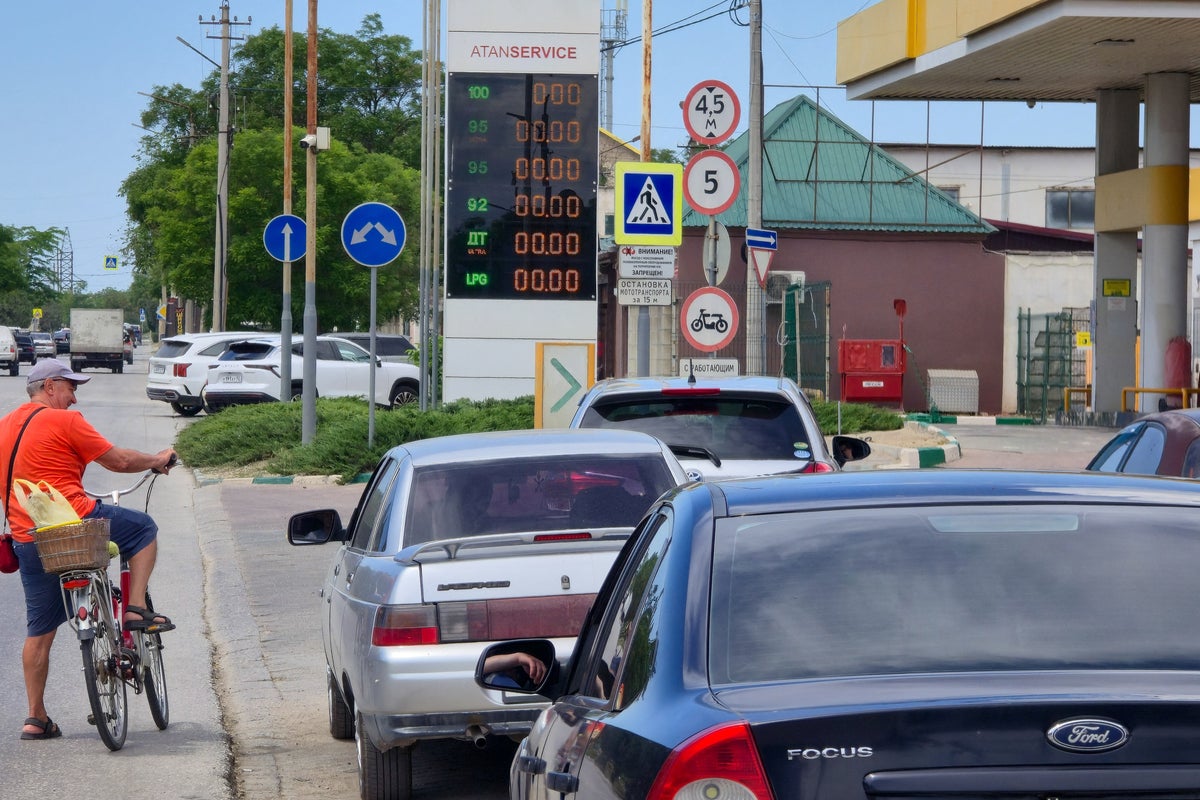
The Russian-occupied Crimean Peninsula is experiencing its worst energy crisis since Moscow illegally annexed the territory twelve years ago, driven by a highly coordinated Ukrainian drone campaign that has systematically severed the region's fuel supply chains. Long queues stretching over a kilometer have formed at gas stations across Sevastopol and Yevpatoria. The Russian Energy Ministry recently abandoned its previous narrative of a stable domestic market, explicitly admitting that "enemy aerial attacks" are responsible for the severe gasoline shortages plaguing the region.
While mainstream coverage treats these developments as isolated disruptions, the reality is far more calculated. Ukraine is executing a multi-tiered attrition strategy that pairs deep strikes on Russian oil refineries with a brutal "middle strike" campaign targeting logistics hardware between thirty and two hundred kilometers behind the front lines. This coordinated interdiction has crippled civilian movement, forced the implementation of strict rationing systems, and directly threatened Russia's military mobility on the peninsula.
The Mechanics of a Logistics Chokehold
The current crisis is not merely the result of diminished refining capacity. It is a textbook demonstration of supply-line interdiction executed via autonomous technology. Ukraine has shifted from sporadic, symbolic strikes to a sustained operational chokehold.
The Land Corridor Under Fire
Historically, the billion-dollar Kerch Bridge served as Crimea’s primary logistical artery. However, following a truck bombing in 2022, heavy commercial trucks were permanently barred from crossing, forcing fuel transport onto ferries or a grueling 700-kilometer overland route. This northern highway, running through occupied southern Ukraine from the Rostov region to Crimea, has become a graveyard for Russian logistics.
Fixed-wing attack drones, including autonomous models capable of identifying targets without direct operator input, now patrol this corridor. They systematically target civilian-style fuel tankers and cargo trucks. A burning tanker on the Melitopol highway is no longer an anomaly; it is a daily operational reality. By turning the land corridor into a high-risk zone, Ukraine has exponentially increased the cost and danger of moving fuel to the peninsula.
The Rail Network Paralysis
The situation deteriorated further following a targeted drone strike that disabled a locomotive and forced the suspension of train services into Crimea. In a military architecture heavily reliant on rail for bulk transport, losing rail infrastructure forces an unsustainable reliance on road transport.
[Refineries in Southern Russia] ---> [Overland Trucks / Rail Lines] ---> [Kerch Strait Ferries] ---> [Crimean Depots]
               |                                   |                              |                     |
        (Deep Strikes)                     (Middle Strikes)                (Marine Drones)        (Local Rationing)
With the land corridor under constant drone surveillance and rail networks bottlenecked, the peninsula’s internal reserves have rapidly evaporated.
Digital Rationing and the Illusion of Control
The response from occupational authorities underscores the severity of the deficit. Mikhail Razvozhaev, the Moscow-appointed governor of Sevastopol, initially dismissed the panic as unnecessary, promising swift replenishment. The administrative actions taken behind the scenes, however, tell a completely different story.
- QR Code Rationing: Commercial sales of high-octane gasoline (AN-92 and AN-95) have been restricted or outright halted for average citizens. In Sevastopol, fuel acquisition now requires specific QR codes issued through Max, a state-backed messaging application pushed by authorities to replace Western platforms.
- Fuel Vouchers: Vouchers are strictly reserved for emergency services, military personnel, and select state officials, leaving the civilian population stranded.
- Volumetric Limits: Where fuel is available to the public, purchases are capped at twenty liters per vehicle, with an absolute ban on filling portable containers to prevent hoarding.
These measures have triggered secondary domestic panics. Fearing an extended blockade, residents have begun panic-buying basic dry goods, sugar, and grains, compounding the administrative strain on local governance.
The Refinery Downstream Effect
The shortages in Crimea cannot be separated from Ukraine’s broader campaign against the Russian energy sector. Striking deep into the Russian federation—hitting major facilities like the Afipsky refinery in Krasnodar Krai and petrochemical plants in Samara and Tatarstan—has forced a restructuring of Russia's domestic oil economy.
The Afipsky plant alone processes over six million tons of crude oil annually. Repeatedly struck by drone waves, its operational pauses ripple through the southern supply chain. To shield the domestic market from total collapse, Moscow extended a gasoline export ban through the summer and was forced to cut crude exports, redirecting raw product back into damaged domestic refineries to prioritize basic fuel production.
Yet, processing crude means nothing if the finished product cannot safely cross the Sea of Azov region. The Kremlin finds itself trapped in a logistical paradox. It possesses the raw oil but lacks the secure refinement and transportation corridors required to deliver it to its most strategically vital occupied territory.
The Tourist Economy Casualty
The timing of this energy starvation campaign is deliberately ruinous. The peak of the summer vacation season traditionally sees hundreds of thousands of Russian tourists drive to Crimea's beach resorts.
This tourist influx is not just a economic necessity for the local service industry; it is a vital propaganda tool for the Kremlin, used to project an image of normalcy and permanent integration. The current lack of fuel has shattered this image.
Vacationers face a grim choice: brave a 700-kilometer highway exposed to autonomous drone strikes or risk getting stranded in Crimea without enough gasoline to make the return trip home. The tourism-dependent economy is effectively frozen, dealing a psychological blow to the narrative that the occupied territory is a secure, integrated haven.
Strategic Realities Behind the Lines
While the immediate impact is felt at civilian pumps, the ultimate target of this interdiction is the Russian military machine. Crimea serves as the primary staging ground and logistical hub for Russian forces operating across southern Ukraine. Sevastopol remains the base of operations for what is left of the Black Sea Fleet.
The military relies on the same regional fuel infrastructure as civilians. While the armed forces maintain separate, fortified tactical fuel reserves, those stockpiles are not infinite. Every week that civilian distribution remains paralyzed forces the military to dip into its operational reserves or reallocate secure transport assets to defend supply lines rather than support front-line offensives. By forcing Russia to choose between fueling its garrison and keeping the civilian economy functioning, Ukraine has created a dilemma that cannot be solved by air defense systems alone.
Russia's Air Ministry claims high interception rates for incoming drones, but the sheer volume of attacks ensures that some invariably get through. The economic and logistical friction generated by merely defending against these swarms is achieving Ukraine's goals without needing to destroy every refinery in Russia. The systemic vulnerability of the Crimean peninsula is no longer a theoretical risk. It is an active, unravelling logistical failure.