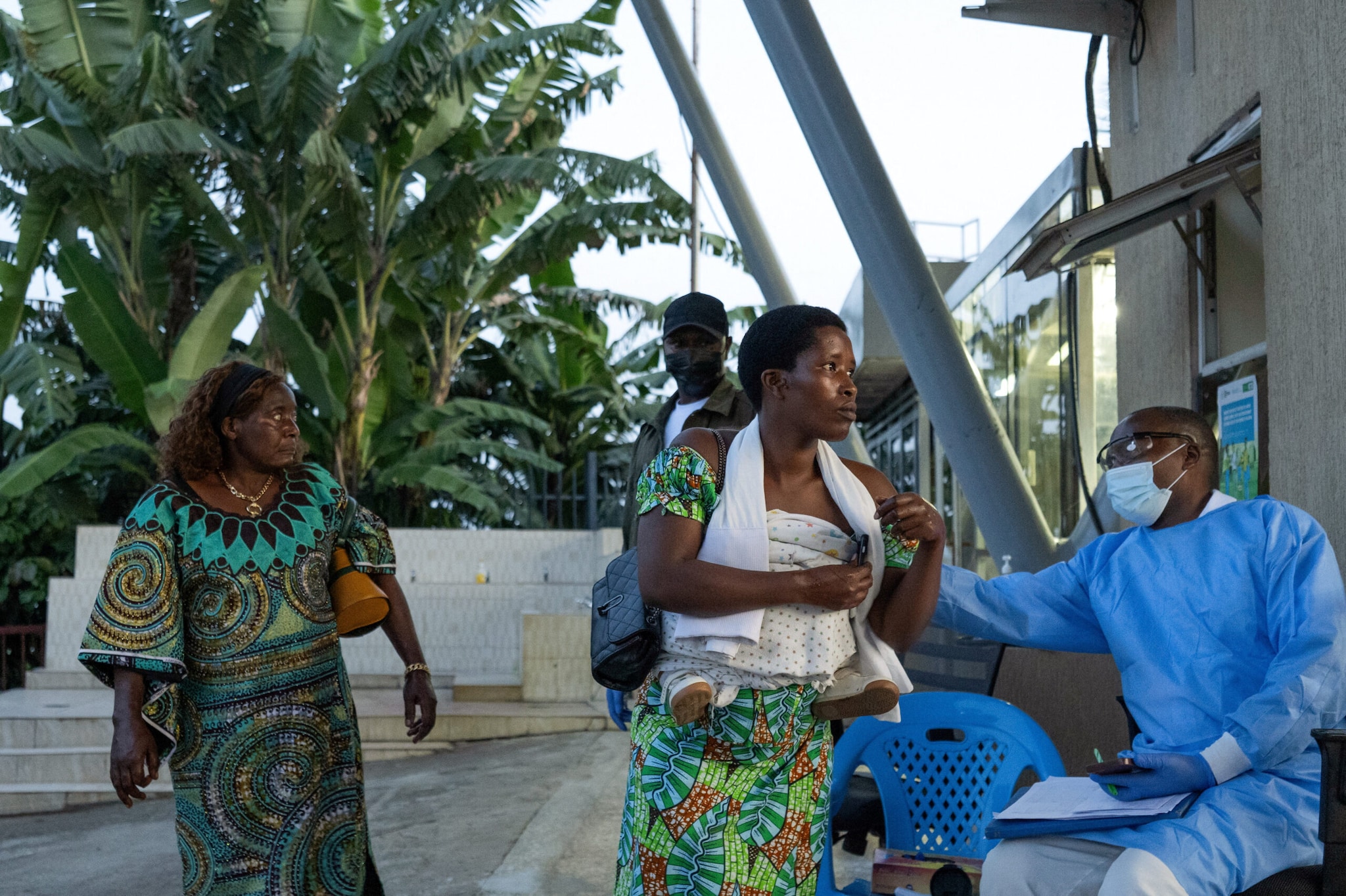
The World Health Organization just triggered its second-highest level of global alarm over a surging Ebola outbreak in the Democratic Republic of Congo and Uganda. Officially, the death toll sits at 131, with over 500 suspected cases multiplying across active war zones.
But the official narrative is missing the real story. Public health officials are focusing on the numbers, yet the true crisis lies in the identity of the pathogen and the geography of the battlefield. This is not the Ebola the world learned to fight a decade ago. It is an entirely different beast, moving through a landscape fractured by active warfare, rendering standard medical countermeasures completely useless.
The Blind Spot in the Vaccine Arsenal
For the last several years, global health agencies talked about Ebola as if it were a solved problem. The deployment of the highly effective Ervebo vaccine during previous West African and Congolese outbreaks created a false sense of security.
That security just vanished.
Laboratory sequencing confirmed that the current crisis is driven by the Bundibugyo virus, a rare variant of the orthoebolavirus genus. Ervebo only protects against the Zaire strain. For Bundibugyo, there is no approved vaccine. There is no validated therapeutic cocktail.
[Ebola Strain Profile]
├── Zaire Strain -------> Vaccine Available (Ervebo) -> Contained efficiently
└── Bundibugyo Strain --> NO Approved Vaccine ---------> Current Outbreak Driver
Medical teams are entering the field empty-handed, relying on basic supportive care like hydration and symptom management. The virus spread entirely undetected for weeks because local triage protocols were tuned to search for the Zaire strain. When those initial tests came back negative, the alarm bells remained silent. By the time health ministries realized they were dealing with Bundibugyo, the virus had already established a foothold in major urban transit hubs like Goma and the Ugandan capital of Kampala.
Fighting a Pathogen on a Active Front Line
The epicenter of this outbreak is northeastern Ituri province, a region defined by violent factional fighting and massive population displacement. Containing an outbreak requires precise contact tracing, isolation, and highly disciplined burial practices. None of these are possible when the population is actively fleeing mortar fire.
Milita groups control the roads leading into ground zero. The front line dividing government forces and the Rwanda-backed M23 armed group runs directly through the infected zones.
This dynamic completely breaks the standard epidemiological playbook. When a contact tracer cannot safely enter a village, tracking the chain of transmission becomes impossible. Rebel-held territories have effectively become black boxes, hiding hundreds of suspected cases from international view. The reported 131 deaths are almost certainly a vast underestimate, representing only the bodies counted in accessible urban clinics.
The Collapse of Clinical Trust
The most alarming aspect of the current data is the high rate of infection among medical staff. Four nurses are already dead. When healthcare workers become vectors, it means basic infection control inside local clinics has utterly failed.
This failure triggers a catastrophic secondary effect. The local population stops trusting hospitals. Congolese Health Minister Samuel Roger Kamba noted that early alerts failed to circulate because communities attributed the rapid deaths to mystical origins rather than a virus. When people believe a hospital is a place where you go to die rather than heal, they hide their sick relatives at home.
Home-based care and traditional washing of the deceased are the primary drivers of super-spreader events. An infected body is never more contagious than immediately after death, when viral loads peak. Without secure, dignified medical burials, a single case routinely turns into a dozen within forty-eight hours.
Global Spillover and the Bureaucratic Response
Western nations are already reacting with familiar, heavy-handed border measures. The United States announced enhanced screening for air travelers arriving from the region and temporarily suspended certain visa services.
History shows these blunt restrictions often backfire.
When international borders close or become punitive, it does not stop desperate people from moving. It simply drives them away from official checkpoints and into unmonitored bush paths. The virus does not stop at the border; it merely bypasses the scanners.
The immediate risk to countries outside Africa remains low, but the domestic response in places like India and the West must shift from airport theater to raw funding for clinical trials. The WHO is currently scrambling to evaluate candidate vaccines that have sat on laboratory shelves for years due to a lack of commercial funding.
The international community treated the Bundibugyo strain as a low-priority academic curiosity because its previous outbreaks were small and self-limiting. That negligence has now come due. Containing this outbreak will not be a matter of shipping stockpiled vials from European warehouses. It will require negotiating ceasefires with armed militias just to deliver basic protective gear to terrified local doctors.